.svg)
















.png)
.png)























.png)


.jpg)


.svg)
-cropped%20(1).svg)
.svg)
.svg)
Blog & Articles
Explore our library of research backed articles and expert insights. From the fundamentals of scalar energy to the latest findings in EMF science, we provide the knowledge you need to navigate a wireless world and optimize your biological health.

A new HHS Request for Information is inviting public input on electromagnetic fields (EMFs), RF radiation, and wireless exposure through October 21, 2026. After EMFs received only brief coverage in the 2025 MAHA Report, this focused federal notice offers an important opportunity for researchers, clinicians, advocates, and individuals to share evidence and personal experiences of EMF-related health effects. Add your voice through the Federal Register and help advance informed public-health action on unnecessary EMF exposure.

In previous articles, we have explored the rapidly accumulating body of science that demonstrates a connection between electromagnetic field (EMF) exposure and voltage-gated calcium channel (VGCC) overactivation, leading to a cascade of detrimental health effects, especially throughout the brain and nervous system. The downstream effects of this “calcium channel flooding” can potentially produce many diverse symptoms and illnesses, including serious conditions like strokes, Alzheimer’s and Parkinson’s disease, heart disease, and various neurological conditions.
The scientist who established the novel connection between these causes and effects, based on many previous studies, is Dr. Martin Pall. His ResearchGate.net profile summarizes his extensive work on these topics:
“Since 1998, I have focused on the mechanisms of chronic inflammatory diseases and how various stressors initiate cases of such diseases. The local mechanism involved in such many such diseases, called the NO/ONOO- cycle, has been confirmed in a recent 57-page paper on heart failure, and to a lesser extent in a recent paper in pulmonary hypertension. I have focused in recent years on how stressors cause human disease, with special emphasis on electromagnetic fields (EMFs) and also chemicals. Non-ionizing, low-intensity EMFs act primarily via activation of voltage-gate calcium channels (VGCCs) and to a lesser extent activation of other voltage-gated ion channels via forces on their voltage sensor. VGCCs act via calcium signaling and the peroxynitrite pathway.”
Just last year, Dr. Pall published a new study review, this one focusing on a hot topic in recent times: the sharp rise in autism, and autism spectrum disorders (ASDs), over the past 30-40 years, and potential environmental factors that may be associated with its causation. Autism incidence is thought to have increased by 55 times since the 1980s, averaging around 1 in every 2,000 children in the ‘80s, whereas in 2023, up to 1 in 36 children were considered to be autistic.
Many argue that autism hasn’t increased at all, but only appears to have increased due to vastly improved diagnostic practices. They claim that many children and teens (and even adults) who would have previously been undiagnosed, or diagnosed with another condition like “intellectual disability” or ADHD, would get an autism diagnosis in modern times.
It is true that autism, with its full spectrum of attributes and possible expressions, has become more widely recognized in the mainstream than it was in the past. Since autism is considered to be a spectrum, there are those on the upper end of the spectrum considered ‘high functioning’, who can live seemingly normal lives, but just have a ‘neurodivergent’ way of thinking and operating. Those at the lower end of the spectrum cannot live normal lives at all, and require caretakers even throughout their adult years. They suffer from a myriad of debilitating symptoms and health issues. It is clear that the spectrum that is autism varies widely, and the upper end really cannot even be compared to the lower end of the spectrum.
While it seems obvious that diagnostic procedures have improved considerably, this does not rule out an actual increase in autistic individuals, or the likelihood that various environmental factors that have increased in modern times may have a causal role in the development of autism. A 55-fold increase in diagnostic accuracy and practices does not seem very likely, so there must be more pieces to this puzzle.
Also, autism is often thought to be purely genetic, but it’s not possible for genes in themselves to change that drastically over just a couple generations. However, interactions between genes and the environment, described by the term ‘epigenetics’, could certainly explain such a sharp rise (while also factoring in improved diagnostics). Epigenetics is the link between genetic risk, and certain environmental factors that turn susceptible genes on or off, controlling the presence or absence of symptoms associated with autism.
Various environmental or developmental factors can determine whether a genetic tendency is actually expressed and active in a child, or whether it stays dormant and never plays out. These factors include prenatal conditions like stress, infection, chemical and heavy metal exposure, deficiency of key nutrients, and even EMFs (as you will learn more about below). If these stressors are high enough to overwhelm the pregnant mother or the child’s system during vitally important developmental windows, especially in utero or in the postnatal/infancy period, brain development could be delayed or altered.
At the heart of the widespread concern over autism is not an inability to accept different ways of thinking and processing (neurodivergence), but a deep desire for our children to thrive – to function well in life, to be happy, and to be self-sufficient in adulthood.
This is why it’s important to keep an open mind, and to encourage the continuance of deep research into the function of the human body, how our bodies interact with various potentially harmful elements in our environment, and how to prevent, reduce, and remedy these harms as much as we can.
Study review links excessive intracellular calcium to dysfunctions in synaptogenesis
Dr. Martin Pall’s 2024 study review is titled Central Causation of Autism/ASDs via Excessive [Ca2+]i Impacting Six Mechanisms Controlling Synaptogenesis during the Perinatal Period: The Role of Electromagnetic Fields and Chemicals and the NO/ONOO(-) Cycle, as Well as Specific Mutations.
Some foundational concepts first need to be understood to realize the significance of Dr. Pall’s findings, which will hopefully lead to further research to definitively prove or disprove the connections he has established in this review.
The voltage-gated calcium channels (VGCCs) are basically “gates” located on the cellular membranes, which are opened and closed by changes in voltage. Our bodies are electrochemical, which means weak electrical signals produced by ions – like calcium, sodium and potassium – affect the movement of biochemicals. Normally, there is a charge (electrical difference) between the inside and outside of the cells, called polarization, where there’s a lot of calcium outside the cell, and very little inside of it. If there’s a voltage change caused by either an internal or environmental cue, these gates open, allowing a controlled amount of calcium to enter the cell. This temporarily depolarizes the cell membrane and triggers a cascade of intracellular signaling events that influence numerous physiological processes, including neurotransmission, gene expression, muscle contraction, and more.
When too much calcium is allowed to enter the cell, such as when the voltage stimulus is too strong or prolonged – which may be caused by manmade EMFs, which have vastly higher power levels than the weak electric signals in our bodies – this excessive intracellular calcium can overstimulate the body, especially neuron-rich areas like the brain, nervous system and heart.
The downstream effects of excessive, prolonged calcium release result in the production of free radicals, including nitric oxide and superoxide, which then combine to produce a highly unstable free radical called peroxynitrite. Without the presence of sufficient levels of antioxidants to keep this process in check, peroxynitrite becomes one of the most destructive molecules in the body. It can oxidize lipids, derange proteins, and damage DNA. It can also trigger a chain reaction by decomposing into other highly reactive molecules (like hydroxyl radical), which in turn damage more molecules and create even more free radicals. All of this becomes a vicious cycle, resulting in DNA and mitochondrial damage.
This cascade of damage is implicated in chronic fatigue syndrome, neurodegenerative disorders (e.g. Alzheimer’s, Parkinson’s), inflammatory and autoimmune diseases, electrosensitivity, and even autism.

Definitions of intracellular calcium, the peroxynitrite pathway, and synaptogenesis
To make the study more understandable, let’s define some key terms:
The scientific notation [Ca2+]i means intracellular calcium, or more specifically, a concentration of calcium ions inside the cell. You will see this term throughout this study and others.
The NO/ONOO(-) cycle refers to the peroxynitrite pathway, the self-amplifying biochemical cascade described previously. This is where nitric oxide (NO) and superoxide (O2-) combine to produce peroxynitrite (ONOO), with cascading downstream effects involving several more damaging free radicals. Since this phenomenon is central to the theories proposed in this paper, you will see it a lot.
You will also want to know the definition of synaptogenesis. This refers to the process by which neurons form synapses with each other, allowing them to communicate via electrical or chemical signals. It is a crucial part of brain development, as well as plasticity – changes in the brain throughout life to support memory and learning. Synaptogenesis is especially active in the prenatal (in utero) and early postnatal (infancy) stages, collectively referred to as the perinatal period.
EMFs & chemicals act through two separate calcium signaling pathways
Dr. Pall’s paper cites a total of 287 related studies to support his main theory, which is that excessive intracellular calcium during the perinatal period disrupts the six mechanisms controlling synaptogenesis, therefore resulting in aberrant or dysfunctional brain development. He details a variety of environmental stimuli that are known to cause excessive intracellular calcium production, including electromagnetic fields (EMFs), as well as various autism-implicated classes of environmental chemicals and heavy metals.
Most of these stimuli act either through the VGCCs, or through another plasma membrane calcium channel class, referred to as the NMDA (N-Methyl-D-Aspartate) receptors. While VGCCs respond purely to changes in membrane voltage, NMDA receptors require both chemical and electrical signals to activate. NMDA receptors allow calcium to enter the cell when the neurotransmitter glutamate (derived from the amino acid glutamic acid) binds to the receptor along with a co-agonist – either glycine or D-serine. At the same time, membrane depolarization is required to dislodge a magnesium ion that normally blocks the channel, allowing ion flow through the receptor.
You may have heard of glutamate excitotoxicity, which is known to be caused by consuming monosodium glutamate (MSG) in certain foods, potentially leading to neurological symptoms, especially in sensitive individuals. This occurs through the NMDA receptors described above. Less well known is that many other chemicals can overactivate these same receptors, causing similar types of symptoms and conditions.
The chemicals that have been found to activate the NMDA receptors, which Dr. Pall highlights in his paper, include various classes of pesticides (including glyphosate, organophosphates, carbamates, organochlorines and pyrethroids), volatile organic compounds (VOCs), mercury, bisphenol A (BPA), phthalates, acetaminophen, and valproic acid (a seizure medication). These chemicals have been found in other studies to cause the release of excessive intracellular calcium, and when the toxicity of several of these were tested, the toxic effects were greatly lowered by administering an NMDA antagonist compound, proving that the chemicals were acting through the NMDA pathway.

It is interesting that EMFs and various synthetic chemicals, both of which are vastly more widespread in our environment in modern times than in the past, could affect brain development, and brain and nervous system function, in similar ways. This supports our observation that those who have multiple chemical sensitivities (MCS) are very often also electrically hypersensitive (EHS). It seems that these two separate types of environmental stimuli, acting through different pathways to the same destructive end, likely combine in their deleterious effects in sensitive or genetically prone individuals, both child and adult.
Causal and epidemiological links between EMFs, excessive [Ca2+]i, and autism
Numerous scientists and research groups have suggested that increased autism/ASD incidence is associated with, and may be caused by, electromagnetic field (EMF) exposure. Some of these suggestions are based on correlations between increased EMF exposure and increased ASD incidence.
Since the 1980s, when autism was barely known, technology has become substantially more prevalent and powerful over the subsequent decades. Higher frequencies are being used, requiring a higher density of wireless equipment than before, increasing exposure exponentially. Pulse modulation is now used in all wireless communications devices, which is thought to be highly bioactive because the peaks of the pulses are many times stronger than the average strength of a non-pulsed EMF. The intensity of these peaks are far more likely to trigger the voltage sensors on our cells than non-pulsed (continuous wave) EMFs.
Dozens of studies have shown several measurable elements of the peroxynitrite cycle to be elevated in autistic humans or animals, relative to controls. Two mechanisms that can slow the momentum of (or even reverse) the peroxynitrite cycle – activating Nrf2 or AMPK – have been found to improve conditions caused by the cycle, including ASD. Numerous studies have shown that activating the Nrf2 pathway, which is antagonistic to the peroxynitrite pathway, reduces autism symptom severity in animals and humans.
Dr. Pall also summarizes several epidemiological studies, which are studies that document humans exposed to a specific stimulus, and how this stimulus (the cause) is correlated with increasing incidences of certain conditions (the effect). While this cannot prove cause and effect, it can correlate the two, providing more evidence to support an already sound theory.
One such study found an elevated prevalence of autism in a town on the New Jersey coast, where an important military radar station was located. Another study measured the EMF exposure levels of pregnant women who gave birth to babies with autism, compared to normal babies, and found that the EMF exposure in the sleeping areas of the mothers of autistic babies was greatly elevated. Another study linked maternal mobile phone usage with speech problems in children.
There are also at least six different animal studies establishing a link between prenatal EMF exposure and long-lasting neurological changes, some of which are considered to be symptoms of autism. These include lack of normal sociability, lack of preference for social novelty, and decreased exploratory activity. One study recorded both behavioral and biochemical changes, noting that three proteins that have important roles in synaptogenesis, which have been shown elsewhere to play a role in preventing ASDs, were found to have lowered levels in three parts of the brains of EMF exposed rats. The rats also displayed behavioral changes indicating a potential autistic type condition.
Overactivation of the VGCCs causes excessive intracellular calcium, which has directly detrimental effects on brain function and synaptogenesis, even without the peroxynitrite pathway in the equation. When peroxynitrite becomes part of the picture (as a downstream effect of excessive intracellular calcium), which is always the case when inadequate levels of antioxidants are present, the vicious cycle caused by this dangerous cascade of free radicals could potentially explain why the associated neurological conditions become chronic and sustained, instead of just acute and temporary.
The good news is that in some of these studies, moving the animals to an enriched environment – a place with mentally and physically stimulating activities – resulted in a significant (but not complete) reversal of the neurological dysfunction.
Can you prevent, reduce and remedy autism spectrum disorders?
One very intriguing aspect of the voltage-gated calcium channel activation caused by EMFs is that not every pathway results in pathophysiological (harmful) effects. There is one pathway called the nitric oxide signaling pathway, usually activated by low intensity, short duration EMF exposure of specific types – pulsed electromagnetic field (PEMF) devices and red/infrared light therapy (photobiomodulation) are the most well known – that actually results in therapeutic effects.
The nitric oxide signaling pathway has a downstream effect of activating Nrf2, which controls the transcription of a large number of genes encoding cell protective enzymes. It raises many antioxidant enzymes, including superoxide dismutase and catalase, as well as the body’s ‘master antioxidant’, glutathione. These endogenous antioxidants actually bind to and lower peroxynitrite levels, and also lowers the two precursors of peroxynitrite: superoxide and nitric oxide. This interrupts the vicious peroxynitrite cycle, resulting in lowered inflammation, increased detoxification mechanisms, improved mitochondrial function, and more.
Nrf2 isn’t just activated by short duration therapeutic EMFs; it is also improved by various foods, nutrients and phytochemicals. These include substances contained in cruciferous vegetables, garlic and onions, berries, turmeric, chocolate, green tea, and many other whole foods and herbs.
Dr. Pall references quite a few studies using Nrf2-activating substances to successfully reduce the symptoms of autism. Resveratrol, a polyphenol known for its antioxidant and anti-inflammatory properties, which is especially concentrated in the skins of dark colored grapes, and in blueberries and mulberries, is a common substance used in these studies.
Another regulatory system that interrupts the peroxynitrite cycle is AMPK, a protein kinase best known for improving mitochondrial function and lowering inflammation. AMPK can be boosted naturally by fasting, caloric restriction, exercise, cold exposure, and various nutrients including resveratrol, berberine, curcumin, and alpha-lipoic acid. When it comes to food substances, many of these double as both Nrf2 and AMPK activators, making them extra beneficial!
In the final section of Dr. Pall’s paper, he details what he believes to be the most effective ways to reduce the most severe symptoms of autism, based on all the studies he has reviewed. He strongly emphasizes EMF avoidance, especially for pregnant women. He states that magnesium supplementation, as well as vitamin D and folate are reported as helpful for prevention and treatment.
He also recommends putting the person with ASD into an enriched environment, with plenty of the beneficial kinds of mental and physical stimulation that are healthy and necessary for development.
Avoiding chemical exposure is also important, and he recommends eating organically grown food to avoid glyphosate and other pesticides. Purifying drinking water to avoid heavy metals, PCBs and PFAS can be helpful, and avoiding medicines, medical interventions, cosmetics and cleaning products that contain any of the substances on the NMDA-R activating list.
Blushield EMF protection devices may potentially have a beneficial effect, as well. Blushield’s independent review board certified, peer reviewed, PubMex-indexed study found that using our home and portable EMF protection devices resulted in hypermethylation (a quieting or calming) of the CpG sites on some key VGCC-related genes. You can read more about Blushield’s pilot study, and the VGCC effects that were found, here.
One last thing we want to share on this subject is to be kind to yourself and others. Having an autism diagnosis could mean so many things, and your quality of life may still be very good. If you are (or someone you know is) neurodivergent, and your mind just seems to work differently than people around you, that can be a great thing. If you know someone like this, try to understand them better, so that you can support their needs and help them feel seen and heard.
On the other hand, if you know anyone with autism who is suffering from severe symptoms that are harming their quality of life, we really hope this article is helpful for you, and that it leads you towards answers and solutions that can change their lives for the better.
fatigue, chronic fatigue, stress, memory, concentration, focus, learning, inflammation, free radicals, magnesium, calcium, calcium channel, vitamin d, adhd, cellular, nervous system, neurological, behavior, emf protection, electromagnetic fields, electrosensitivity, ehs, non-ionizing, lte, wireless, mobile phone, blushield, exposure, emf exposure, symptoms, children, sar, health effects, protection, intracellular calcium, excessive intracellular, peroxynitrite pathway, nitric oxide, brain development, nmda receptors, peroxynitrite cycle, electromagnetic field, voltage-gated calcium, downstream effects, study review, environmental factors, modern times, perinatal period, studies, chemicals, increased, synaptogenesis

Here at Blushield, we believe that having a comprehensive understanding of your EMF exposure sources is a great place to start when it comes to protecting yourself from EMF harms. This is why we have decided to partner with a unique and brilliant family-owned business that we trust to do the job right when it comes to helping you identify, measure and mitigate the EMF sources in your home.
Most building biologists have a toolkit full of gadgets they use to find and measure EMF sources, because they aren’t capable of detecting EMFs without these meters. However, the two guys we recently met have truly taken this industry by storm, and operate on a whole different level that blows their competition out of the water.
The Ornithor Brothers Building Biology, Inc., are in a league of their own. While most building biologists are only human, this talented dynamic duo are platypuses.
These two brothers have a special gift that others in the industry are sorely lacking: the amazingly sensitive and unique bill of the platypus has the power of electroreception! What’s more, this innate ability is incredibly sensitive, and can detect EMFs at far more subtle levels than any tool or meter currently available. They are able to scour your home and find every EMF source, leaving no stone unturned. The greatest EMF threats are the ones you aren’t aware of, and they will ensure that every source has been accounted for, followed by comprehensive recommendations for mitigation and protection.
The platypus (Ornithorhynchus anatinus), sometimes referred to as the duck-billed platypus, is native to Australia, and is in a special class of mammals called monotremes, which are the only group of living mammals that lay eggs, rather than bearing live young. The scientific name is Greek for 'duck-like bird-snout', and this unusual physical feature is responsible for their unique power of electroreception.
The platypus has an astonishing 40,000 receptors in stripes along their bill, originally used to detect weak electrical signals underwater to locate their prey. When the platypus dives into the water to find food, it closes its eyes, ears and nose, and relies almost completely on its ability to sense the tiny electric currents generated by the muscular contractions of nearby prey. It also has mechanoreceptors that detect mechanical waves generated from tiny movements of the living food sources it seeks.
They are particularly sensitive to frequencies between 50 and 100 hertz, in the extremely low frequency (ELF) range, and modern man’s home electrical grids happen to operate exactly within this range.
We were so lucky to meet these guys in Kansas City, Missouri, the site of Blushield USA’s very own headquarters. The Ornithor brothers migrated from Australia early in life, catching a ride on a human-led freight ship. They came here on a special mission: to share their innate gift of electroreception with the human species, to help us become aware of the electricity that surrounds us on a daily basis, although this subtle energy is invisible and undetectable to most humans. They are instinctively aware that all living organisms are electrochemical, and therefore highly sensitive to external sources of electromagnetic fields, and they want us to know that this affects our health and well-being on a daily basis.
When they come into your house, you will be fascinated by their special procedure for detecting electric fields. They close their eyes and begin sweeping their bill from side to side as they move around your house, receiving detailed feedback on the precise location of your most insidious EMF sources. After a thorough examination, they will provide a comprehensive report of all your exposures, with recommendations that include:
• Rearranging furniture to increase distance from EMF hotspots
• Step-by-step instructions for improving your EMF hygiene by implementing lower EMF appliances and lighting
• Installing a landline phone
• Hardwiring your computers with ethernet cables
• Acquiring plug timers to shut your Wifi router off at night
They do not usually recommend shielding as a primary solution, as they recognize the potential harms of blocking the beneficial natural fields from the Earth and nature, which they believe are immeasurably important for our health, since they personally live outside on the Earth.
The Ornithor brothers have found Blushield to be an excellent well-rounded solution by creating a beneficial field that acts as a biological “safety bubble” from the EMF sources that aren’t possible or practical to mitigate in other ways. When we first showed them one of our Blushield home devices, and plugged it in, they were very excited and said it really reminded them of their home in the wilderness back in Australia!
Now they carry Blushield portable devices with them during every home assessment visit, to protect their own sensitive biological systems. Previously, they reported feeling very tired and “zapped” after a day on the job, being around so much manmade electricity. Carrying their portable protection with them has changed the game completely, and they have shared with us how grateful they are to still feel energetic even after a long day.
One of their other favorite solutions, this one being specific for dirty electricity from smart meters and many home appliances, is the SineTamer wire-in dirty electricity surge suppression and frequency attenuation technology. When attached to your breaker box, this device cleans up the harmful spikes and transients on the sine wave flowing through our wires almost completely, which dramatically reduces the harmful byproducts of dirty electricity, both to our health and the longevity of our devices and appliances.
Last but not least, they provide these services at a price that can’t be beat, since they don’t even want your money! Platypus are carnivores that require a great deal of food (they eat about 20% of their weight in food daily), so all they ask is that you provide them with their favorite foods at very frequent intervals during their visit. Their requests include worms, insect larvae, shrimp and crayfish, which you should be able to find pretty cheap at a local market, or for free from a nearby creek or river.
As an important side note, you will want to be aware that the male platypus is actually venomous, inflicted through their back ankle spurs. Although their sting isn’t lethal to humans, it can cause weeks of agony. Just make sure you have a steady supply of food for these guys while they’re working hard for you, so as to avoid angering them, and you should be just fine.
Of course, you have probably realized by now that today is April 1st, and that no platypus were harmed in the writing of this post!
We just wanted to have a little bit of fun today, and most importantly, to spread the word about the amazing abilities of this animal. When European explorers first heard reports of this Australian animal, they actually thought it was a joke. The platypus is no joke, and should be celebrated as one of the only animals with innate, fully functional electroreception! There are plenty of animals and insects with magnetoreception, including birds, bees, turtles, sharks and lobsters, which give them the ability to sense and respond to the Earth's magnetic field, often used for navigation and orientation. However, the ability to detect electric fields is unique to monotremes, and especially strongly developed in the platypus.
Because of this, we think the platypus should be the mascot of the EMF awareness movement. Some may laugh at the unconventional appearance of this animal, just like how those lacking awareness of subtle energies often doubt the harms of EMFs, dismissing those of us who spread the word about the harms of EMFs, and the need for mitigation and protection.
The encouraging truth is that societal awareness of EMFs is steadily increasing, leading to the discovery and creation of multi-faceted, comprehensive solutions and strategies to regain and maintain our health in the modern world.
We are wishing you a fun-filled day, and hope that you learned something new today :-)
emfs, electromagnetic fields, wifi, smart meter, smart meters, dirty electricity, blushield, shielding, exposure, emf exposure, building biology, frequency, protection, building biologists, ornithor brothers, platypus, sources, sensitive, comprehensive, harms, unique, electroreception, ability, fields, health, innate, subtle, australia, living, daily, appliances, animal, awareness

We are sad to report that EMF activist, researcher and author Arthur Firstenburg passed away recently, at age 74. After months of enduring an undiagnosed illness, he died at home, surrounded by family and friends, on February 25th, 2025.
We want to take the time right now to remember and honor his life, and his accomplishments in bringing awareness to the harms of electromagnetic fields. He is especially remembered as a spokesperson for EMF hypersensitive individuals, as he struggled with extreme sensitivity to common EMF sources, and could not tolerate them without severe reactions. Although he went through many hardships in life, due to his sensitivity, he was also a prolific and studious researcher. He continuously studied the subject of the biological harms of EMFs for 30 years, and is known to have thoroughly read each study he cited in his newsletters and published works.
Many consider his crowning achievement to be his book, The Invisible Rainbow: A History of Electricity and Life, originally published in 2017, with a second edition released in 2020. The publisher states that 100,000 copies of his book have been sold, marking its significant impact on EMF awareness. This extensively researched, 576-page volume explores the effects that electricity has had on human health and the environment, all the way back to early electricity experiments in the 18th century. Firstenburg suggests that as humans began experimenting with continuous electricity, they unknowingly introduced new biological stressors.
As technology use became more widespread, chronic illness has increased at similar rates. Firstenburg’s book goes through the history of our implementation of electricity and wireless radiation sources, and links the widespread adoption of new technologies to outbreaks of viral illness and disease epidemics. While he has correlated these patterns of events in human history very well, causation itself cannot be established for certain, and that is likely why many of his theories have fallen on deaf ears in mainstream scientific circles. Even though this is the case, finding such a direct correlation stresses the value and importance of prioritizing more extensive studies on the topic, as that is how causation is determined. It also urges caution when using devices that emit wireless radiation, taking a “wait-and-see” stance by limiting exposure.
Of course, many of us are now aware of Dr. Martin Pall’s work, which has established
causation by linking EMFs to the voltage-gated calcium channels in all living organisms, and how this directly results in the harmful health effects of EMFs that have been discovered by many previous studies.
Firstenburg was the founder of the independent campaign group the Cellular Phone Task Force, a nonprofit membership organization created in 1996. This was in response to the Telecommunications Act of 1996, which granted the United States government considerable power to implement wireless technologies throughout the country at a fast pace, by dramatically limiting opposition based on health or environmental concerns.
The Cellular Phone Task Force website has cataloged Firstenburg’s extensive library of newsletters full of research, and his calls to action. He also continually compiled anecdotal reports from all over the world from people who are have noticed health and environmental effects from new sources of wireless radiation and electricity in their area.
Firstenburg’s struggle with electromagnetic hypersensitivity
Arthur Firstenburg was born on May 28th, 1950, in Brooklyn, New York. He studied
mathematics at Cornell University in 1971, then went on to medical school from 1978 to 1982. He did not complete medical school, however, due to illness that he attributed to extreme electromagnetic hypersensitivity, which began to appear after undergoing several diagnostic dental x-rays. He began to experience nausea, headaches, insomnia, and heart arrhythmia in the presence of appliances, computers, wireless routers and other common electronics. His symptoms increased in severity to the point where he was compelled to leave his home to seek a refuge away from electrical pollution, even sleeping in his car at times, because living in a house was too risky.
In a 2008 article in Mother Jones magazine, he was quoted as saying, “Your neighbor could get wifi, and then you have to leave and hunt for a new home.” His condition became so debilitating that he even filed a lawsuit against a neighbor, attempting to force her to turn off her Wifi router, stop using her cell phone (and replace it with a landline), and even to replace dimmer switches and unplug her computer at night. He offered her $10,000 to comply, and when she refused, he saw no other option than to leave his house.
He eventually settled in Santa Fe, New Mexico, a relatively low EMF city, and one of the last refuges from 5G and smart meters. Since settling in Santa Fe, he became very active in protesting cell tower and smart meter installations in his area, regularly attending city council meetings. He filed eight lawsuits since 2010 against various entities, including the city of Santa Fe and several cell service providers. All were unsuccessful.
You can’t change the whole world, but you can create zones of health and safety
Unfortunately, trying to change the patterns of the entire world around you is exhausting and discouraging, as Arthur found. Mother Jones magazine states:
“Of course, if you’re really worried, you could ditch your cell phone for a quaint landline. Just don’t expect the rest of the world to follow suit. Firstenburg has found that it’s almost impossible to avoid the mobile-wielding masses. He used to ask strangers—politely—to stop talking on their phones in his presence until he got reprimanded in a grocery store for harassing a customer. “People get offended,” he says. “They just don’t know about microwave radiation.”
Modern society’s excitement and acceptance of wireless technology already has too much momentum, and the time to turn back is long past, if there was ever a chance of halting these massive technological trends in the first place. The best we can hope for us to bring awareness of safe usage and habits, and to push for safer designs and standards for these products over time, as more people wake up to the harms of our electronic and wireless devices and infrastructure.
Since we cannot change the behavior and choices of the masses of society, we need to focus on improving our own health and resilience in every way we can. Living a healthy lifestyle connected to nature – the electrons from the Earth, fresh air and sunshine – and eating a nutrient rich diet high in antioxidants, can go a long way in increasing our resilience to life’s inevitable stressors, including pervasive EMFs.
We can reduce our EMF exposure as much as possible or practical, without overlycompromising our lifestyle and our ability to work and connect with others.
Developing “EMF hygiene”, or an awareness of the EMF sources around us and how we interact with them, is foundational. We can reduce so much of our acute exposure simply with more awareness of our proximity to wireless radiation, and the duration of our exposure periods.
For all the exposure sources we cannot control or eliminate, we can utilize effective, clinically tested EMF protection devices, like our Blushield home and portable units. Our clinical trial demonstrated statistically significant improvements across a variety of health markers, especially in areas that are commonly affected by EMFs like cognitive function, sleep, blood glucose, immune markers and heart rate variability, all the way down to a quieting of overactive voltage-gated calcium channel genes, which are now considered to be at the very
foundation of the biological harm from EMFs.
All of these strategies combined could make the difference between suffering and being comfortable and healthy, especially if we consider ourselves to be EMF hypersensitive.
We want to honor Arthur’s life by sharing his research and accomplishments, and take the conversation further by exploring sophisticated and effective solutions to the EMF dilemma that all of us are facing in these modern times.
References:
- Cellular Phone Task Force – https://cellphonetaskforce.org
- “In Memoriam: Arthur Firstenberg, Champion of EMF Awareness, May 28, 1950 - February 25, 2025” – https://reinettesenumsfoghornexpress.substack.com/p/in-memoriam-arthur-firstenberg-champion
- “Remembering Arthur Firstenberg: Local anti-wireless activist was a regular at City Hall” – https://www.santafenewmexican.com/news/local_news/remembering-arthur-firstenberg-local-anti-wireless-activist-was-a-regular-at-city-hall/article_716a755a-f617-11ef-873f-9fd839113d51.html
- Mother Jones magazine: “This Is Your Brain on Cell Phones” –
https://www.motherjones.com/politics/2008/07/your-brain-cell-phones
insomnia, stress, headache, focus, cognitive, nausea, heart rate, calcium, calcium channel, cellular, behavior, emfs, emf protection, electromagnetic fields, electromagnetic hypersensitivity, radiation, microwave radiation, 5g, wifi, wireless, cell phone, cell tower, smart meter, smart meters, blushield, exposure, emf exposure, symptoms, school, health effects, protection, wireless radiation, cellular phone, phone task, task force, mother jones, jones magazine, arthur firstenberg, health, awareness, electricity, sources, illness, harms, electromagnetic, world, biological, history, states, effects, causation

Last year, Josh del Sol interviewed our CEO Brandon Amalani, and lead researcher and writer Courtney Taylor. This is one of our favorite Blushield interviews, because of Josh's very insightful series of questions.
We went into extensive detail about our independent review board certified, peer reviewed and PubMed indexed clinical study, and especially the findings related to methylation of the voltage-gated calcium channel (VGCC) genes, which is thought to be directly related to the primary causal mechanism of EMF harm.
We also covered how Blushield works, and read through some testimonials from customers (especially the EMF hypersensitive ones) about how Blushield has changed their life. We also get into deep philosophical topics about energy, consciousness, and taking an approach where we can healthfully live and engage with the world instead of hiding from it, and how Blushield technology supports that philosophy when used to protect from the ever present harms of EMFs in the modern world.
Click play on the video below to check it out.
We hope you enjoy this one as much as we did!
calcium, calcium channel, emf, emfs

Join us for an in-depth conversation with Sayer ji & Brandon Amalani about cutting-edge EMF protection technology and its impact on health. Discover the revolutionary Blushield device, its roots in advanced electromagnetic theory, and how it offers unparalleled protection against harmful EMF exposure.
In this interview, we explore:
- The science behind coherent vs. non-coherent EMF and its effects on the body.
- Insights from new peer-reviewed clinical research supporting Blushield’s effectiveness.
- How the device leverages principles like scalar fields and sympathetic resonance for natural balance.
Learn how to safeguard your health while embracing innovative solutions grounded in natural principles. Don’t miss this fascinating discussion on wellness and technology!
Click here to watch this video on Substack
emf, emf protection, scalar, exposure, emf exposure, protection

It has been definitively established that our bodies are primarily electromagnetic in nature. Electric and magnetic energy is produced at all times by our own bodies, and this energy controls the production, use, and inhibition of the thousands of natural chemicals our bodies use to carry out all necessary processes for the continuation of life. In that way, you could say we’re electrochemical. The minerals inside our body have the ability to carry various levels of electrical charge, and the buildup and movement of this charge can be seen as the causal agent of all the material processes our bodies undergo, all the way down to the atomic level.
Human bodies aren’t unique in having electromagnetic properties, though – all other life forms, the entirety of the living planet around us, and the furthest reaches of the known universe all produce and respond to electromagnetic fields. One may even say that life itself is the dance of a continuous, yet infinitely varied and ever changing electromagnetic symphony.
You may have heard that electromagnetic fields can be harmful to our health. You may have also heard about the therapeutic benefits of electromagnetic fields. Both are true… but how are they true simultaneously?
Foundationally, both of these truths are based on a single fact: we are profoundly, constantly affected by external sources of electromagnetic fields – known as EMFs, for short.
As electromagnetic beings, we are finely tuned to the subtle changes happening in all the fields around us. The tricky part is, we cannot actually see or hear most of the EMFs we are exposed to and affected by. There are some exceptions, like the visible light from the sun, fire, and artificial light sources that harness electromagnetic energy and express it visibly. Another related exception is audible sounds, which are primarily mechanical longitudinal waves that result from an object vibrating, creating disturbances in the surrounding medium (usually the air), and are not technically electromagnetic, but are still considered frequencies. Also, we can feel some kinds of EMFs in the form of heat, mainly in the infrared spectrum.
That said, the vast majority of frequencies around us cannot be perceived by our five physical senses. Since the living body is a highly tuned electrochemical system, our cells perceive and respond to the entire electromagnetic spectrum, even frequency bands that are completely invisible, inaudible and undetectable to our five physical senses.
Okay, so we are definitely affected by EMFs. If that’s the case, then why do some frequency fields harm our bodies, and others help us heal?
It’s all determined by the structure of the fields themselves.
This includes the actual frequencies emitted, whether they’re repetitive (like a car alarm) or constantly varied (like a symphony), whether or not there is incoherent noise riding on the carrier signal, the duration of exposure to a particular field, as well as the finer details of the field’s structure; whether it’s pulsed, oscillating, modulated in phase, frequency or amplitude, and especially the quality and type of information the field is carrying.
These are a lot of variables, which is why EMFs can be so intensely harmful and so profoundly healing.
Voltage-gated calcium channels: the Nrf2 and peroxynitrite pathways
This is a good time to dive into some of the science on harmful versus healing EMFs. For a long time, people knew that EMFs affected us, but no one knew of any biological mechanism to explain these effects. In the past, this lack of an established mechanism reduced the enthusiasm of the scientific community to further study the health effects of EMFs. This all changed when Dr. Martin Pall, a retired Professor of Biochemistry and Medical Sciences at Washington State University, linked electromagnetic field effects to our voltage-gated calcium channels (often abbreviated as VGCCs).
The voltage-gated ion channels (each of which utilize either calcium, potassium, sodium or chloride) are a major component of the body’s electrochemical control system. Ionic minerals in our bodies will alter their charge in response to how our sensory neurons perceive external cues (such as light, movement and heat), which then elicits electrical changes in our cell membranes. These changes trigger voltage sensors in one or more of the voltage-gated ion channels, which are like guardians of the cell membranes, to open their gates and allow minerals to enter the inside of the cell to perform highly specific functions.
Of the voltage-gated ion channels, the calcium channels specifically were found to be extraordinarily sensitive to external EMF sources, and especially to manmade polarized and pulse-modulated radiofrequency and microwave radiation. This kind of radiation is emitted by cell phones, cell towers, Wifi routers, smart meters and many other modern EMF sources, and causes a literal flood of calcium to enter our cells, wreaking havoc at the cell level. Through Dr. Pall’s research, which compiled and evaluated data from hundreds of studies on the subject, the effect of external EMFs on our electrosensitive VGCCs is now widely accepted as a primary causal mechanism of harm.
Interestingly, other studies on the health effects of electromagnetic fields have actually shown beneficial effects. Why the mixed results? The telecom industry-funded portion of the scientific community likes to conclude that because some studies show harmful effects, and some show beneficial effects, this can somehow be “zeroed out” to no effects. Of course, this conclusion is wholly unscientific, but is convenient for the telecom industry.
What true scientists should be asking is if there are nuances to this subject that cause EMFs to be harmful in some instances, and helpful in other instances. Martin Pall discovered a fascinating phenomenon that may give a great deal of clarity to this looming question.
What was found is that at any given time when the calcium channels are activated, one of two main pathways will be intiated, depending on the nature of the electromagnetic stimulus. The first primary pathway is called the nitric oxide signaling pathway, which has downstream effects of activating Nrf2. Nrf2 has systemic cell protective, antioxidant, anti-inflammatory and lifespan lengthening effects. In many studies, beneficial EMF effects are connected to short exposure durations, where the EMF may act as a kind of hormetic stress, resulting in a healing response in the body – summed up in the saying “what doesn’t kill you makes you stronger” (and healthier). Hormesis is often seen in the beneficial effects of exercise, where the breakdown of muscle tissue creates new, stronger tissue; and fasting, where deprivation of nutrients causes the body to “eat” unhealthy, damaged cells as fuel and become more finely tuned and efficient to more easily survive anticipated future instances of nutrient deprivation. Since the Nrf2 pathway is considered to be a cellular defense mechanism against oxidative stress and inflammation, it’s clearly a big part of the body’s adaptive capacity in the face of hormetic stress. The Nrf2 pathway can also be activated by antioxidant-rich food substances like berries, green tea, onions, chocolate and other fruits and herbs.
The Nrf2 pathway likely plays a major role in the health promoting effects of some types of electrotherapy devices, especially the kind that produce “destructive” frequencies like Rife machines. This kind of technology is designed to target and eliminate viral, bacterial and parasitic activity in the body by matching and hitting the resonant frequencies of these organisms.
On the other hand, long exposure durations of the wrong kind of EMFs goes beyond healthy stress, and activates the other main calcium channel pathway, referred to as the peroxynitrite pathway. This pathway is purely destructive to the body’s healthy cells, and results in a snowball effect of oxidative stress, free radicals and eventually DNA damage. The destruction and derangement of healthy cells can result in cell mutation, and allow opportunistic organisms like bacteria, viruses and parasites to proliferate. All of the common unpleasant symptoms that have been attributed to EMFs could potentially be traced to the peroxynitrite pathway of the VGCCs, including heart and nervous system issues, fatigue, insomnia, headaches, dizziness, and many more.
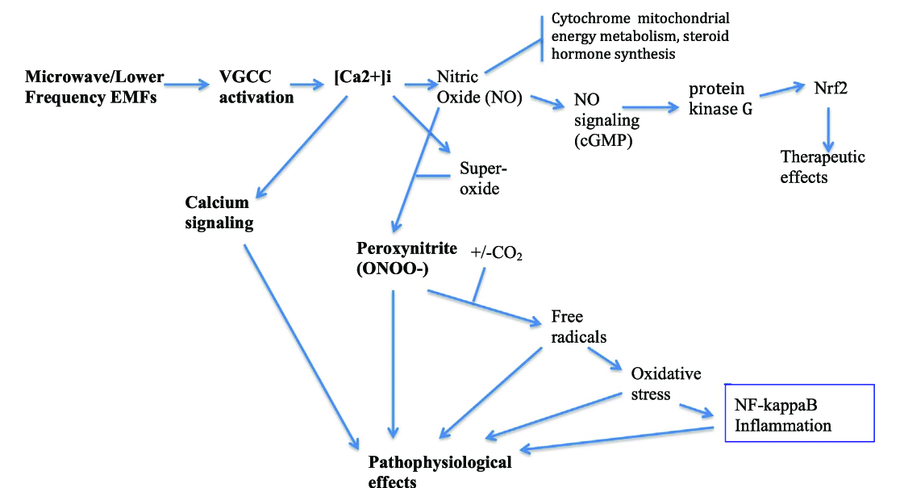
Now, this is just one mechanism that’s been discovered, and more will likely be found over time.
Healing and therapeutic electromagnetic fields
Throughout history, especially in the past couple hundred years, the therapeutic applications of electromagnetic fields have been explored by many brilliant scientists, engineers and physicians. Since ancient times, electricity has been used for pain relief, at first utilizing live electric fish on a patient’s body as a healing stimulus. In the 18th century, this practice was discontinued after frictionless machines were found to produce electrostatic fields. Therapeutic use of electrostatic and/or electromagnetic fields became known as electrotherapy.
Since our living bodies are highly sensitive to external fields, the healing potential of targeted electrotherapy is vast and possibly almost endless. It has the potential to go far beyond dietary and other lifestyle interventions as a powerful healing modality, because electrotherapy works directly on the electrical systems of the body, rather than indirectly in the form of food, drugs, herbs and other modalities. These modalities also affect our electrical system, but in a less direct and efficient way. In modern times, we even hear rumors of so-called “Med beds” that can restore our bodies to their original healthy state, said to potentially be capable of healing injuries and illnesses that are considered permanent and incurable.
In the 1800s, Nikola Tesla made significant progress into the study of electrotherapy, using his Tesla coils and “magnifying transmitters” to excite the surrounding atmosphere into producing a similar energy to lightning, which Tesla hypothesized could have beneficial effects on human health from its uniquely structured electric fields and negative ions. These high frequency devices would produce fantastic streams of blue light, and several scientists during and after Tesla’s time continued and expanded upon his experiments, finding highly beneficial results on human health. These machines were thought to act as systemic vitality boosters, allowing the body to throw off diseased states simply by increasing the overall vitality of the system as a whole.
Other notable men who built on Tesla’s electrotherapy work in the 1900s were Georges Lakhovsky, Royal Raymond Rife, Guy Obolensky and Antoine Priore. All were having major success reversing serious chronic illness with Tesla-inspired electrotherapy machines. However, the mechanism of action was not discovered at that time, and this void in knowledge discouraged scientists of the past, just as much as it kills the motivation of modern scientists.
There are always exceptions, however, as there is a special type of mind that’s not discouraged by the unknown, but deeply inspired by it.
Two powerful healing modalities – plasma electrotherapy and PEMF
Paul Harris, inventor of the modern plasma electrotherapy machines Theraphi and Quantaphi, has been devoted to discovering the potential of electrotherapy from an early age. Antoine Priore’s system, in particular, had to be pieced together almost from scratch, as Priore left very little records and no intact, functional electrotherapy machines by the time of his death in the early ‘80s. The healing effects of his machine were found to be extraordinary in Priore’s time, but research was abandoned and experiments ceased because no one, not even Priore himself, could figure out why it worked so well.
Priore didn’t know at the time, but his machine was utilizing a principle discovered in the field of optics in the 1960s, known as phase conjugation. American Lt. Colonel Thomas Bearden figured this out and shared it widely in the 1990s, and placed 20 years of research into the public domain to stimulate redevelopment of this type of electrotherapy, which became known as scalar electromagnetic therapy. Applying phase conjugation to an EM field creates coherence by causing a wave to mirror itself exactly (in a phase conjugate mirror model), compared to a regular mirror that further scatters the wave and decreases coherence, increasing entropy and breakdown of the field’s orderly structure. The opposite of entropy is known as negentropy, referring to an increase in order, coherent structure, and an expression of the pure, original state of the field. In a sense, it’s a form of time reversal, where something is restored to its original, closer-to-perfect state.
This process has profound implications on living biology, by applying time reversal on a biological cell level, where a cell structure exposed to a phase conjugate field reverts back to its original state (which is programmed into our DNA, and always remembered there), before disease, disorder and entropy set in.
Theraphi and Quantaphi utilize this principle in the most powerful and advanced form yet created. Some electrotherapy devices, like the Rife machine, operate using “destructive” fields, meant to promote health through the destruction of anything present in the body that inhibits health (like a chronic viral or bacterial load). These likely work through the hormetic Nrf2 pathway explained earlier, where the body is exposed to some amount of stress to stimulate healing. Rife machines use a continuous, repetitive, square wave frequency to accomplish this.
Theraphi and Quantaphi operate on quite another level, where the entirety of the frequency field is considered “constructive”. It does not produce stress on any part of the body, and almost transcends the “progress through adversity” path that other methods take, by bathing the body in a coherent field of time-reversed waves. Instead of targeting and destroying a misaligned cell, in most cases the cell is simply “time-reversed” into its younger, previously healthy state. The concept itself is clean, harmonious and gentle. It may sound contradictory, but this is a subtle energy device that’s massively powerful in its potential effects.
Another powerful electrotherapy modality is called PEMF (pulsed electromagnetic fields). The first PEMF machines were invented over a century ago, inspired by Tesla’s research and experimentation with the healing effects of certain types of electromagnetic fields. PEMF devices gained popularity and became more formally recognized by the medical field around 50 years ago. Therapeutic uses of PEMF include bone healing, pain management, inflammation reduction, and overall wellness.
The most powerful and effective PEMF machine we have found is called ARC (Advanced Resonant Charge). It was specially developed by acupuncturists and electrical engineers to provide maximum magnetic penetration into the deep tissues and bones of the body. Where the magnetic fields of many modern machines have a tendency to bounce off the body or have little long term effects, the ARC provides deep, therapeutic levels of raw, magnetic energy to the cells, without the issues that come along with repetitive signal devices. Compared to solid state PEMF devices, the analog ARC device delivers strong, coherent, point source magnetic fields to the body, with unparalleled tissue penetration.
ARC constantly changes the amplitude and pulse rate so that the body never adapts to the magnetic flux, resulting in the body never getting used to the energy, increasing the long term benefits. Although the magnetic pulse patterns are ever changing, you can change both the intensity and the pulse rate on the ARC. This gives you the most control possible in a totally analog package. You will find that as your needs change, settings on the ARC can easily and intuitively be adjusted and adapted for what the body or application requires.
It has long been known in acupuncture that the human body produces its own electrical current within each cell. The magnetic field and currents in the body play a critical role in regeneration, healing, growth, and cellular energy production. Pulsed magnetic fields can be used to energize and stimulate the meridians and tissues of the body, which can give the body the raw energy it needs to create health and balance.
Pulsed magnetic therapy produced by the ARC will support circulation, pain mitigation, lymphatic flow, reduce anxiety, enhance blood flow, charge the blood and cells, and reduce inflammation and stress.
Analog technology is old school, but we feel it has far better effects biologically speaking. The ARC has evolved analog PEMF technology to a level that we feel is currently unmatched in the industry. This is the most natural form of intense magnetic fields… like having lightning in a box.
The Theraphi and the ARC are practitioner grade devices, mainly used in healing centers by holistic practitioners. Even if you don’t run a healing center, if you have the space in your home and have a serious interest in healing technology, you can acquire either of these devices for yourself and your family (as well as the Quantaphi, which is sized and priced more for home users), here:
Theraphi & Quantaphi Plasma Electrotherapy
ARC (Advanced Resonant Charge) PEMF machines
Doing sessions on the ARC (used first) followed by the Theraphi is the ultimate energy healing and biohacking device “stack” that we have found yet.
fatigue, insomnia, anxiety, stress, headache, dizziness, inflammation, oxidative stress, free radicals, minerals, calcium, calcium channel, dna damage, cellular, nervous system, emf, emfs, radiation, radiofrequency, microwave radiation, lte, wifi, cell phone, cell tower, smart meter, smart meters, scalar, exposure, symptoms, school, sar, frequency, health effects, calcium channels, beneficial effects, electrotherapy machines, plasma electrotherapy, healing, bodies, energy, pathway, health, cells, state, electrical, charge, therapeutic, frequencies, system, mechanism, powerful, theraphi, level, produce

One of our primary goals with Blushield’s online presence, besides providing highly effective EMF protection devices, is to share valuable EMF-related information to help our audience become more educated and well-versed in all subjects related to electromagnetic fields.
An important part of this education is to share with you any and all progress on the front of EMF activism: men and women, just like you, standing up for their right to be free from forced exposure to harmful sources of electromagnetic fields, especially inside their very own homes.
Over the decades, there have been consistent attempts to take a stand against government and corporate policies that are not designed to protect our health, but instead prioritize government and corporate power and profits. Protests, speaking up at city council meetings, educating neighbors and rallying community members to get on board, and even expensive lawsuits are what many EMF-aware and especially EMF-sensitive men and women have invested their energy into each time a new harmful exposure source is thrust upon us, without our full knowledge of the potential harms involved, and without our explicit consent.
Unfortunately, many who fight these hard battles have found their attempts to be hard won, or thwarted entirely by an often corrupt legal system. Many of us have realized that government agencies are working alongside corporations, primarily motivated by money. There is a “revolving door” between individuals working for corporations (such as the telecom industry), and those working for the government agencies that supposedly regulate the industries these corporations are involved in. The most relevant example when it comes to EMFs is the shady association between the FCC (Federal Communications Commission) and the telecoms it is responsible for regulating.
To understand the depths of this alarming situation, you can read a 2015 publication from Harvard University’s Center for Ethics, titled Captured Agency: How the Federal Communications Commission Is Dominated by the Industries It Presumably Regulates.
The sad truth is that corporate entities and governments (which are also corporations) are primarily motivated by money. When they see small groups of angry citizens complaining about a new 5G tower going up in their neighborhood, or protesting that their old but perfectly functional analog electricity, gas or water meter got quickly swapped for a so-called “smart” meter, what they see is simply a threat to their bottom line.
While some individual men or women who work for government agencies may personally believe they care about human health, and may have the motivation of influencing policy in the direction of what’s “good for the people”, these intentions are undermined by the powerful momentum of Goliath governments who have entirely different motives. They see these groups of protesters as annoying flies that need to be swatted away and quieted as quickly as possible. Large corporate entities happen to be the primary lobbyists for government agencies, which quietly influence policy decisions towards the interests of these corporations.
What if there was a method of advocating for policy changes that support the health and well-being of living men and women, in a way that could more effectively get government and corporate attention, and create urgency through consequences involving money and personal liability?
Notice of Liability movement brings EMF activism to a new level of effectiveness
In 2015, a new movement and method of activism was born, initially in response to unwanted “smart” meter installations on homes. It is referred to as the Notice of Liability (NoL) movement, started by InPower co-founders Cal Washington and Josh del Sol. The techniques utilize a sophisticated understanding of the laws that all governments of the world abide by, which most common people are not currently versed in. Because of our lack of awareness, we unwittingly fall victim to the will of the corporate government, and unconsciously waive our own rights and power.
However, there are ways that we can play their game by following their own rules, which we were not taught in school or by our society. The Notice of Liability is a formal written document that can be sent in response to a harmful offer, and is the first of a series of documents. These documents are private contract negotiations utilizing the same principles used by corporations and governments to get you to agree to offers.
You may not be aware that when your utility company first sends you a letter telling you they’re planning to install a smart meter on your house, that is actually an offer to contract. However, because of clever wording, most of us interpret their letter as a statement of what they will do, rather than an offer awaiting our agreement. Because of this, most of us will not respond to this letter properly and honorably, and many will not respond at all, believing we have no power of choice over the matter.
In accordance with commercial law, our lack of response is interpreted as our agreement to the terms of their offer: this is legally called tacit agreement, and is a form of implied consent. A party's failure to object to certain actions may be seen as an implicit agreement.
Contracts are the lifeblood of the world of commerce. In accordance with the Uniform Commercial Code (UCC), which is the “rule book” for all commercial interactions, there are four steps essential to forming the simplest version of a contract.
The first step is the offer, which in this case could be a notice, or even a website, announcing a “meter upgrade”.
The second step is a mutual assent (or a meeting of the minds), which must include full disclosure of the relevant facts and terms, including the potential health and privacy consequences to the recipient of the offer. If there is not full disclosure, the contract is not legally valid.
The third step is unconditional acceptance. This means that both parties have agreed to every part of the contract – if there are any objections to any part of the contract, they should be presented through a conditional acceptance (or counter-offer), and the negotiations must continue until all conditions are agreed to by both parties. It’s important to note that consent can be gained tacitly, meaning silence or a lack of response is considered to be an unconditional acceptance to all terms of the contract.
The fourth and final step is ratification, which refers to the formal approval or confirmation of an agreement. This is gained by performance (the act of doing something based on the contract), which can involve monetary exchange, signing a document, through a statement of approval, or accepting the benefits of the contract. In this example, ratification can happen when a smart meter is installed on a property after the initial notice (offer) was sent directly to the individual or posted publicly, and the recipient tacitly agreed to it (did not respond properly, or at all).
There is another element essential to a contract, called consideration. This means each party must offer something of value (consideration) in return for the other party’s promise or action. The utility providers try to convince you that by installing a “smart” meter on your house, they are providing you with the benefit of frequent meter readings so you can monitor your own energy usage in “real time”. They will try to sell you on this, but surveys have suggested that most people do not want or need this. Also, the risks to our health, safety and privacy far outweigh this single proposed benefit, as we outline in our article all about smart meters.
To negotiate the conditions of the contract, we need to know how to speak their language to get what we want. We can respond to their offer with a Notice of Liability, which recognizes that a utility’s desire to install a “smart” meter is a contractual offer. We conditionally accept their offer in a written notice, but only on the condition that they provide definitive proof that the device is not harmful to human health, and does not violate privacy laws protected by the U.S. Constitution. This would require them to disprove, point-by-point, facts outlined in our affidavit (a document that we verify is true), with an affidavit of their own.
We can then go on to state that if they cannot provide this proof (which they won’t be able to), then we will allow them to install this meter, but require that they pay us on a fee schedule of a specific dollar amount (such as $10,000) per day to offset the potential harm to our health, safety and privacy caused by the meter’s presence on our house. Since you are the one negotiating the contract, you can choose the conditions you are willing to accept.
By sending an NoL, you are putting officials and executives on notice that they are involved with something that is causing harm towards you and your loved ones, and that you do not agree to it. Once they receive your NoL, they can no longer claim they did not know they were causing you harm.
The NoL process implements Contract Law, Common Law and Commercial Law (outlined by the Uniform Commercial Code). It is multi-faceted and operates in multiple jurisdictions. The power of this private contract negotiation is that it holds individuals who are enforcing or allowing the enforcement of this technology as personally liable for harm that may be caused by it. When this is not done, these people hide behind their governmental or corporate positions, with no “skin in the game” personally.
What happens when government officials receive your NoL?
According to commercial Notice of Liability processes, there are two more types of letters that can be sent to remind the recipient to respond: the Notice of Fault and Notice of Default. If there is no response (or an insufficient response to your conditional terms), and the action is taken anyway (the “smart” meter installed on your house), billing and enforcement can begin. Since the NoL is a private contractual agreement, it cannot be taken to public courts, but liens and debt collectors are options for enforcing the contract.
What has often happened since this movement began in 2015 is that a public official, after receiving one or more NoLs, has resigned or stepped down from their position immediately. Many officials do not want to be in a position where they may be personally financially liable for harm. Another common result of sending NoL letters is they do not go through with their offer – meaning no “smart” meter on your house. This is even more likely to happen when groups of people under the same utility district get together and all send NoL notices around the same time. There is strength in numbers!
Whereas petitions, protesting, attending public hearings, costly class action lawsuits, hiring attorneys or writing letters are often ineffective, the NoL process may be able to accomplish more.
When you read the examples below, keep in mind that in cases where public officials resigned after receiving an NoL, those may be cases of "correlation does not equal causation", and no one can be absolutely sure that their resignations were a direct result of the NoL process; just that both events occurred very near the same time, indicating the possibility of a link.
- One of the first groups to send NoLs to a local utility in Seattle, Washington were all able to keep their analog meters (although there was another group who were protesting just by bringing awareness to the issue who were also able to keep their analog meters).
- In Kelowna, British Columbia, more than 100 residents sent Notices of Liability to Corix Utilities’ CEO Brett Hodson. A few days later, immediately after receiving a Notice of Default, Hodson resigned from office.
- Len Kelsey, the chair of the BC Utilities Commission, resigned in 2015 after receiving NoLs.
- After being sent Notices of Default from 21 people, three of nine Seattle City Council members announced that they would not be seeking re-election.
- After being defaulted by 21 individuals, the Michigan attorney general began calling for free smart meter opt-outs.
- Four of the eight Michigan Public Services Commission officers being held liable are no longer listed on the Commission’s website.
- Michigan city attorney David Greim resigned after receiving NoLs, after informing one of the claimants that the utility company had a budget of $21 million set aside for paying off state legislators – more evidence supporting the financial connection between corporations and governments.
- Recent international successes include resignations from Scotland’s First Minister, as well as Ireland’s Chief Medical Officer, after receiving NoLs.
InPower has also received many direct reports of success from men and women using the NoL processes in being able to prevent “smart” meters from being installed on their homes. As of the time this article was written, the community has collectively served a combined total of 18 billion dollars worth of bills of exchange (negotiable instruments) to corporations and governments.
The InPower community also recently began utilizing the same processes to prevent the installation of 5G towers in residential areas.
InPower has a membership community for a low monthly fee that supports members in creating custom documents using templates, finding others in their area to work with to increase the impact of their NoL processes, and for further education on how all of this works. You can even join the community just to read and learn more about the processes, to get familiar and comfortable with how it works before taking action. You can read about the successes that others in your area have had, and communities throughout the world who are taking action.
All the InPower staff are volunteers, and the membership fees go towards maintaining the website.
One of the strengths of Blushield EMF protection is to create a bubble of safety around you and your family while you work to fight the bigger fight, if you are personally inspired toward activism. We think this particular strategy has considerable potential, as you are stepping more fully into your true power as a living man or woman, transcending older forms of activism that rely on pleading, complaints, and over-reliance on the court system.
This documentary is an excellent watch, to get a full overview of this movement:
InPower is a worldwide movement securing life, liberty, and property for all through accountability. The InPower community is culturally, governmentally, and geographically diverse, but has a common bond: the need to have authority over one's health and home. Regardless of where you live in the world today, people have fewer choices when it comes to certain technology and services, and often have no choices when it comes to medical interventions with no recourse for bodily harm.
attention, emf, emfs, emf protection, electromagnetic fields, lte, smart meters, blushield, exposure, school, protection, government agencies, receiving nols, contract, offer, health, corporations, corporate, inpower, community, governments, response, agreement, commercial, women, personally, utility, house, respond, action, officials, processes, public, resigned, harmful, potential, fight, commission, groups, world, common

A systematic study review published in October of 2024 by South Korean researchers, which analyzed 24 relevant studies, found significant evidence of a higher risk of malignant brain tumors, glioma and meningioma on the side of the head where cell phones were held.
They also found an increased risk of glioma, the most deadly type of brain tumor, in long-term, heavy cell phone users.
This is the seventh peer-reviewed systematic meta-analysis published between 2016 and 2024 that has found statistically significant connections between cell phone use and brain cancer.
The recent study review was published in Environmental Health, and authored by Jinyoung Moon, Jungmin Kwon and Yongseok Mun, researchers associated with the Departments of Environmental Health Science, Occupation and Environmental Medicine, as well as universities and hospitals in South Korea.
This most recent study on this subject is an important one to analyze in the wake of several highly biased WHO-sponsored study reviews on the health effects of cell phone radiation, which concluded there to be no significant link between EMFs and ill health effects, including cancerous tumors.
Let’s analyze this systematic review, why its results are significant, and then break down the reasons why many EMF-literate scientists have found the WHO-sponsored reviews to be unscientifically manipulated to create the illusion of inconclusive health effects from EMF exposure.
Every one of these recent study review authors, both independent and WHO-sponsored, publicly agrees that the risks of health effects from cell phone exposure need to be comprehensively reevaluated, based on the rapidly changing exposure levels and technology usage habits of modern populations, compared with the 1990s and early 2000s when the international and United States-based exposure “safety” guidelines were originally set.
These exposure guidelines have not been updated since 1996 in the US, and 1998 internationally. If you think about your own life in the late ‘90s, and how drastically different your use of wireless radiation emitting technology was at that time, you will understand the urgency of the need to reevaluate these heavily outdated safety guidelines.
However, the conclusions each group has come to differ dramatically. The independent researchers have concluded that modern cell phone radiation exposure is indeed a pressing concern, compiling and analyzing data from a growing body of scientific research finding a connection between cell phone radiation and cancer. The WHO-sponsored researchers’ findings conveniently support the previous exposure limits set by the same organizations that many of the researchers themselves work for.
South Korean meta-analysis finds evidence of brain tumors connected to cell phone use
In the October 2024 meta-analysis by South Korean researchers, 19 case-control studies and 5 cohort studies were included. Case-control and cohort studies are observational studies used in epidemiology and medical research.
Case-control studies are used to investigate whether exposure to a specific factor is associated with the outcome, in this case cell phone use and various types of brain cancer. They use two groups: the “case” group already has the outcome (the cancer diagnosis) and the “control” group does not have the outcome (no cancer diagnosis). The researchers look back into the past to compare exposure to the risk factor (cell phone radiation) in both groups, to determine if the outcome is uniformly associated with higher exposure to the risk factor. One advantage of case-control studies is that they’re retrospective, looking into the past to find results, which is useful to find results more quickly. One disadvantage of this study type is the “recall bias” factor, where it can be difficult for participants to recall their past exposures accurately. To correct this as much as possible for cell phone radiation studies, phone call records from phone companies are acquired to collect exact data on usage.
Cohort studies are slightly different, as they are not retrospective, but prospective, following participants over a period of time to see who develops the outcome. In this case, researchers would record data in real time of participants’ cell phone use, and over time will find out who becomes diagnosed with brain cancer. Cohort studies are less prone to recall bias or misreporting (since data is being collected in real time), but the disadvantage is that chronic degenerative disease like cancer can have a long latency period, so fully accurate results can only be obtained by following participants over a very long period of time, which is time-consuming and expensive.

Here is an excerpt from the results of the meta-analysis:
“Ipsilateral users reported a pooled odds ratio (OR) of 1.40 (95% CI 1.21–1.62) compared to non-regular users. Users with years of use over 10 years reported a pooled OR of 1.27 (95% CI 1.08–1.48). When stratified by each type of brain tumor, only meningioma (OR 1.20 (95% CI 1.04–1.39)), glioma (OR 1.45 (95% CI 1.16–1.82)), and malignant brain tumors (OR 1.93 (95% CI 1.55–2.39)) showed an increased OR with statistical significance for ipsilateral users. For users with years of use over 10 years, only glioma (OR 1.32 (95% CI 1.01–1.71)) showed an increased OR with statistical significance.”
Ipsilateral is a term used in anatomy and medicine to describe something found on the same side of the body. In contrast, contralateral means something found on the opposite side of the body. The use of ipsilateral in this context refers to cell phones held against the same side of the head where a tumor was found, compared to tumors that were found on the opposite side of where the cell phone was routinely used.
A pooled odds ratio (OR) is a statistical summary that refers to the combined results of all the studies analyzed, and the odds of the outcome occurring in one group (such as the “case” group) compared to the odds of it occurring in another group (the “control” group). A number higher than 1 means the ratio leans in the favor of the case group, which in this instance refers to the participants diagnosed with brain tumors in the case-control studies. For the results to be statistically significant, meaning the outcome (cancer) is very likely to be associated with the exposure factor (cell phone use), you also want the “95% CI” to be higher than 1. CI stands for Confidence Interval, which gives us a realistic span of the probability of the association.
Let’s take the first statistic quoted above, the pooled OR data for ipsilateral users vs. non-regular users as an example: The OR is 1.40, which means the odds of brain cancer being diagnosed on the side of the head where the cell phone was regularly used is 40% higher than in “non-regular users” who only use cell phones infrequently, not regularly. The following data, (95% CI 1.21–1.62), means that the realistic percentage increase (adjusting for potential covariates and inaccuracies) would be somewhere between 21% and 62%. This remains a statistically significant increase. If the lower number range of the CI goes below the number 1, the result is not considered to be statistically significant.
The next finding shows that those who have regularly used cell phones for more than 10 years have 27% higher odds (with a possible range of 8% to 48%) of being diagnosed with brain tumors, compared with those who have used cell phones for less than 10 years overall.
After that, the analysis goes on to compare specific tumor types for ipsilateral users. Meningioma, a tumor that forms in the protective layers of tissue surrounding the brain and spinal cord, has a 20% higher odds of developing. Glioma, a particularly aggressive, fast-growing and deadly type of brain tumor, was found to be 45% more likely to occur on the same side of the head as regular cell phone use. Finally, when they only compared malignant versus non-malignant tumors, they found a 93% increase in occurrence, which is quite alarming.
These three types – malignant tumors, glioma, and meningioma – were found to be connected with regular ipsilateral cell phone use, at statistical significance. There were also increased odds of glioma by 32% for long-term cell phone users (10+ years of regular use).
Further in the analysis, and we won’t include all the excerpts here, 11 studies that recorded over 896 cumulative hours of cell phone use found a 59% increased chance of brain tumors. In this group of heavy, long-term cell phone users, glioma, meningioma and acoustic neuromas were found to be increased by 66%, 29% and 84% respectively. Acoustic neuromas in particular were found to occur much more often with heavy and long-term cell phone use.
The introduction to this systematic study paper emphasizes that the associated between cell phone radiation and brain tumors found in these studies is likely conservative, compared to the real time modern cell phone exposure that most of us have today. Therefore, these results, although they were found to be statistically significant, may not be reflective of the actual risk of exposure we have today.
“In recent years, the pattern of mobile phone use has changed rapidly. With the introduction of 3G phones for data transmission (so-called ‘smartphones’ such as iPhones or Android phones), people started using their mobile phones for other purposes than mere calling: web surfing, watching movies and videos through YouTube or other applications, connecting to social network services like Facebook or Twitter, text messaging, morning alarm, recording schedules, catching a taxi, etc. This change increases the exposure time to RF-EMR from mobile phones and makes the exposure irregular according to a person’s characteristics of mobile phone use…. Therefore, RF-EMR exposure patterns are becoming more complicated for researchers to anticipate than before.”
Another systematic review from 2017 by Carlberg and Hardell found similar results as the recent South Korean study, with a thought-provoking introduction about the weakness of using short-term epidemiological studies to measure long latency chronic illnesses like cancer. A classic epidemiology paper from 1965, written at the height of the tobacco and lung cancer controversy, cautions making quick assumptions that no clear association means no link, as statistical significance can change dramatically after just a few extra years of exposure to the disease-causing stimulus.
“None of the today's established carcinogens, including tobacco, could have been firmly identified as increasing risk in the first 10 years or so since first exposure.”
WHO-sponsored study review finds no link between cell phone use and brain cancer
Back in May of 2011, the International Agency for Research on Cancer (IARC) of the World Health Organization (WHO) evaluated the studies published on the link between cell phone radiation and brain cancer (specifically glioma and acoustic neuroma), and classified radiofrequency radiation as a Group 2B “possible human carcinogen”.
Very soon afterward, in June of 2011, the WHO issued a fact sheet stating that “to date, no adverse health effects have been established as being caused by mobile phone use”. Issuing a statement that directly contradicted the IARC evaluation, and only a month later, is highly suspect. Since that time, and with much evidence to the contrary continually being produced in the scientific sphere, the WHO and other government organizations have been strongly emphasizing the complete, definitive absence of a link between cell phones and cancer.
At that time, the WHO also stated that “two international bodies have developed exposure guidelines for workers and the general public… based on a detailed assessment of available scientific evidence.” These two organizations are the International Commission on Non-Ionizing Radiation Protection (ICNIRP) and the Institute of Electrical and Electronics Engineers (IEEE).
ICNIRP is a private organization based in Germany that selects its own members, and IEEE is the world’s most powerful group of engineers, whose members are employed in companies that produce or use technology that depends on radiofrequency radiation, such as power companies, the telecom industry and military organizations.
In 1998, ICNIRP established wireless radiation exposure guidelines that are based only on thermal (heating) effects from wireless radiation, and ignoring the large body of science showing non-thermal biological effects. These guidelines have been adopted by most countries in the world, based on the archaic assumption that tissue heating (thermal effects) are the only way that radiation could possibly negatively affect living organisms. This is commonly referred to by EMF-literate scientists as “the thermal-only paradigm”.
In 2009, they provided an update to their guidelines, stating that the established limits from way back in 1998 are still protective, even from the considerably increased modern day exposure levels.
Most of the WHO Monograph core group, a specialized team responsible for assessing scientific research to inform WHO recommendations, are also members of the ICNIRP, so cannot be considered independent, unbiased researchers.
Joel Moskowitz, PhD, Director of the Center for Family and Community Health at the School of Public Health, UC Berkeley, stated that in 2019, investigative journalists from eight European countries published 22 articles in major news media that exposed conflicts of interest in this ‘ICNIRP cartel.’ The journalists argue that the cartel promotes the ICNIRP guidelines by conducting biased reviews of the scientific literature that minimize health risks from EMF exposure. By preserving the ICNIRP exposure guidelines favored by industry, the cartel ensures that the cellular industry will continue to fund their research.
As just one of a series of study reviews commissioned by the WHO, a systematic review specifically focused on human cell phone use and brain cancer was published in August of 2024 in Environmental International. The study’s highlights state that exposure to RF from mobile phone use likely does not increase the risk of brain cancer or childhood cancer. The methodology used in this study review has been extensively criticized in the past few months since it was published, including by Joel Moskowitz on his website, SaferEMR.com.
Moskowitz’s criticisms of the WHO study include:
- crude exposure measures and inadequate follow-up time for the cohort studies
- they defined “regular cell phone use” as at least one cell phone call weekly, which is very low
- incorrect methods for dealing with differences in the original studies’ methods and results (heterogeneity), which can skew the overall findings
- the cumulative call time analyses that did find increased risk of glioma and meningioma with increased call time, but assessed only a small sample size so it was unable to achieve statistical significance
The language used by the lead study author in a news release reveals their bias:
"This systematic review provides the strongest evidence to date that radio waves from wireless technologies are not a hazard to human health."
"Overall, the results are very reassuring. They mean that our national and international safety limits are protective. Mobile phones emit low-level radio waves below these safety limits, and there is no evidence exposure to these has an impact on human health."
"There remains no evidence of any established health effects from exposures related to mobile phones, and that is a good thing."
In truth, for the past couple decades, substantial disagreement has existed among experts who study wireless radiation. Unfortunately, these recent WHO study reviews are only going to increase the rift, as the panel of researchers involved in these studies are from the WHO’s own core group, most of whom have significant past or present ties with ICNIRP and other regulatory organizations.
The sad truth is this has become a political battle on the world stage, with the pursuit of money and power at its core, and all of humanity as collateral damage.
The best we can do as this plays out is educate ourselves on the risks of EMFs, protect ourselves, and raise awareness within our community, so that as a species, we can eventually win this battle of humanity’s health over corporate power.
References:
- Study review: “Relationship between radiofrequency-electromagnetic radiation from cellular phones and brain tumor: meta-analyses using various proxies for RF-EMR exposure-outcome assessment” – https://ehjournal.biomedcentral.com/articles/10.1186/s12940-024-01117-8
- Children’s Health Defense: “New Report Adds to Evidence That Cellphone Radiation May Cause Brain Cancer” – https://childrenshealthdefense.org/defender/cellphone-radiation-may-cause-brain-cancer-south-korea-report/
- Children’s Health Defense: “Biased? WHO-Backed Study Finds No Link Between Cellphones and Cancer” – https://childrenshealthdefense.org/defender/brain-cancer-cellphones-who-study/
- Study review: “Evaluation of Mobile Phone and Cordless Phone Use and Glioma Risk Using the Bradford Hill Viewpoints from 1965 on Association or Causation” – https://pmc.ncbi.nlm.nih.gov/articles/PMC5376454/
- SaferEMR.com: “Biased WHO-commissioned review claims no cancer link to cellphone use” – https://www.saferemr.com/2024/09/biased-who-commissioned-review-claims.html
- SaferEMR.com: “WHO Radiofrequency EMF Health Risk Assessment Monograph (EHC series)” – https://www.saferemr.com/2021/09/who-radiofrequency-emf-health-risk.html
- Study review: “The effect of exposure to radiofrequency fields on cancer risk in the general and working population: A systematic review of human observational studies – Part I: Most researched outcomes” – https://www.sciencedirect.com/science/article/pii/S0160412024005695
- Study analysis: “WHO to build neglect of RF-EMF exposure hazards on flawed EHC reviews? Case study demonstrates how “no hazards” conclusion is drawn from data showing hazards” – https://www.degruyter.com/document/doi/10.1515/reveh-2024-0089/html
- Study analysis: “Self-referencing authorships behind the ICNIRP 2020 radiation protection guidelines” – https://www.degruyter.com/document/doi/10.1515/reveh-2022-0037/html
focus, tumor, brain tumor, cellular, emf, emfs, electromagnetic radiation, radiofrequency, non-ionizing, wireless, mobile phone, smartphone, exposure, emf exposure, children, school, frequency, health effects, protection, brain tumors, cell phones, statistically significant, systematic review, cohort studies, statistical significance, south korean, exposure guidelines, wireless radiation, case-control studies, ipsilateral users, mobile phones, phone users, recent study, study reviews, case group, non-regular users, long-term cell, glioma, results, researchers, increased, icnirp, published, higher, compared, outcome

Oxidative stress from free radical production in the body is a pervasive issue that can significantly impact our lives and our health, and potentially cause or contribute to degenerative disease, especially in modern times.
Through our normal metabolic processes (the conversion of food into energy through oxygen), our bodies naturally produce a small but consistent amount of free radicals as a byproduct. Our immune system also creates free radicals intentionally to destroy harmful elements that have invaded the body, such as viruses and bacteria, by oxidizing their cell membranes. Free radicals are essential to cell signaling and wound healing, as well as degrading and recycling damaged cells. In the right amounts and applied in the right situations, free radicals serve a vitally important function in maintaining the health and survival of the body. The danger lies in the excessive amounts triggered by the many modern sources of toxic exposure, which overwhelm the body's antioxidant defense system, leaving us vulnerable to chronic illness.
Free radicals are highly reactive molecules with unpaired electrons in their outer electron shell, making them unstable and prompting them to ‘steal’ electrons from nearby molecules to stabilize themselves, which causes oxidative stress. If there are not enough molecules in the area with extra electrons and the ability to donate them to subdue the unstable free radicals, they will grab electrons from the membranes of healthy cells, creating a vulnerability and damaging the cell.
Types of free radicals include reactive oxygen species (ROS) like superoxide, hydroxyl radical and hydrogen peroxide; and reactive nitrogen species (RNS) like nitric oxide. These can even combine to produce more highly reactive and harmful substances, such as peroxynitrite, which is created when nitric oxide interacts with superoxide.
Molecules in the body that effectively neutralize free radicals by donating or receiving an electron to protect the body from the harmful effects of oxidative stress are called antioxidants.
Antioxidants are defined as substances with the ability to donate or receive electrons to stabilize free radicals, without becoming destabilized themselves. Some types of antioxidants are endogenous, meaning they are produced from within the body. These include glutathione, melatonin, catalase, and superoxide dismutase. Endogenous antioxidants are the body’s internal defense against being harmed by the chain reaction of free radicals, which would otherwise proliferate unchecked, causing significant cell damage and cell death.
Additionally, many antioxidants come from dietary sources, including some that are considered essential nutrients. These include vitamin C, vitamin E, selenium, magnesium, zinc, beta carotene, folic acid/folate, and various flavonoids and polyphenols, including lycopene, quercetin and catechins. Some of these (including vitamins C and E) act as antioxidants on their own, while others support the enzymes involved in the body’s antioxidant system. Selenium is an essential component of the enzymes that produce glutathione peroxidase, while magnesium is necessary for the activation of the enzyme superoxide dismutase (SOD).
Some of the most important and biologically active dietary antioxidants are vitamin C and vitamin E. They work together synergistically, as they function in different areas of the body, together scavenging free radicals throughout the entirety of the organism.
Vitamin E is fat soluble, and protects the lipids of the cell membranes from oxidation. Cell membranes are rich in polyunsatured fatty acids (PUFAs), which are highly susceptible to oxidative damage. This process of lipid peroxidation is prevented by adequate vitamin E levels in the body, which is especially important in areas with a high fat content, like the brain, nervous system, heart, lungs and skin.
Vitamin C is water soluble, so it works in the watery parts of the body, including the bloodstream and the cytosol, the fluid portion of the cell between its outer membrane and nucleus/core. It is particularly important for optimal immune system function, as well as wound healing, collagen production, and utilizing iron from plant foods.
After vitamin E has donated an electron to neutralize a free radical, it then becomes oxidized itself. The oxidized form of vitamin E is called tocopheryl radical. However, unlike free radical molecules, vitamin E remains relatively stable in its oxidized form. The only problem is it’s no longer useful as an antioxidant.
This is where vitamin C comes in. Vitamin C has the ability to regenerate oxidized vitamin E back into its active form, so it can continue its protective role in lipid-rich environments. Vitamin C will then become oxidized by donating an electron to regenerate vitamin E (oxidized vitamin C is called dehydroascorbate), but it’s easily regenerated back into its active form by endogenous processes, usually involving glutathione.
This a powerfully synergistic combination that can significantly assist the body in defending itself from excess oxidative stress and the harm it can cause to our overall health.
The overall process of transferring electrons between substances, which changes their oxidation state, is called the redox reaction (short for reduction-oxidation). A substance that donates electrons (such as an antioxidant) is called the reducing agent, and a substance that accepts electrons is called the oxidizing agent (such as a free radical when interacting with an antioxidant).
A perfect example of a redox reaction is how hydrogen and oxygen combine to produce water (H2O). Two hydrogen molecules each donate their sole electrons to one oxygen molecule, which contains six electrons in its outer shell and readily seeks two more to fill all eight spaces available in its electron shell, which is its most stable form. In this example, hydrogen is the reducing agent (the electron donor) and oxygen is the oxidizing agent (the receiver).
The inherent instability of the oxygen molecule explains why oxygen so frequently and easily turns into water, and it also explains why the oxygen molecule itself can act as a free radical in the body, if antioxidant levels are insufficient. Excess oxygen in the body, beyond what is needed for cellular energy production, is converted into H2O by our internal antioxidant defense system.
Without antioxidants, free radicals create a path of destruction by stealing an electron, which creates a new free radical that finds another electron to steal, resulting in a chain reaction that can wreak havoc on the healthy cells of the body. As soon as an antioxidant like vitamin E neutralizes one free radical in the chain, the whole process of destruction grinds to a halt.
Oxidative stress occurs if the antioxidant defense system is unable to prevent the harmful effects of free radicals, which can happen if free radical levels in the body exceed the capabilities of the antioxidants we have available. If our diet is deficient in antioxidant sources, we are more susceptible to damage from oxidative stress, as our antioxidant defense system won’t be as fully equipped.
The health risks of oxidative stress, and the many modern exposure sources
Since excessive oxidative stress damages cells, proteins, and even DNA itself, the potential harm affects every system of the body, and can contribute to various diseases and conditions. It affects the cardiovascular system, increasing the risk of atherosclerosis, hypertension, heart attacks and strokes.
Free radicals can cause DNA mutations and DNA damage, which may lead to cancer development. They damage neurons and promote the formation of amyloid plaque, implicated in neurodegenerative diseases like Alzheimer’s and Parkinson’s.
Free radicals contribute to diabetes by impairing insulin signaling pathways, and exacerbating complications of the disease, like neuropathy. Oxidative stress can cause chronic inflammation through the overproduction of inflammatory cytokines, which can result in autoimmune conditions like rheumatoid arthritis and inflammatory bowel disease.
Oxidative stress also accelerates the aging process and overall health decline, impairs the immune system, and can cause eye disorders like macular degeneration and cataracts.
Why is oxidative stress far more of a health concern in modern times than it was for our ancestors?
It relates to the cumulative effect of the numerous exposure sources we are faced with today.
Air pollution triggers the production of free radicals in the lungs and bloodstream. Long-term exposure from living in polluted, population dense urban areas can contribute to respiratory diseases, cardiovascular problems and even cancer. This includes excessive smoke inhalation from cigarettes and other sources. Excessive ultraviolet (UV) radiation from sun exposure can cause oxidative damage to skin cells. Chemical exposure (including pesticides, heavy metals and industrial pollutants, all of which are invisible and pervasive) generates oxidative stress that causes cell and tissue damage and chronic disease.
Unhealthy diets that contain a lot of processed food, additives, preservatives and alcohol, especially combined with a poor intake of fruits, vegetables and herbs (which are dietary antioxidant sources), can cause oxidative stress.
Excessive stress beyond what the body can recover from, whether it’s physical, mental or emotional, can increase cortisol, which produces oxidative stress.
Another well known source of oxidative stress is radiation exposure. Typically this refers to ionizing radiation, which vibrates at a high enough frequency to instantly knock electrons out of atoms, creating unstable free radicals. Ionizing radiation sources include x-rays, medical imaging, industrial accidents and environmental contamination.
There is an increasingly large body of science that also links non-ionizing radiation with free radical production and oxidative stress-related harmful health effects. Previously, people believed that since electromagnetic frequencies under the threshold of ‘ionizing’ are not strong enough to instantly dislodge an electron from an atom, that they must have no health effects. Science has overwhelmingly convinced us otherwise, and shown us that the effects may take a little longer, but that this form of radiation is equally dangerous because of our constant exposure to it.
In the past decade, the primary mechanism believed to cause the health effects of EMFs involves the voltage-gated ion channels of cells (calcium, potassium, sodium and chloride), particularly the voltage-gated calcium channels (VGCCs). Basically, excessive or inappropriate activation of the VGCCs, which are highly electrically sensitive (readily responding to external EMFs as well as our internal electrochemical signaling), creates a cascade of damaging effects. Excessive calcium signaling on its own results in pathophysiological effects of various kinds, but what also occurs is an overproduction of nitric oxide and superoxide (both free radicals), which combine to produce a highly toxic and reactive free radical called peroxynitrite. This research was spearheaded by Dr. Martin Pall, who has been compiling this groundbreaking information since around 2016.
Dr. Pall also established the role of the VGCCs in the therapeutic effects of specific EMFs, dependent on the frequency, intensity and duration of exposure. EMFs found to have beneficial effects trigger a different part of the VGCC pathway called the nitric oxide signaling pathway, with a downstream effect of activating Nrf2, resulting in hormetic, therapeutic effects.
Here is a summary of several studies that not only implicate electromagnetic field exposure with free radical production and oxidative stress, but demonstrate the protective effects of vitamin C and E supplementation in neutralizing the harm. Most of these were done using cell phone frequencies, to study one of the most common EMF exposure sources in the daily lives of modern humans.
Studies demonstrating oxidative stress from EMF exposure, and protection from vitamins C & E
A study review from Turkey in 2017 assessed several studies showing that exposure to EMF results in oxidative stress in many tissues in the body, increases free radical production, and impacts the antioxidant defense system of the body. Reported findings from these studies include stress, headache, tiredness, anxiety, decreased learning potential, impairment in cognitive functions and poor concentration as a result of exposure to microwave radiation emitted from cell phones.
The review elaborates on how non-ionizing radiation generates reactive oxygen species (ROS), which is extremely toxic to cell membranes. It describes the antioxidant defense system of the body and all of its components, and how EMF exposure compromises this defense system.
It points out that the brain has a high metabolic rate, making it more prone to oxidative damage compared to other organs, since our metabolic processes themselves produce oxidative stress. We know from many studies that the brain and nervous system are particularly affected by EMFs.
Malondialdehyde (MDA) is a highly reactive compound that results from lipid peroxidation of polyunsaturated fatty acids. It is used as a marker of lipid oxidative damage, and is the final product of the lipid peroxidation process. Vitamin E is the most important antioxidant which inhibits the LPO process. One of the reviewed studies reported that 50-day exposure to EMF causes oxidative stress by increasing MDA levels and reducing SOD (superoxide dismutase) activity, and observed that treatment with vitamin E prevented oxidative stress and lipid peroxidation. Several other studies corroborated the finding that exposure to EMF led to oxidative stress by reducing SOD activity, and reported that treatment with vitamin E prevents lipid peroxidation.
The review paper advises the use of various antioxidants such as vitamin E, melatonin and folic acid to reduce the adverse effects of EMF exposure.
In the study that did the 50-day exposure, the rats in the experimental group were exposed to EMF for 4 hours per day, and the second experimental group was exposed to the same EMFs but with vitamin E supplementation of 200 milligrams per kilogram of body weight.
Note that this particular dosage would be difficult or impractical to replicate for a human – the same dosage for a 150 pound human would equal 13,600 milligrams of vitamin E per day! A similar dosage was used in a 2013 study on rats, but this time using vitamin C. They found excellent protective effects from vitamin C, compared to the EMF-only group, but once again, this would be impractical to replicate in humans on a daily basis.
A 60-day study from 2019 that tested the effects of vitamin E supplementation on rats exposed to cell phone radiation, and observed before and after health markers in their testes, was another story. The dosage used was quite low (1.35 mg per kilo of body weight), and would be easy to replicate with the normal recommended daily dosages of vitamin E. These rats were exposed to cell phones ringing continuously for 120 minutes per day, and the vitamin E was only given 3 times per week, two hours before exposure to the EMFs. It was found that vitamin E protected sperm from oxidative damage, and enhanced sperm motility and performance.
Another study from 2012 on rats also used reasonable dosages. One group was exposed to EMFs without supplementation, the second group exposed to EMFs along with vitamin C (40 mg per kilo of body weight per day), and the third group exposed to EMFs along with vitamin E (2.7 mg/kg/day). This one also tested sperm quality, and both of the groups that were supplemented with the two different antioxidant vitamins were in much better shape than the EMF-only group.
These studies that found good results at lower dosages may indicate that even though the dosages used in the other studies mentioned are quite high, that this high amount may not be necessary to achieve optimal results. Since both vitamins are considered safe to consume at much higher levels than the recommended daily allowance, best results may be achieved by finding a happy medium between the low and high doses used in these studies.
How effective are antioxidants like vitamin C & E for EMF protection?
The studies listed above give a convincing argument that antioxidant nutrients, including the essential vitamins C and E, may be a powerful addition to your EMF protection strategy. Do we want to rely on them as our only form of EMF protection? In our opinion, no, we shouldn’t.
One reason is because of the dosage inconsistencies in these studies. Some studies used extremely high dosages, and although these dosages are likely safe, it would be impractical and expensive to maintain this level of consumption as a daily routine. We could assume that the lower levels used in some studies are adequate, but if we want to be very thorough in protecting our bodies from EMFs, it’s best to do whatever we can to reduce the harm as much as possible.
Another reason is that EMFs are not our only source of oxidative stress. We are also exposed to air pollution, chemicals, carcinogenic food byproducts and additives, stress, and possibly excessive sunlight, cigarette smoke and ionizing radiation. All of these exposure sources have to be neutralized by the antioxidants available in our body, lowering the total amount and leaving less available antioxidants dedicated to neutralizing EMF effects.
Every source of oxidative stress we're exposed to increases our nutrient burn rate, increasing the amount of each nutrient we need to consume to remain at a healthy baseline. If our EMF exposure is excessive, and we use vitamins as our only EMF protection strategy, to remain healthy we would need to take very large quantities of these antioxidant nutrients every single day.
Since there's no way to exactly measure our personal daily exposure to every source of oxidative stress, and calculate the exact amount of vitamins C & E needed to neutralize it, we would be guessing at best. Underestimating would leave us unprotected and vulnerable, and overestimating would leave us with a stomach full of pills and a very expensive monthly supplement bill.
What we believe to be the most sensible strategy is to minimize your EMF exposure as much as possible or practical, then to use an effective, clinically tested EMF protection device, like our Blushield home and portable units, as the foundation of your protection for the exposure sources you cannot control or eliminate. Blushield prevents oxidative stress from EMFs by creating a biologically coherent field that your body preferentially entrains with, which stops the body from attempting to “attack” the invisible, intangible EMFs 24/7. This constant attack exhausts the immune system’s energy reserves, and the excessive cytokine production from the immune activation directly produces free radicals.
While antioxidants can neutralize free radicals that have already been produced and begun to damage the body, entraining with a beneficial field can prevent free radical production before it even starts.
Where we really see antioxidants like vitamin C and E shining, when it comes to their role in EMF protection, is as an extra protection strategy – the icing on the cake!
Blushield devices come with various field strengths, depending on the model, and the one you choose should depend on your overall EMF exposure levels. Since nothing in nature is 100% efficient, there will likely always be a little bit of EMF that gets through and affects you anyway, even if you have the ideal strength Blushield for your needs. If you have plenty of antioxidants in your daily diet, and regularly supplement with vitamins C and E, this little bit of exposure that’s still affecting you can be mitigated by these antioxidants, rounding out your EMF protection strategy.
Another use for vitamins C and E is to assist highly sensitive folks, those with hyper-reactive bodies or chronic illness, in acclimating to the Blushield field. These people can sometimes take longer to adapt to the protective field, because their bodies are more guarded and resistant to change – and very understandably so, being burdened by trauma and illness for so long. Nutritional reinforcement of just the right kind could make all the difference.
When it comes to nutrient sources, there’s no replacement for getting these vitamins in their natural form, from the foods you eat. Eating plenty of fruits, vegetables, and raw nuts and seeds (cooking destroys vitamins C and E) will give you an excellent baseline of essential nutrients, polyphenols and flavonoids. Since our world is not ideal, and most food is deficient in nutrients to some extent, it is also sensible to supplement strategically.
You can take food-based supplements, like concentrates of vitamin C and E rich powders, which are highly bioavailable. You can also use concentrated synthetic forms for a more therapeutic effect, especially if you’re already deficient, or wanting to target sources of oxidative stress in your life, including EMFs.
Here are some of our favorite sources of vitamin C and E. If you feel called to add more of these two powerhouse nutrients into your life, pick the options that resonate with you most!
-
Rice Sprouts Powder by Shen Blossom (use coupon code EMF at checkout to save 15%) – a delicious, creamy whole food powder you can add to your food, for a big burst of flavor and nutrition. Not only does it provide the full spectrum of vitamin E complexes, but it contains all the B vitamins, all essential amino acids, CoQ10, folic acid (also protective against oxidative stress), silica, GABA, and a variety of other polyphenols, vitamins and minerals.
Potent-C by Shen Blossom (use coupon code EMF at checkout to save 15%) – our favorite “whole food vitamin C” product, which combines collagen-producing peptides derived from fermented seaweed with potent sources of vitamin C from high quality food concentrates. The vitamin C sources are incredibly unique, from traditional Japanese cultivated and wild harvested foods and herbs, including umeboshi plum, Japanese gooseberry, Shishito pepper, Japanese wood sorrel and watercress.
You can also find synthetic versions of both vitamins C and E. These can be strategic for therapeutic use if one is really deficient, or wants to cover all their bases.
Our favorite concentrated vitamin E is the AC Grace Vitamin E Mixed Tocopherols, which has been considered the standard in the industry for vitamin E supplementation for the past 50 years.
References:
- Study review: Effects of electromagnetic fields exposure on the antioxidant defense system – https://www.sciencedirect.com/science/article/pii/S2213879X17300731
- Study: Protective Effects of Vitamin E Consumption against 3MT Electromagnetic Field Effects on Oxidative Parameters in Substantia Nigra in Rats – https://www.ncbi.nlm.nih.gov/pmc/articles/PMC5102560/
- Study: Vitamin C protects rat cerebellum and encephalon from oxidative stress following exposure to radiofrequency wave generated by a BTS antenna model – https://www.tandfonline.com/doi/full/10.3109/15376516.2014.910852?needAccess=true
- Study: Influence of an Extremely Low Frequency Magnetic Field (ELF-EMF) on Antioxidative Vitamin E Properties in AT478 Murine Squamous Cell Carcinoma Culture In Vitro - https://journals.sagepub.com/doi/full/10.1177/1091581809352011
- Study: Rat testicular impairment induced by electromagnetic radiation from a conventional cellular telephone and the protective effects of the antioxidants vitamins C and E – https://www.sciencedirect.com/science/article/pii/S1807593222017732
- Study: Effect of electromagnetic field on body weight and blood indices in albino rats and the therapeutic action of vitamin C or E – https://www.researchgate.net/publication/228373771_EFFECT_OF_ELECTROMAGNETIC_FIELD_ON_BODY_WEIGHT_AND_BLOOD_INDICES_IN_ALBINO_RATS_AND_THE_THERAPEUTIC_ACTION_OF_VITAMIN_C_OR_E
- Study: Influence of Pulsed Magnetic field on RBCs and therapeutic action of vitamins C and E – https://japer.in/article/influence-of-pulsed-magnetic-field-on-rbcs-and-therapeutic-action-of-vitamins-c-and-e
- Study: The possible protective effect of vitamin E on adult albino rat’s testes exposed to electromagnetic field emitted from a conventional cellular phone – https://ejhm.journals.ekb.eg/article_25267_3aed9b7784acb4b443cec598ca185523.pdf
tiredness, anxiety, cortisol, headache, concentration, learning, cognitive, immune system, inflammation, free radicals, melatonin, magnesium, minerals, calcium, calcium channel, cancer, sperm, dna damage, cellular, nervous system, emfs, emf protection, electromagnetic fields, electromagnetic radiation, radiation, radiofrequency, microwave radiation, non-ionizing, cell phone, blushield, exposure, emf exposure, sar, frequency, health effects, protection, free radical, defense system, antioxidant defense, radical production, oxidative damage, lipid peroxidation, exposure sources, electromagnetic field, body weight, cell membranes, nitric oxide, protective effects, protection strategy, highly reactive, superoxide dismutase, folic acid, oxygen molecule, ionizing radiation, therapeutic action
Expert guidance,
tailored solution
Why coherence matters more than signal strength: EMF, your cells, and what the science says
The impact of electromagnetic fields on the body isn't determined by strength alone it comes down to signal structure. Natural fields from the earth, including solar radiation, geomagnetic energy, and the Schumann resonance, provide coherent, structured signals that the body is designed to interface with. Modern technology introduces incoherent noise that can improperly stimulate voltage-gated calcium and potassium channels, leading to oxidative stress and cellular dysfunction. In this video, Brandon Amalani of Blushield breaks down the science behind EMF and biology and why supporting coherence, rather than simply avoiding exposure, is the key to cellular health.

It's not EMF itself, it's the kind of signal your body is absorbing
EMFs aren't inherently harmful, in fact, your body relies on electromagnetic signals to function. The real problem isn't that EMFs exist, but the specific nature of the signals we're now exposed to. Technologies like Wi-Fi routers, cell phones, and cell towers surround us with incoherent, chaotic noise at a cellular level. This constant bombardment drives internal disregulation in the cellular environment, quietly disrupting how the body is meant to work.

From the first spark of life: why your biology is electromagnetic from the very beginning
Human biology relies on clean electrical gradients to maintain proper signalling at the cellular and mitochondrial level. This foundation is there from the start: the brain and nervous system are the first structures to develop after conception, and the most voltage-dependent in the body. Conception itself is marked by a photonic flash, a burst of light showing that life is electromagnetic from its earliest moment, which is why protecting your health in today's non-native electromagnetic environment matters so much.
Client Experiences Success Stories
Real stories from people experiencing calmer homes, better sleep, improved wellbeing, and greater peace of mind with Blushield technology.





.webp)

Advanced Protection for
Healthier Connected Living
Advanced EMF protection for modern living. Blushield’s home and portable devices use nature-inspired frequencies to support balance, without disrupting connectivity. Find the right solution for your lifestyle, at home or on the go.


Product updates
Practical tips for low-EMF living
New releases
Exclusive promotions
Frequently asked questions
Invisible forces are part of modern life, but their impact doesn’t have to define you. Blushield works quietly in the background, supporting a more stable, balanced internal state so you can focus, rest, and perform at your best.
It doesn't block or shield EMF. Instead, Blushield is designed to support the body's natural response to everyday electromagnetic exposure. By focusing on biological support rather than altering environmental signals, it takes a different approach to EMF protection.
Plug-in units (Premium, Ultimate, Phi) cover your home. Portables cover you when you leave it. Most people start with one of each: a plug-in for the house and a portable for travel, work, and the car. If you're not sure, use our Find Your Device tool or message us.
30-day limited money-back guarantee on every device (restocking fee applies - see our full return policy). Stationary and portable units carry a 1-year warranty. If anything extends past that, contact us.
Yes. EMF meters measure intensity, not biological impact. Even low-level exposure from Wi-Fi, Bluetooth, smart meters, cell towers, and nearby homes accumulates 24/7. Blushield works on the body's response, so it helps regardless of what a meter reads.
Some people feel calmer or sleep better within the first night. For others it's a few weeks of gradual change - better focus, deeper sleep, and less fatigue. A small number notice a short adjustment period as the body recalibrates. Everyone responds differently, so give it time to become part of your daily environment and let the benefits build naturally.
Yes. Blushield is built on decades of research into how the body responds to coherent vs. incoherent electromagnetic signals. We have independent studies, HRV data, and live-blood analyses on our Science page. We don't make medical claims. We point you to the data and let you decide.