.svg)
















.png)
.png)


























.png)


.jpg)

.svg)
-cropped%20(1).svg)
.svg)
5G Explained and What It Means for Health and Humanity
Article by
Brandon Amalani
May 6, 2021


.webp)

The fifth generation technology standard for broadband cellular networks, commonly called 5G, is on a lot of people’s minds these days. Ever since it was announced several years ago that it would be coming our way, there has been both excitement and apprehension about its proposed benefits and any unintended, unanticipated consequences.
Many people don’t really know what 5G truly is, how it’s different than previous generations of wireless technology, and what its implementation means for humanity and our planet. You may have heard of some of its perks through the extensive marketing campaign that ramped up last year, but may not understand the inner workings. Most importantly of all, the potential deleterious health effects of 5G have started to circulate all throughout the internet, but many do not understand the mechanism of harm upon living organisms, and what they can do to protect themselves.
With this article, we intend to explain 5G in as much detail as possible, without getting unnecessarily technical and missing or diluting the main points.
We will discuss how it’s different, the proposed uses for the technology and the way that many imagine it will change society, the potential downsides and negative consequences of its implementation, the current studies that point towards damaging health effects of extremely high frequencies (microwaves, as well as centimeter and millimeter waves), and what you can do to protect yourself as this technology ushers in huge change to the fabric of society and exposes us to exponentially increased levels of radiofrequency radiation.
The History of Wireless Technology
Let’s briefly cover the history of cellular networks and broadband technology, from 0G to 4G, to provide some background information.
In the 1970’s, the “mobile radio telephone”, which before this point was mainly a large installation in vehicles that required switchboard operators to connect your calls, became a smaller device that was possible to carry with you and no longer required switchboard operators. At the time, this was pretty revolutionary, as I’m sure you can imagine. This is referred to as 0G (Zero G).
In 1981 was when 1G came on the scene. This meant large cell phones that could only make phone calls, but were smaller and more manageable than 0G devices. Like 0G, they still used only analog signals, but were more compact and didn’t have protruding wires, making them more mobile. This new wireless technology meant you could make wireless calls on the go, whenever you wanted, bringing a level of long distance connectivity that began to change the function of human society.
2G standards were reached in 1992. Cell phones became even smaller and more affordable, making the technology more accessible and widespread. This was the beginning of the “mobile phone revolution”. Speeds increased, and text messaging became possible, as it used a combination of analog and digital signals.
3G came about in 2001, and integrated video, data and voice. This was the first time you could access the internet from a mobile device. Wireless devices became even more popular, especially among younger people.
4G standards were announced and begun implementation in 2011. From 3G, 4G has mostly brought with it a drastic increase in speed and bandwidth, making it possible to transfer much more and different types of information, such as video streaming. The term “LTE” stands for Long Term Evolution, which refers to the way they planned to increase 4G capabilities over the following decade. It means that 4G hadn’t reached its potential yet, and had a long way to go to achieve the speeds and bandwidth that was possible for the technology.
4G is still being improved, and it’s actually instrumental as a backbone for 5G technology. This means that 4G will NOT be abandoned as 5G is implemented. Rather, 5G stacks on top of 4G and they work together. This also means that none of the 4G infrastructure will be removed, but they will just add 5G antennas and repeaters along with the current infrastructure, therefore not removing any EMF sources, and actually adding considerably more.
How Is 5G Different, and What Are the Implications?
The actual software for the 5G antennas that are being installed is very different than the 4G software. What are the main differences?
First of all, a much wider range of frequencies is going to be used for 5G. Generally, 4G used frequencies up to 900 MHz. 5G will also use these lower frequencies (even down to 400 MHz) when attempting to transmit signals over very long distances. This is because lower frequencies travel considerably further, and since the waveforms are so large, they also have the advantage of being able to travel around obstructions like trees, buildings and through inclement weather conditions. However, using these lower frequencies that overlap the 4G spectrum will not allow 5G to reach its proposed capabilities. To achieve the speeds that are possible with 5G, much higher frequencies need to be used.
Current “high band” 5G infrastructure (as of mid 2021 when this article was written) is mostly operating between 5 GHz and 28 GHz, with some rare instances of up to 39 GHz. These are popularly referred to as millimeter waves, but they are actually centimeter waves. Centimeter waves are technically 3 – 30 GHz, while millimeter waves’ official definition is between 30 and 300 GHz.
We do not know of any instances where true millimeter waves have yet been utilized for 5G technology, although that is bound to change soon, with some of the 5G satellite companies that plan on activating their services later this year, but we will go more into that later in this article!
Higher frequencies can carry exponentially more data than lower frequencies. The supposed implications for this are capabilities that could change society in big ways. This includes nearly instantaneous movie downloads, extremely fast upload speeds, autonomous vehicles (self-driving cars), and the so-called Internet of Things (IoT).
The Internet of Things describes what are called “Smart” devices, appliances and utilities, which are being released on the retail market in droves. This could mean a video camera with sensors that points at your baby while they’re napping, notifying you when they make enough movement and sound to indicate waking. It could mean you have a wireless oven and a corresponding app on your phone, so you can preheat your oven for dinner on your way home from work. You could have a wireless doorbell that captures video of your visitors and sends it to your phone, letting you see who’s at the door without having to get off your couch. You could even have a “smart” refrigerator that lets you know when you’re out of butter, or even orders it for you without you having to do anything!
The Internet of Things is basically a staff of tiny robotic servants that are supposed to make our lives easier and more convenient. If you don’t like getting too much physical activity or participating in the mundane, manual aspects of life as a human being, you might love this idealized future. If you’re pretty self-sufficient and value the “chop wood, carry water” humble mentality and moving meditation practice of washing your own dishes and turning your oven on manually, you probably just see it as a waste of resources and a pointless invisible soup of wireless radiation permeating the resting space that’s supposed to support your health and well being.
All that philosophy aside, the Internet of Things is one of the main drivers and goals of 5G technology. It will also enable augmented and virtual reality, which certainly could have some valuable uses, one big one being a safe way to train people who are entering dangerous professions like surgeons, truck drivers and pilots. It’s a way for them to physically master the skills beforehand, reducing the likelihood of them endangering the lives of themselves and others due to lack of skill and experience.
However, widespread access to augmented and virtual reality, for the average person, could present serious problems. Once again, this depends on your philosophy of life, and many people are actually excited about the idea of transhumanism, a.k.a. the merging of man with machine. Many people would gladly install their mind into a machine and shed the mortal body, if it meant they could live forever and without the limitations of the natural human organism.
Whatever your philosophy, immersion into a digital and mental life could cause a serious deficiency of the necessities for human health, including physical contact with other humans, time in the outdoors and nature, natural vitamin D production from exposure to sunshine, physical activity, metabolic efficiency and uptake of nutrients. Not to mention the vital but underrated mental “free time” we need to let our minds wander and contemplate existence, without the distractions that come from our overstimulating technocratic world. Even with the current level of digital connectivity we have today, children are spending less time than ever playing outdoors and interacting with real life humans, and more time than ever staring into their smartphones and ignoring their physical surroundings, which is negatively impacting their health and development in many ways.
Other Features of 5G Technology
Getting back to the technical side for a moment, there a few other aspects of 5G technology that work differently than 4G. 3G and 4G cell towers are usually very tall and large, and the emitted signals radiate into the environment around the tower for miles. The signal permeates the air space, and any receiving device within that “cloud” can pick up and utilize the signal.
5G uses an antenna technique called beamforming, which goes along with the higher frequency, much shorter and smaller wavelengths that 5G utilizes. Via beamforming from phased array antennas, these very small wavelengths are directionally focused, depending on where the receiving devices are that are requesting the signal, rather than a cloud that permeates the area. It is so precise that it can even bounce signals off walls (since they generally can’t go through walls), exactly targeting the receiving devices, so that direct line of sight isn’t always required, which increases versatility and usefulness.
The beamforming aspect itself, since it concentrates a beam in a particular direction, could potentially be far more damaging to the health of anyone holding a receiving device (or in the direct path of one), and less damaging to anyone lucky enough to not be in the firing path at that time. As we detailed before, 4G is a “cloud” of radiation, permeating the vicinity and every living organism within that cloud. One may think that in this way, 4G could be more damaging than 5G, since the amount of time within direct 5G firing beams will probably be less overall than the time we spend in the 4G cloud, but the focused intensity of the 5G beams likely more than makes up for it. Additionally, as we stated before, 5G will be built on top of 4G infrastructure, so we will still be exposed to the same 4G, with the added intensity of 5G to boot!
Another feature that 5G brings is called Massive MIMO. MIMO is short for “multiple input, multiple output”, and refers to the nature and function of the antenna arrays on each base station. MIMO is used with 4G, where each antenna array contains between 8 and 12 antennas. With 5G, “massive” is added because there can be hundreds of antennas per base station, up to 256. This is specifically designed for crowded indoor areas where the number of devices demanding data is extremely high, like in sports stadiums, at concerts and in airports. If there are enough available antennas, it’s much more likely a data channel will be available in the exact moment you go to send a text or upload a photo to social media from your phone. Because of the sheer number of signals bouncing back and forth at all times, the beamforming technology explained above is absolutely essential for Massive MIMO to work effectively, without the signals bouncing off each other and canceling each other out.
For 5G to be utilized by receiving devices, like phones and computers, these devices actually need more antennas themselves. This means your current wireless devices won’t work with 5G. You need to buy a new cell phone that’s “5G enabled”, with different software and more antennas that are designed to receive the special 5G signals. All new cell phone models being released now are 5G enabled. If you want a 5G service, you will need a new phone, and likewise, if you want to AVOID 5G, make sure you stick with an older version that doesn’t have 5G capabilities!
We could essentially summarize the ways 5G is designed to improve wireless technology as:
- faster speeds: due to higher frequencies and more antennas available to transmit each data stream
- lower latency: also known as “lag time”, latency is the time it takes for an action to be executed following the instruction
- bandwidth: bandwidth is how large each data channel is, controlling the amount of information sent and received, and the greater frequency spectrum usage of 5G means each channel will be larger
- energy consumption: beamforming is more direct and efficient because it only sends information when and where it’s needed
Millions of Small Cells
The large, looming cell towers of the 3G and 4G days that reach many miles won’t work with the 5G vision, except as supporting infrastructure for long distance transmission. Because the higher frequencies can’t travel nearly as far, and are even obstructed by the atmosphere itself, the antennas need to be almost within line of sight of any receiving device. This means far more antennas need to be installed everywhere to make this a reality. This is called densification. These 5G antenna base stations are called small cells, because they are small, numerous, and low to the ground, compared to 4G cell towers. Because of the densification required to make the technology work in a seamless way, they will be installed on almost anything they can get away with. This includes lamp posts, trees, and top of buildings; indoors on desks, walls and ceilings; and even mobile small cells that are transported by drones to areas of high demand!
This is bringing up some major issues within some local communities who object to the placement of the new antennas. Since the viability of the technology relies on dense antenna placements, the FCC has passed laws and regulations that override the jurisdiction of local municipalities about where antennas are placed. According to their regulations, which are designed to allow the 5G rollout to happen as quickly as possible with the least objections, local areas and their citizens cannot contest the placement of antennas on public property. To expand their coverage even further, they are even trying to override personal and property rights by allowing a telecom to contract directly with a property owner to place a 5G repeater on their house (in exchange for monetary compensation or a discount on their service), without being required to notify neighbors. You can read more about this new rule in our article on the subject: FCC Changes Rule to Allow 5G Repeaters on Private Properties Without Neighbors’ Consent
Security & Surveillance Concerns
One major concern that many people have with 5G and the increase in artificial intelligence (AI) enabled devices in our lives is our security and privacy. This includes both security of sensitive personal information (like credit cards and identifying information) from those who intend to take advantage of it, and privacy from prying eyes into our personal lives.
An automated world could lead to technology that controls access to our basic necessities based on arbitrary standards, like a sort of “social credit score” that communist first world countries like China are already implementing. This could mean that if you say anything dissenting, or not approved by the State, on social media (or even in private email or text messages), the system itself could block your access to international travel, property rental, or even access to food. This may sound far fetched, but many believe that this potential reality is much closer than we can imagine. With the way that 5G is slated to drastically change society in fundamental ways, who is to say that it will always be used for “good” purposes, and won’t ever be an abuse of power by authoritarian governments who want tighter reins to control their citizens with? Just because technology is getting more advanced doesn’t mean that human morality and ethics are getting better alongside it.
Even more immediately realistic (and already happening) is the increased likelihood of the larger numbers of internet connected devices opening up more access than ever to your personal life by hackers. If someone wanted to burn your house down, they could turn on your stove and turn your thermostat all the way up remotely. If someone wanted to break into your house, they could remotely monitor your wireless cameras to study your daily routines and access points.
The truth is, the more of your life that’s on the internet, the more accessible your personal information and actions are to others. No matter how many security improvements are made to a wireless system, someone will find a way around them to get what they want.
Studies on Millimeter Wave Health Effects
In a U.S. Senate hearing in 2019 about the future of 5G technology, U.S. Senator Richard Blumenthal asked two Federal Communications Commission (FCC) representatives if any studies have been done on the effects of 5G technology on human health, and if they haven’t been done, if they plan to do any studies. Their answer was basically (and very awkwardly), no, there are no current studies, nor plans to do any studies in the future.
The strategy of the FCC and the telecoms is to rely on the highly outdated thermal-based exposure regulations that were established in 1996, the meager list of industry-funded studies that show no effect on biology, and misinterpreting, downplaying or ignoring several thousand additional studies that DO show negative effects on living biology from microwave radiation.
Obviously, no studies have been done on 5G itself, because 5G has not existed until now. However, there are studies on millimeter waves and their biological effects, because millimeter waves have been used since the 1950s for radar, the ‘60s for radio astronomy and the ‘70s for military applications. Russia has been researching the biological effects of millimeter waves since the ‘70s.
One argument that the industry makes for the supposed “safety” of millimeter waves in comparison to the lower frequencies is because the higher the frequency, the less the frequency will penetrate past the skin. However, this absolutely does NOT indicate safety. Vastly higher frequencies, such as ultraviolet and x-rays, also do not easily penetrate the skin, but everyone knows that an excess of these frequencies can do considerable damage.
The main reason why their argument is invalid, from currently available studies, is because these millimeter waves have a particular affinity for sweat ducts on human skin. It has been shown that these sweat ducts actually act as helical antennas for millimeter wave radiation, channeling it deep into the body. You can read the full study here.
Additionally, skin contains capillaries and nerve endings, and since millimeter waves primarily target the skin (and other surface body tissues), the effects can be transmitted through molecular mechanisms by the skin or through the nervous system.
One way that the military uses millimeter waves, and its implications, is particularly alarming. The military developed a non-lethal weapon that uses 95 GHz millimeter waves to inflict an unbearable burning sensation on the skin, causing the person to immediately move away by reflex. It was designed as a crowd-control method to disperse protesters and rioters. This is a form of Directed Energy Weapon (DEW) called the Active Denial System (ADS). Of course, the beams they use are at a much higher power than 5G will use, but instead of just a couple seconds of exposure, 5G will be a continuous exposure for anyone in the vicinity of an antenna.
Obviously, we don’t know if this low powered, continuous exposure will have similar effects as a high powered exposure that only lasts a couple of seconds, but why should we assume that it won’t have any negative effects? Potential negative side effects of the military weapon include redness of the skin and blisters, and that’s just for brief seconds of exposure. There have been two documented cases of injuries from ADS weapons, both second degree burns that required medical attention. Being targeted by this beam of millimeter waves has been described as making you feel like your body is on fire.
Barrie Trower, a former microwave weapons expert for the Royal Navy and British Secret Service, has extensive knowledge on the subject of microwave radiation. He states that pulsed microwave radiation, which now includes 5G, is considerably more bioactive at lower power levels than non-pulsed radiation. He strongly cautions against allowing children to be exposed to Wifi and cell phones, due to their sensitive developmental stage and the risk of permanent damage.
Doesn’t it sound sensible that we should at least do some more research on these high frequencies, as well as the combined effect of all the RF radiation we are about to be regularly exposed to, before we unleash it on all of society?
5G Satellites
So far we have just covered the ground-based aspect of 5G, which in itself is vast, but this is not even close to all that’s about to change. Several companies in the United States and around the world are in the process of launching tens of thousands of satellites into the low and very-low Earth orbit part of the atmosphere, all designed to provide 5G service from space, especially to rural and low-coverage areas. Even just SpaceX has been approved to launch 42,000 satellites, and up to one million Earth-based satellite uplinks (ground hubs) to connect them to ground users!
These satellites are set to operate up into the true millimeter wave spectrum, from 12 GHz to 75 GHz. This is a considerably higher frequency range than the current ground antennas. The intention to provide coverage to “rural and underserved” areas is concerning, as many EMF sensitive people who have gotten sick from RF radiation have had to move to rural areas to save their health. We currently do not know how much these satellites are going to affect people in the vicinity of 5G satellite service users, or if you will have to be using the service yourself to be affected by it.
There are even more issues with these satellites. One major issue is the massive increase of moving parts within the Earth’s orbit, which will exponentially increase the already high likelihood of collisions. Even one collision between two satellites can create thousands of pieces of “space junk” that circulates through the atmosphere and adds to the already terrible “debris belt” that exists from past collisions. Each piece of space debris, in turn, increases the chances of another collision happening again! Even a tiny object like a screwdriver, orbiting the Earth at an extremely high speed, can render a functioning satellite useless after a collision. Read more about this in our article about 5G satellites and space debris.
Besides this imminent danger, the more satellites and debris we have within Earth orbit, the less access we have to space. This deals a painful blow to astronomy, and even just to any person who enjoys viewing the night sky. Too many satellites in the night sky can brighten it enough to make it hard or impossible to view more distant objects, such as other stars and galaxies. Astronomers are pleading these satellite companies and the FCC to rethink all these satellite launches, voicing warnings of the consequences it will have on space observation and discovery.
An even more serious concern is the unknown effect that this many satellites, emitting their high frequencies, will have on the ionosphere itself. The ionosphere of the Earth holds a very specific and delicate electrical charge, which keeps the balance of all life on Earth. In ways we are just starting to understand, humans and all other life forms rely on this natural electromagnetism to hold and maintain the complex symphony of life on Earth.
How Can Blushield Technology Help?
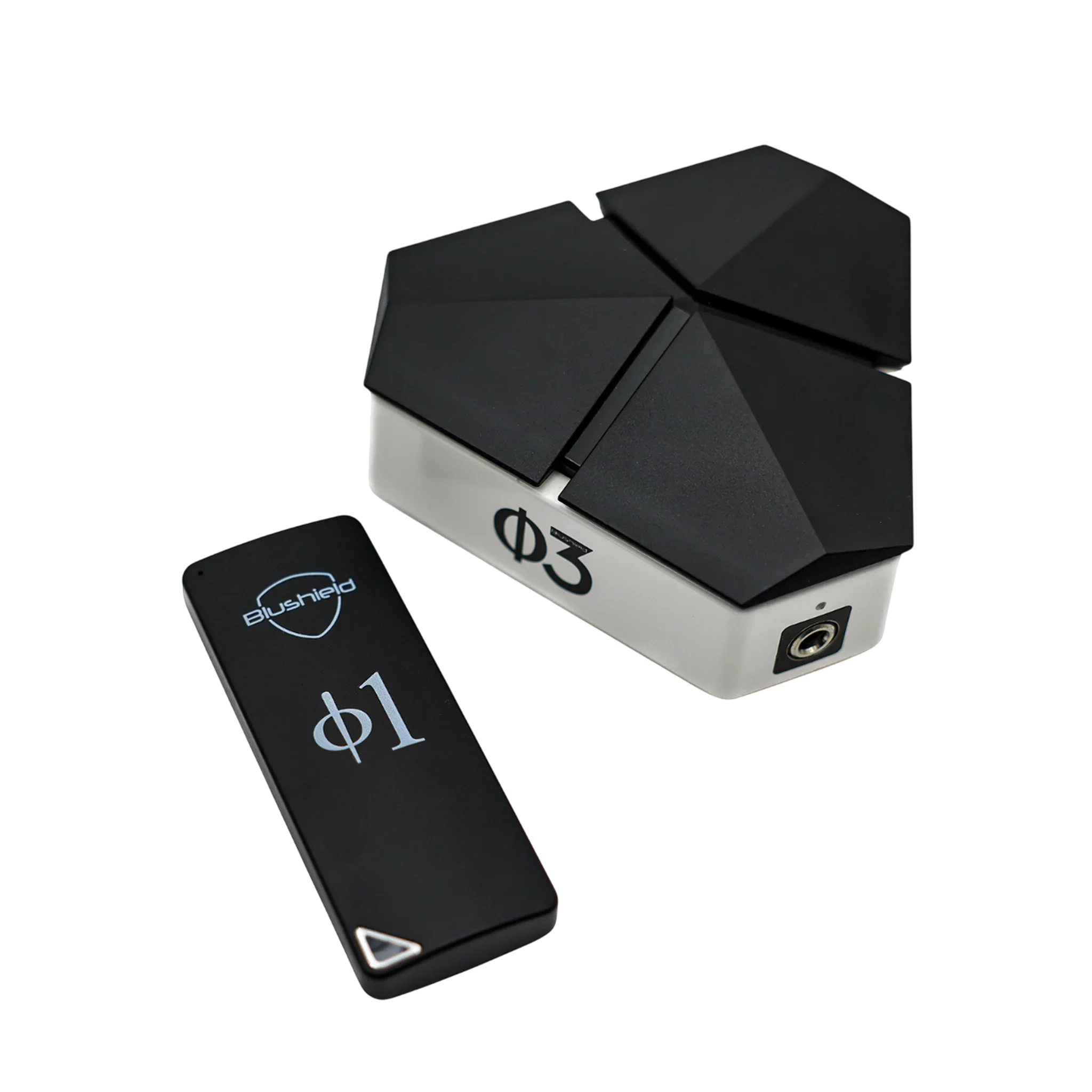
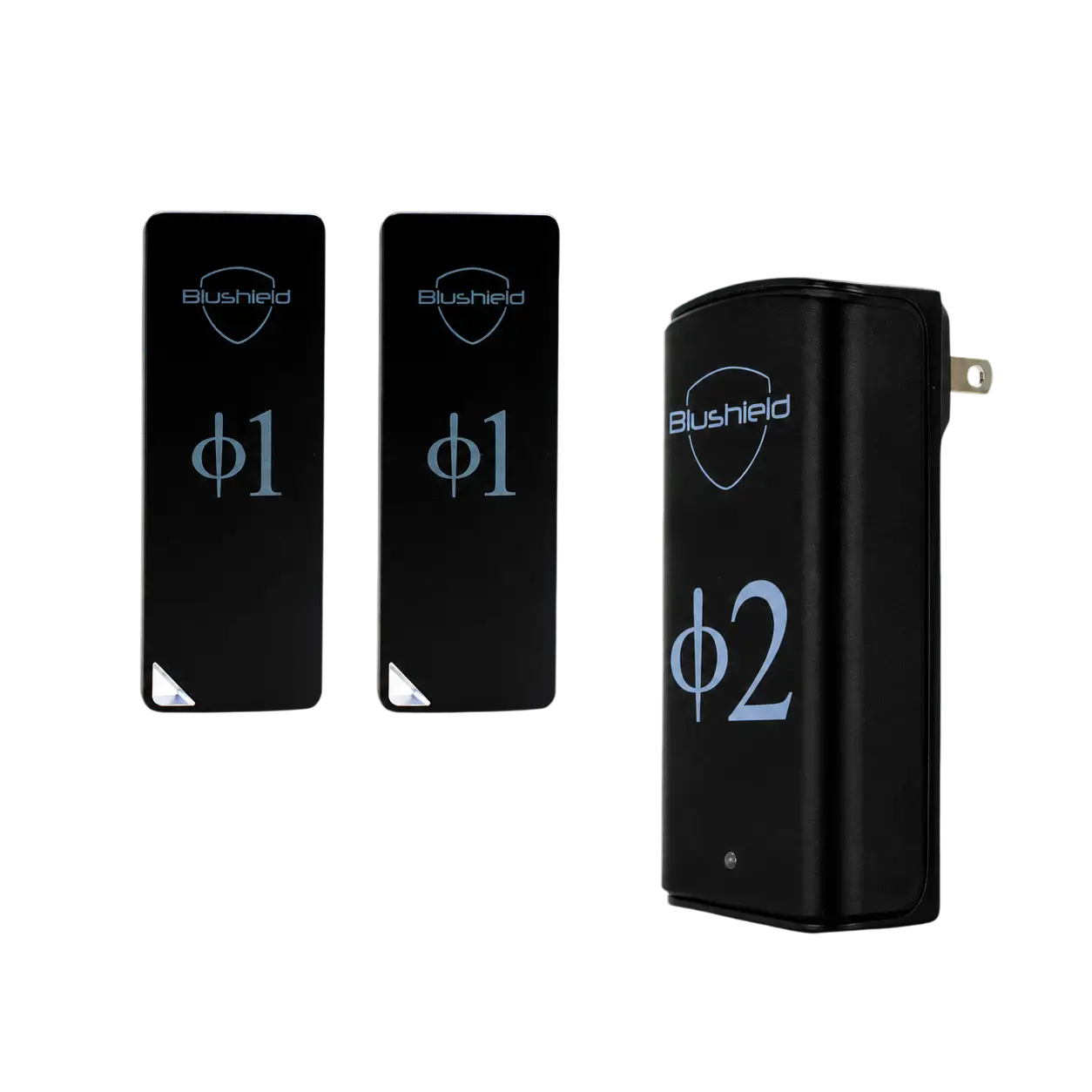
Here at Blushield, we have been studying and following the plans for 5G for many years now. All our current stationary home and portable devices emit a dual band signal for optimal protection from more intense EMFs like 5G. This updated algorithm (compared to our older mono band products from years ago), which contains an additional microprocessor that emits continuous Phi ratio based frequency patterns, is designed to create a regenerative effect in the body if you’re dealing with close range and/or millimeter wave 5G. Read more here about the Phi ratio and why these frequency patterns are significant when it comes to healing and regeneration.
Close range means you are in direct line of sight of a 5G antenna or small cell, or less than 350 feet. This means you’re more likely to be in the “line of fire” of the 5G data beams at any given time, which can be a source of significant stress on the body.
The design of our current product line is also for exposure to the higher frequencies of millimeter wave 5G, between 40 and 300 GHz. While these frequencies are not currently being widely used, we do know that’s in their future plans, and we do know that the satellites will be operating in this spectrum.
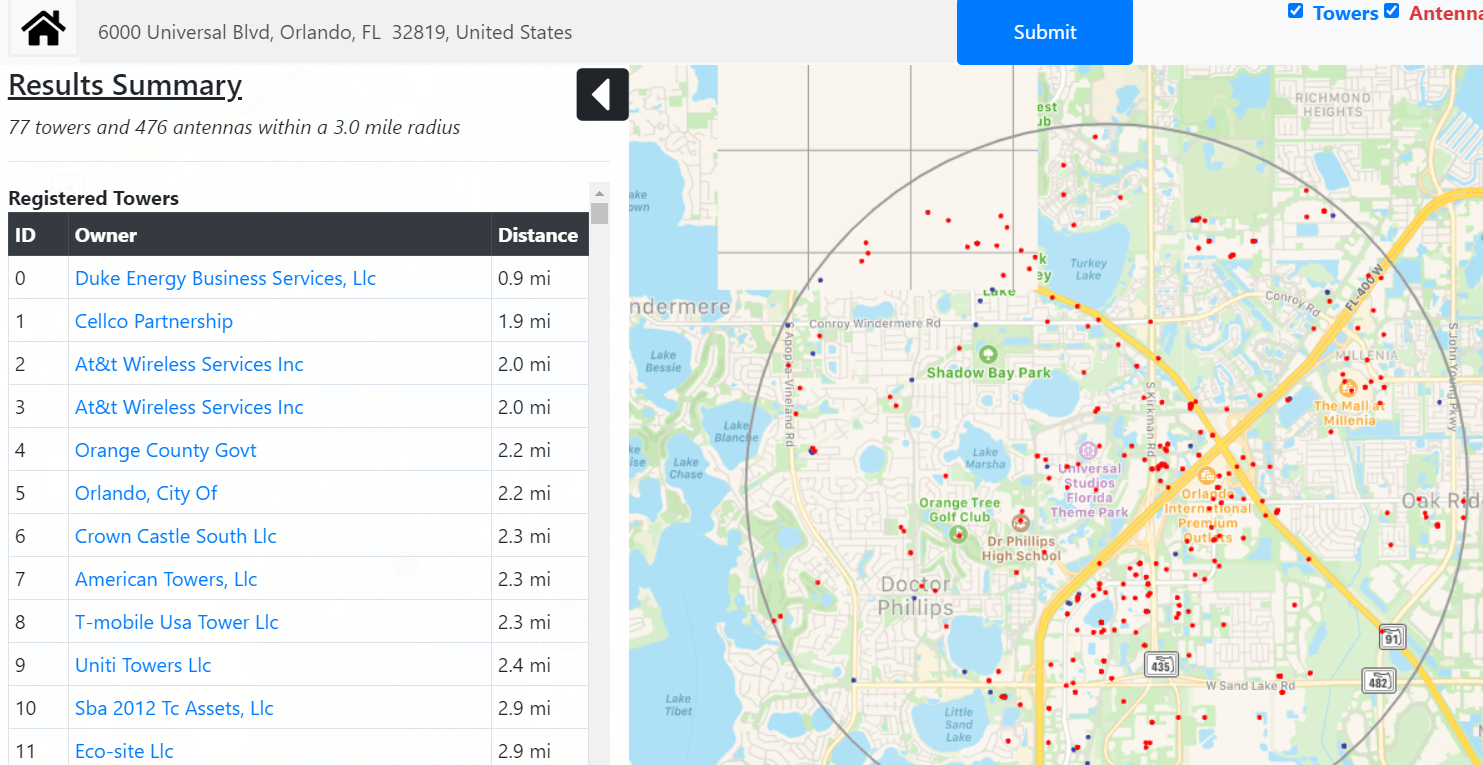
If you are not sure if you’re close to a 5G antenna, or what frequencies your local 5G antennas emit, stay tuned for our next article where we walk you through how to find this information with exacting accuracy.
EMF Spectrum Cheat Sheet

References:
“5G: Everything You Need to Know” – https://www.youtube.com/watch?v=LhECDSuXRDs&t=1105s “Scientific American Warns: 5G Is Unsafe” – https://www.lewrockwell.com/2019/11/joseph-mercola/scientific-american-warns-5g-is-unsafe/
“5G Wireless Technology: Millimeter Wave Health Effects” – https://www.saferemr.com/2017/08/5g-wireless-technology-millimeter-wave.html
“What You Should Know About 5G Satellites—How Musk’s Sci-Fi Dreams Are Becoming Our Living Nightmare” – https://childrenshealthdefense.org/news/what-you-should-know-about-5g-satellites-how-musks-sci-fi-dreams-are-becoming-our-living-nightmare/
Study: “Human sweat ducts as helical antennas in the sub-THz frequency range - an overview” – http://www.tstnetwork.org/June2018/tst-v11n2-43Human.pdf
Study: “Modelling millimetre wave propagation and absorption in a high resolution skin model: the effect of sweat glands” – https://iopscience.iop.org/article/10.1088/0031-9155/56/5/007/meta
“Elonx: Starlink Compendium” – https://www.elonx.net/starlink-compendium/ “U.S. DoD: Active Denial System FAQs” – https://jnlwp.defense.gov/About/Frequently-Asked-Questions/Active-Denial-System-FAQs/
“Millimeter Wave Radar – Advantages And Challenges” – https://legendkings.com/millimeter-wave-radar-advantages-and-challenges/
This post copyright ©2020–2026 Blushield USA. All rights reserved.
Unauthorized use and/or duplication of this material without express and written permission is strictly prohibited.
Explore more Articles
The Science of Stability: Why Powered EMF Protection Outperforms Passive Devices
In our increasingly hyper-connected world, the conversation around Electromagnetic Fields (EMF) has shifted from "if" we should protect ourselves to "how" we should do it. As we surround ourselves with 5G towers, Wi-Fi routers, and smart appliances, the market has been flooded with solutions ranging from stickers and crystals to sophisticated electronic resonators.
However, not all protection is created equal. To understand why some methods fail where others succeed, we have to look at the physics of signal dominance and the biological need for a coherent reference.
The Passive Problem: The Limitation of "No Power"
Passive EMF protection products such as shungite, specialized stickers, or unpowered pendants operate on the principle of attenuation or local field alteration. While these materials may have unique molecular structures that interact with frequencies, they face a fundamental "physics wall": they lack an internal energy source.
Without power, a device is purely reactive. It cannot create a signal; it can only respond to the signals already present in the room. This leads to three critical failures in a modern environment:
01. Lack of Signal Dominance
For the body to prioritize a "healing" or "balancing" frequency over the chaotic noise of a Wi-Fi router, that frequency must be dominant. Passive devices are essentially "whispering" in a room where the EMF environment is "shouting." Because they cannot project a field, their influence is limited to the near field usually just a few millimeters or inches from the object.
02. The Trap of Ambient Fluctuations
Passive devices are at the mercy of their environment. If the ambient EMF levels spike (like when you take a call or download a large file), the passive device has no way to scale its interaction. It cannot maintain a structured reference signal because it is constantly being "pushed around" by the very frequencies it is meant to harmonize.
03. No Timing or Pulse Control
Biological systems are highly sensitive to rhythm and timing. Active EMF protection often uses specific pulse-width modulation to mimic natural Earth frequencies (like the Schumann Resonance). Passive devices have no "heartbeat"; they lack the circuitry required for timing control, meaning they cannot provide the rhythmic consistency the body needs to stay grounded.
The Active Advantage: Establishing a Coherent Reference
Powered, dynamic signaling systems represent a different paradigm of protection. Instead of trying to block or absorb radiation which is nearly impossible in a modern home these devices focus on Active Resonance.
Building a "Safety Bubble"
A powered device uses a dedicated power source to emit a consistent, coherent, and structured electromagnetic field. Because this signal is generated internally, it is not dependent on the noise of the room. It creates a stable "reference point" that remains constant regardless of how many devices are active in the house.
Conclusion: Why Power Matters
In the quest for wellness in a high-tech world, we must choose tools that match the scale of the challenge. Passive materials certainly have their place in history and personal practice, but they lack the "active voice" required to compete with the high-output infrastructure of modern telecommunications.
If the goal is to create a true sanctuary a space where biology can rest independent of the changing electromagnetic tide a powered, dynamic system is not just an upgrade; it is a necessity. By establishing a dominant, coherent reference signal, we provide our bodies with the stability they need to thrive in the digital noise.
Did you know that your smart phone settings include a section that advises usage habits to reduce RF (radiofrequency) exposure?
This advice is included even though all smart phones proclaim that they are in compliance with the government’s SAR (Specific Absorption Rate) safety limits.
If the radiation emitted by cell phones was truly safe, why would they bother to tell you ways to reduce radiation exposure? Could it be because the SAR limits are outdated, and only address thermal (heating) effects of non-ionizing radiation exposure, and ignore the mounting evidence of harm from non-thermal mechanisms?
Let’s dive into this revealing topic that most people are unaware of, even though the majority of us are smart phone users.
You can check your own smart phone now. If you have an iPhone, just go into the Settings, then click General, and there should be a section called Legal and Regulatory. If you click that, and scroll all the way down, there should be a section titled RF Exposure. This may look slightly different on Android phones (like Samsung and Google Pixel), but you will find something similar if you investigate.
This section should display the results of the SAR test for your phone model, which of course will be within the “safe limits” for radiofrequency radiation exposure. If you have an iPhone, you may see something like this:
"To reduce exposure to RF energy, use a hands-free option, such as the built-in speakerphone, headphones or other similar accessories. Cases with metal parts may change the RF performance of the device, including its compliance with RF exposure guidelines, in a manner that has not been tested or certified."
Why advise reducing exposure, if the exposure level is already safe?
A Google Pixel phone we looked at, which tested at well within the SAR safety limits, even included this statement: “Keep the device away from your body to meet the distance requirement.”
What distance requirement? The SAR tests state that when the phone is placed directly against the head, or within 5mm of the torso of the body (to simulate the phone being in a pocket with a thin layer of clothing in between the phone and your skin), that you are “safe”, according to standard tests.
The Samsung S21 smart phone fine print informs that their SAR distance for safety is 15 millimeters, which is equivalent to more than half an inch. Most people place their cell phones directly against their head when making calls, as they have never been informed to do otherwise. If a Samsung S21 phone user is making calls in this way habitually, the company’s own recommendation implies that the user may be exposed to unsafe levels of RF radiation on a regular basis. Yet, this is not widespread knowledge, and is only in the fine print that most people don’t know exists!
Samsung also states, “Specific Absorption Rate (SAR) certification establishes a minimum recommended distance from a person’s body for safe operation of RF-emitting devices. Body-worn operations are restricted to belt-clips, holsters or similar accessories that have no metallic component in the assembly and must provide at least 1.5 cm (3/4 in.) separation between the device and the user's body.”
Did you ever hear any of this from a cell phone TV commercial or online advertisement? We certainly haven’t.
Pharmaceutical drugs are legally required to list their “fine print” of potential side effects, even on TV commercials. Why aren’t cell phone companies required to at least give you a brief warning about RF radiation exposure before you purchase their products, and suggest ways to reduce exposure?
It’s also important to note that having Wifi and Bluetooth enabled on your smart phone will significantly increase the RF radiation output of the device. Many people keep both of these turned on continuously or at least periodically, and do not consider the additional radiation exposure they may be getting, which may often be higher than the SAR safety limits.
The Specific Absorption Rate (SAR) limits are too high, and not healthy
Cell phone companies and the FCC seem to enjoy splitting hairs about the details of the SAR limits, and are quick to point out that the SAR test scores that phones list are at their maximum radiation output, implying that most usage is going to fall at far lower levels than the output listed on the test results.
If we’re going to argue at this level, it’s good to know that many phones may not actually be compliant at all, according to independent tests performed in 2019. If the cell phone company itself performs the tests, and the results can’t be replicated independently, then can we trust them in the first place?
However, let’s move past this type of nitpicking for now, and talk about why the SAR limits are inherently flawed and dangerous in the first place.
As stated earlier, the Specific Absorption Rate is only testing the thermal effects of cell phone radiation, meaning how much it heats localized tissue. That is the only mechanism of harm that the telecoms and FCC are willing to admit to. For a minute, let’s pretend that this is the only mechanism of harm. Even if that were true, there are significant flaws with the SAR safety limits.
The SAR safety limit was originally set in 1996 – 30 years ago. They modeled the body proportions of Army personnel, who are generally large, fully grown men, often around 6 feet tall and 200 pounds. This model does not come close to representing smaller and more developmentally vulnerable populations like children, teenagers and pregnant women. Grown men are generally the most resilient category of humans to toxic exposures of all types, whereas babies, children and developing embryos and fetuses are the most fragile. Babies and children have smaller heads, thinner skulls and rapidly developing brains that are highly vulnerable to harmful environmental influences, including wireless radiation.
The SAR rate that was set in 1996 has not been updated at all over the past 30 years, even as new cell phone technology and usage habits have evolved seemingly at light speed. The maximum distance that a phone could be tested at to achieve compliance was up to 25 millimeters, which is much further from the body than where today’s phone users keep their phones. The 25mm distance was set because in the ‘90s, people often carried their flip phones on belt clips, which were about an inch away from their body. Almost no one uses belt clips anymore, and most often, the phone is carried in a regular pocket, which is generally only 2mm away from body tissue, especially vulnerable reproductive organs like the ovaries and prostate. Guidelines have not been updated to reflect changing habits of users, nor have users been adequately warned of the potential harm of keeping their phone that close to the body.
There is also no consideration for long term exposure. Regulations are set based on immediate effects, with no thought for the many decades of consistent cell phone and other wireless radiation exposure that most modern people, especially young people, will experience in their lifetimes.
Regulations also do not acknowledge the fact that people generally no longer carry just one wireless device with them, but use multiple RF emitting devices regularly: cell phones, tablets, Bluetooth speakers and headphones, vehicle GPS devices that connect to Bluetooth, smart devices that connect to your smart phone, and much more. All of these sources multiply our RF exposure to levels that are currently unknown, and unacknowledged by official government and telecom industry sources.
We are stuck with the ancient 1996 SAR guidelines, which were created in a vastly different technological world than the one we live in today.
Thermal effects are not the only concern with wireless radiation
Lastly and most importantly, the SAR safety standards are based on the (proven erroneous) assumption that the thermal effect is the only way that cell phones can cause harm.
In the early 2000s, the National Toxicology Program, an arm of the U.S. Government’s National Institutes of Health, performed the largest, longest study on the health effects of cell phone radiation that had ever been done up to that point. Their stated intention for the study was to find out whether there were non-thermal health risks to cell phone use, since the only safety guidelines that existed at that point were the SAR safety limits, which were only based on thermal exposure risks.
This is an entire story in itself, but suffice to say that considerable harm related to cancer and DNA damage were found – results that were surprising to everyone involved in the study. After a brief period where a peer review panel of experts declared that the study was well performed and showed clear evidence of cancer and DNA damage, the government agencies involved subsequently pivoted in their opinion and decided that the study was NOT relevant to human exposure. If you haven’t yet read this whole story, you will want to, as it shows beyond any doubt how egregiously biased the United States government is towards siding with the telecom industry.
$30M National Toxicology Program Study Shows Cell Phone Radiation is Carcinogenic (full story)
The most important thing to realize is that science shows that non-ionizing radiofrequency radiation, at below-thermal levels, can be harmful to health. Whether or not a mechanism has been definitively recognized that accounts for this non-thermal harm, the harm itself has been documented in hundreds to thousands of studies, many of which you can read about here.
If you’re interested in purported mechanisms of non-thermal harm, the most probable theory at this time involves the voltage-gated ion channels of the body, and how external electrical signals trigger these highly sensitive voltage-mediated channels to flood various minerals (especially calcium) into the cells, triggering a cascade of unintended and unwanted effects. This mechanism has been extensively studied by Dr. Martin Pall, and has been discussed in at least a dozen of our other articles.
Don’t fall into the trap of blind trust – protect yourself
Ignorance of the truth won’t protect you. It is the fault of the government and telecom companies that it isn’t common knowledge that your daily wireless device usage may cause health issues over time. However, it is your responsibility to educate yourself, and to protect yourself as well as you can. Most people are not going to give up their cell phones entirely, but there are things you can do to significantly reduce your exposure:
- Never carry your cell phone in your pocket, or anywhere against your body, unless it’s turned off, or set to airplane mode.
- Never sleep with your cell phone near you, unless on airplane mode with Bluetooth and Wifi disabled, and even then be sure it’s at least a few feet away – definitely not under your pillow or near your head.
- Never hold your phone up to your head when you talk. Instead, use speaker phone or an AirTube headset (which has a tube of air instead of wires all the way to your ears) to make calls.
- Limit your children’s cell phone and tablet exposure, and be cautious during pregnancy and around babies.
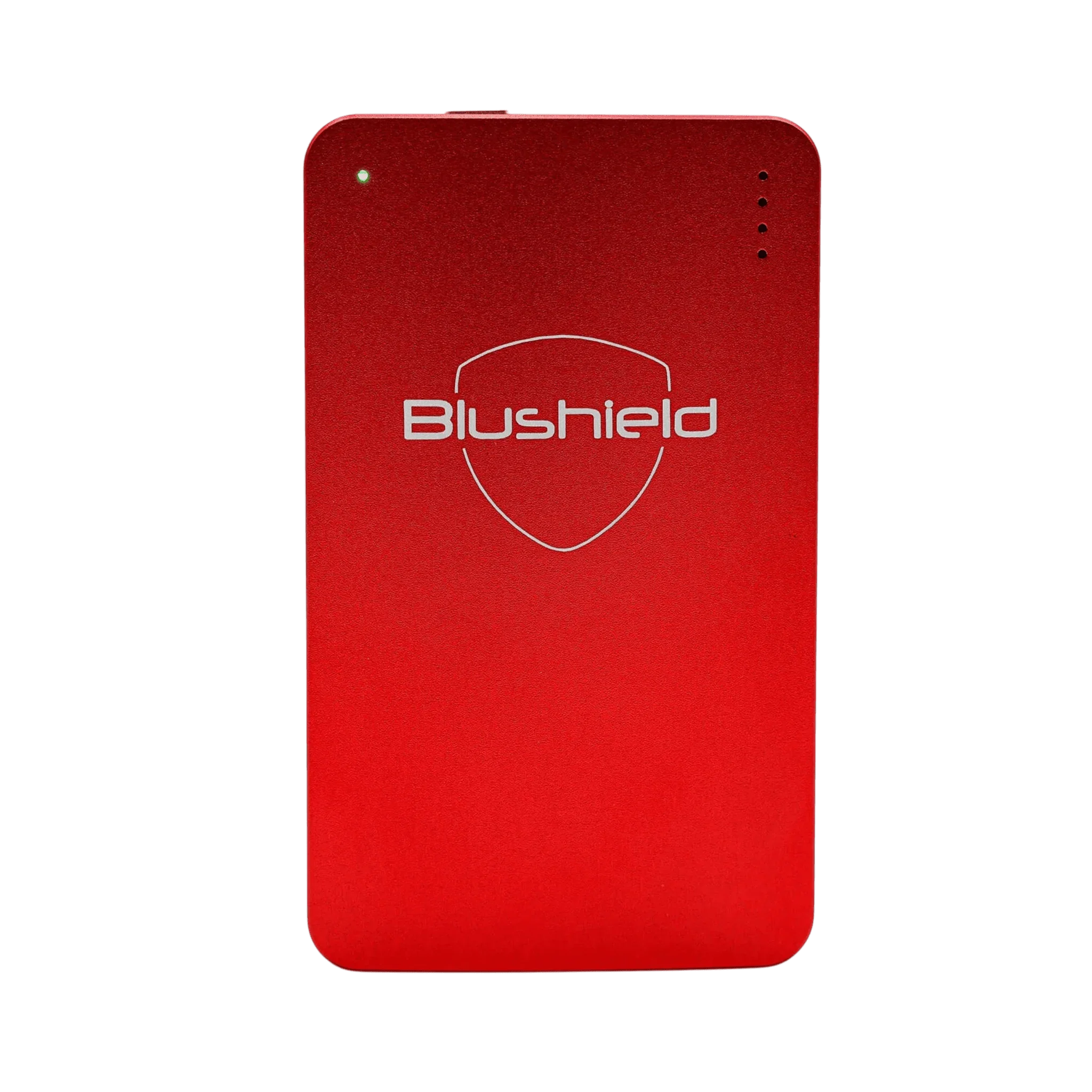
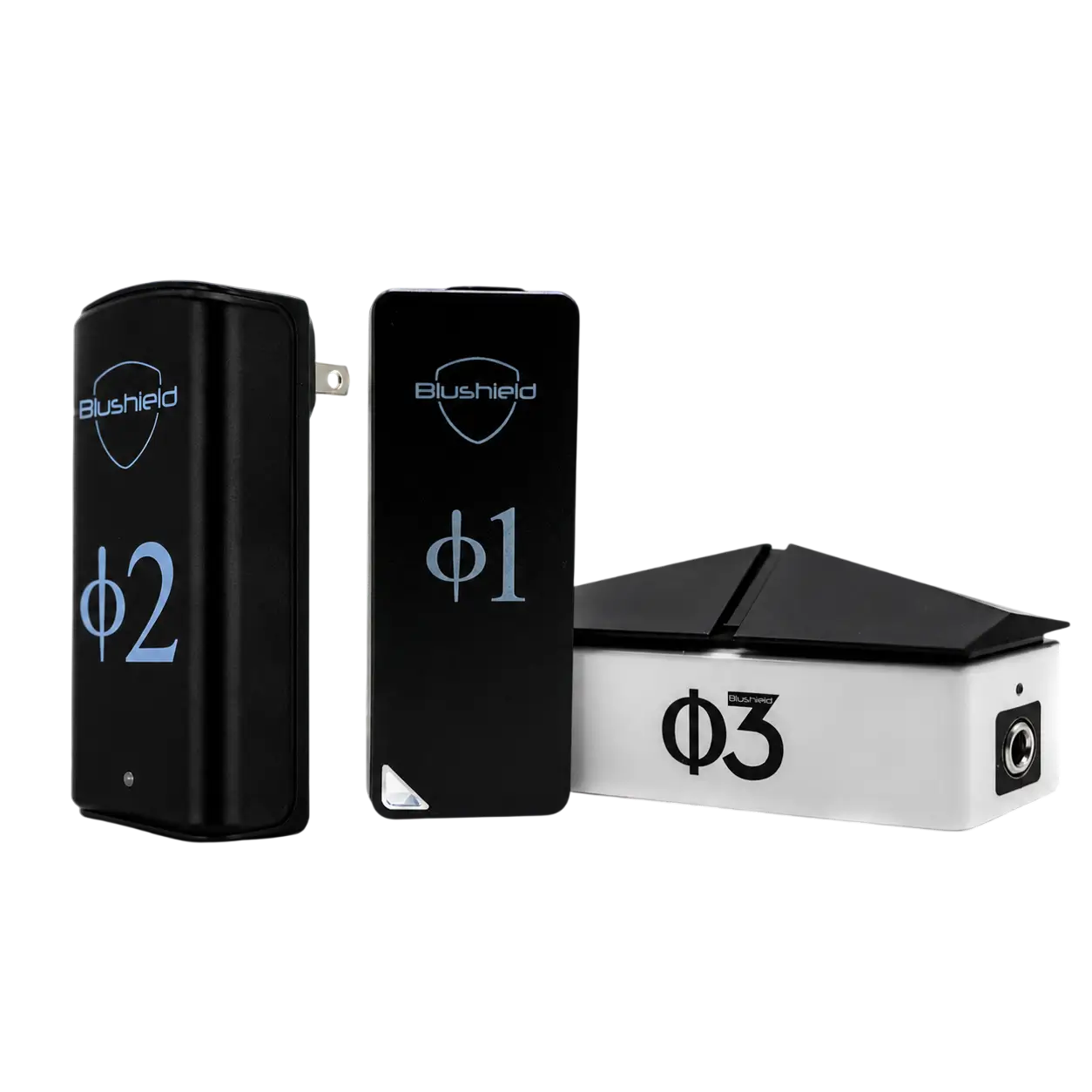
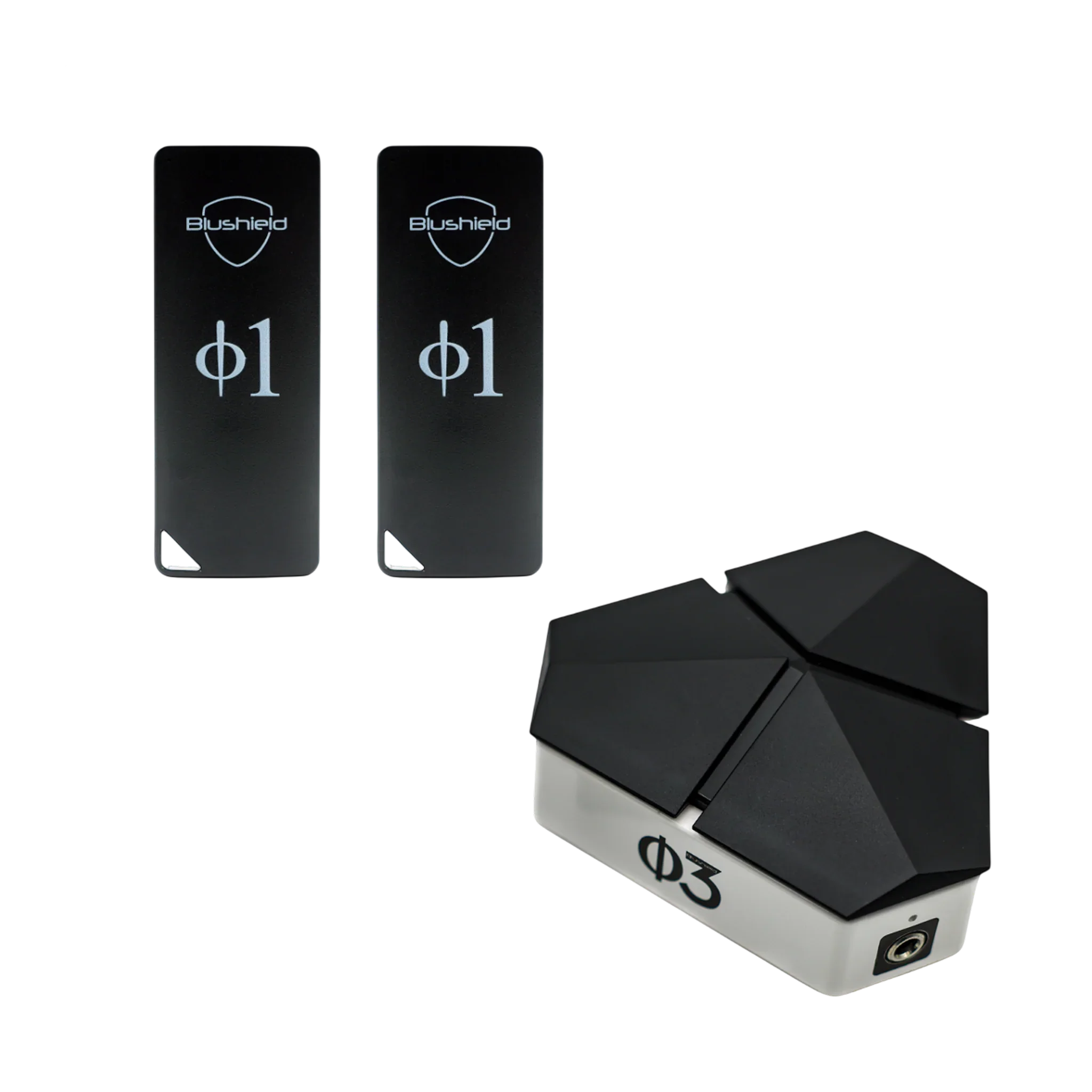
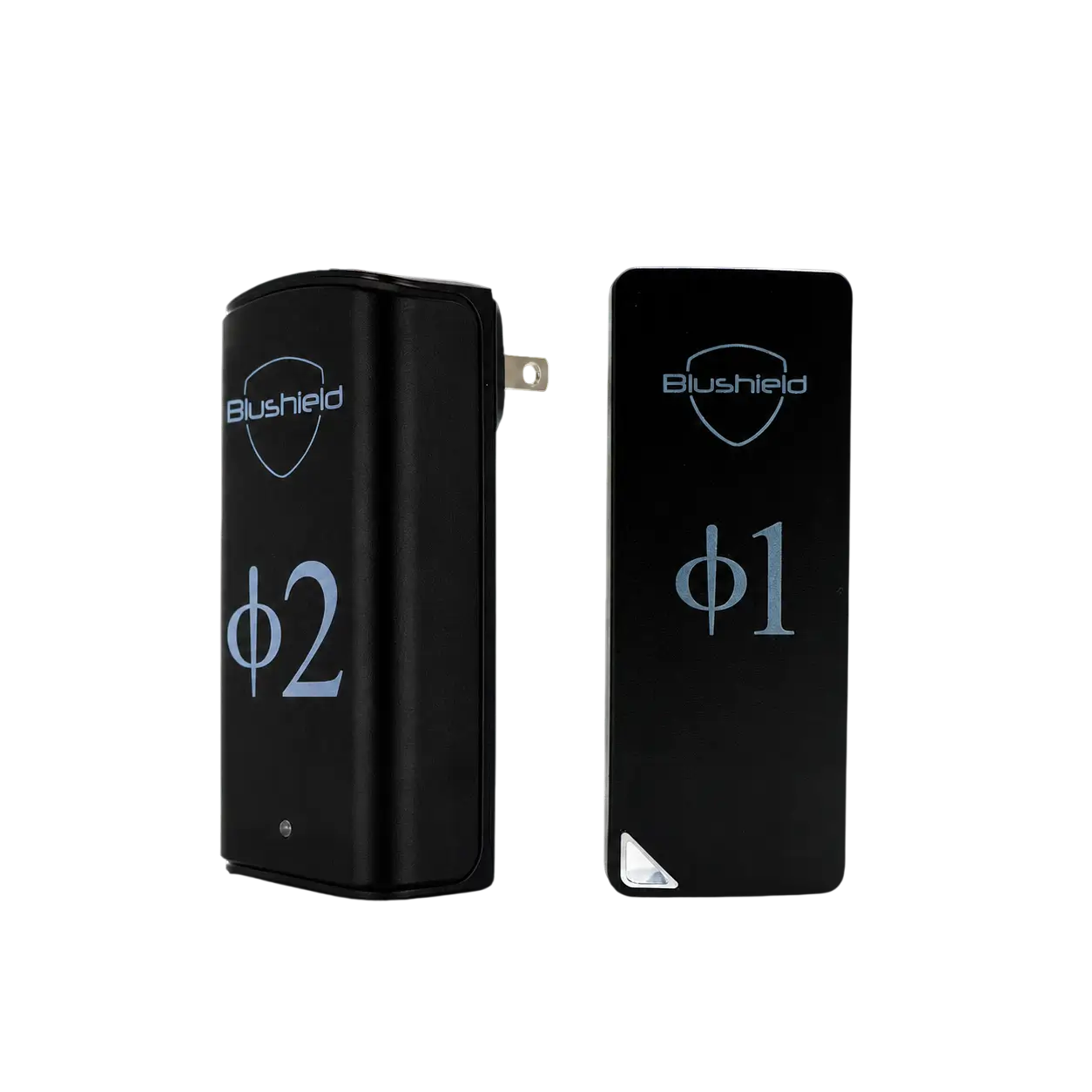
To protect your body from any remaining radiation exposure, since you can’t control a lot of the RF exposure sources around you, be sure to protect your home with a stationary Blushield device of the appropriate strength for your overall EMF exposure levels, and carry a Blushield portable device with you anytime you’re on the go.
Blushield devices were demonstrated in a 2023 clinical study to calm overactivation of the voltage-gated calcium channels back to normal levels – VGCC overactivation is widely thought to be the primary mechanism of harm from EMFs, as we touched on earlier. A variety of other statistically significant health improvements were recorded, as well, showing that even if the mechanism of harm from non-thermal EMFs is more complex and nuanced than we currently know, that our EMF protection technology is broadly beneficial in regulating physiology back to a healthier state.
References:
- Apple iPhone RF Exposure Information – https://regulatoryinfo.apple.com/rfexposure/iphone18,1/en
- Samsung Galaxy S21 Radiation Levels – https://www.rfsafe.com/phone/samsung-galaxy-s21/
- Blushield: “New Proof that Cell Phones Are Not Safe” – /blogs/new-proof-that-cell-phones-are-not-safe
- Blushield: “$30M National Toxicology Program Study Shows Cell Phone Radiation is Carcinogenic” – /blogs/30m-national-toxicology-program-study-shows-cell-phone-radiation-is-carcinogenic
- Bioinitiative Report (updated in 2022) – https://bioinitiative.org/table-of-contents/
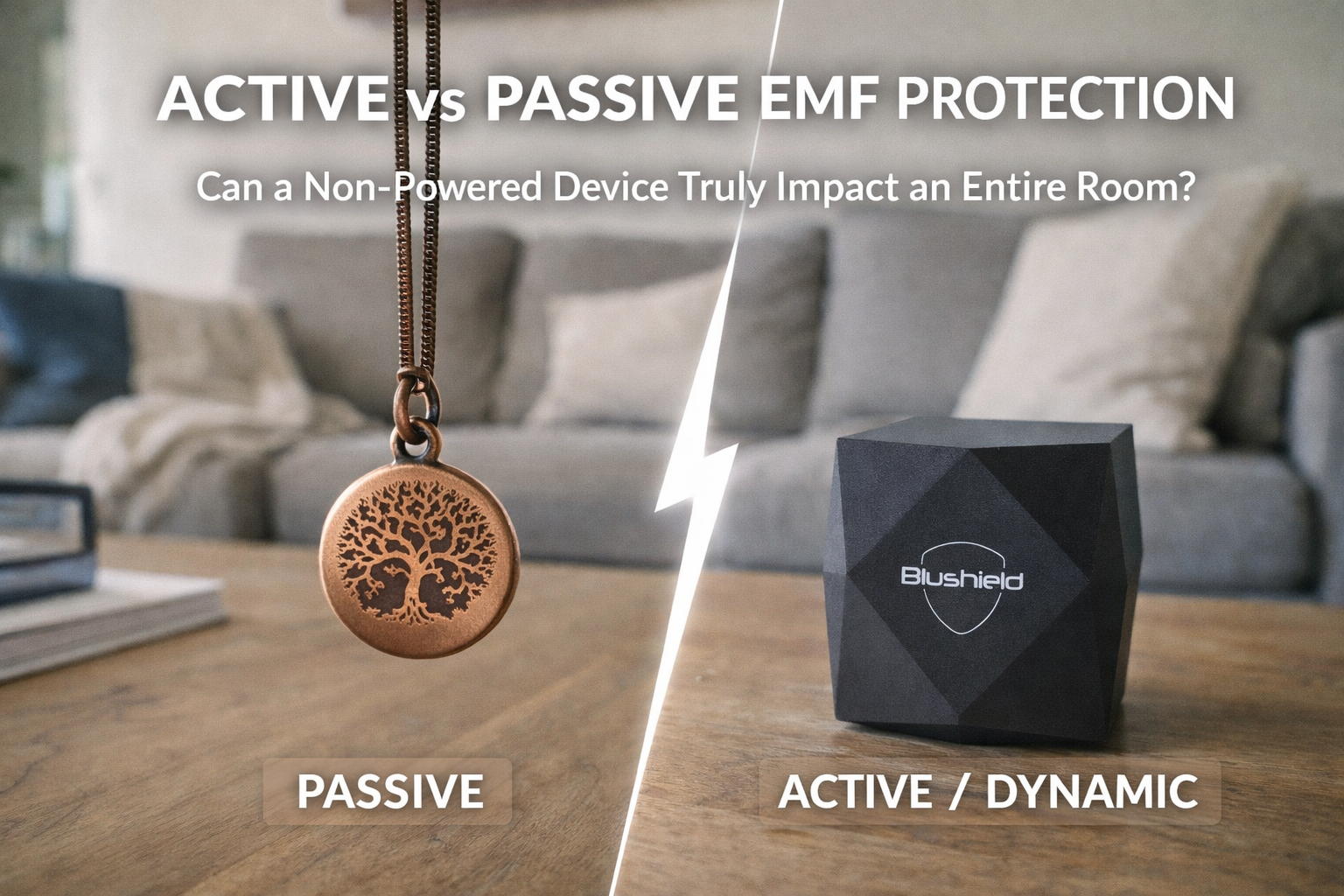
Why I ultimately chose active and dynamic field signalingMy name is Brandon Amalani and I have been running Blushield.com for nearly ten years.People regularly ask me about passive EMF protection devices and whether they are reliable or effective at protecting biology from man made electromagnetic exposure. That question comes up more now than ever, especially as passive devices have become extremely popular in recent years. I want to be very clear from the beginning that this article is not an attack on anyone or any company. It is an honest attempt to explain what I have learned about physics, biology, and signal behavior after a decade of working directly in this space.I originally got involved with Blushield after personally exploring many of the options available at the time. Most of what existed were passive EMF devices such as stickers, pendants, resonator chips, cards, and other non powered products. There were also shielding materials, grounding strategies, and constant single frequency generators. I tested all of these myself and spent a lot of time learning where each approach worked and where it clearly did not.That was about ten years ago. Since then I have worked closely with inventors and researchers in the electro therapy space and continued my education across multiple disciplines including cold plasma technology, photobiomodulation, PEMF system design, cellular biology, nutrition, and herbalism. Having this cross-disciplinary perspective has been critical in helping me understand how the human body functions as an electromagnetic system and how it interfaces with both natural and man made fields.Over the years I have noticed a shift in how passive EMF devices are discussed and marketed. Many educators and companies have moved away from older language like depolarizing EMF or harmonizing waves, and are beginning to use more nuanced terminology around coherence and biological signaling. That shift is a step in the right direction. However, based on what people share with me and what I continue to observe, there is still a great deal of confusion around the actual physics and biology involved.There are really three categories worth discussing. The first category is passive EMF devices. These devices have no power source. They claim to harvest ambient electromagnetic radiation and reorganize or modify those fields in a way that reduces biological stress. They often rely on geometry, fractal patterns, holograms, microchips embedded in pendants, or specific material combinations. The second category is active EMF signaling devices. These devices are powered systems that intentionally emit weak structured signals. They do not claim to overpower ambient EMF. Instead they claim to bias biological systems toward more coherent endogenous signaling and improved physiological resilience. The third category is what I would call active and dynamic signaling systems. Blushield falls into this category. It is active because it generates a field using an internal power source. It is dynamic because the signaling changes over time in a coherent way, more closely resembling the constantly shifting electromagnetic environment found in nature.To be clear, many of the concepts used to justify passive devices are not crazy or unscientific. Electromagnetic fields do have polarization. Geometry can influence how fields interact with materials. Fractal antennas exist in real engineering applications. Metals can couple to radiofrequency energy and act as grounds. Passive objects can scatter or redirect fields locally in the near field. All of that is true. This is why claims like an intentionally designed resonator can reorganize harmful EMFs and make them less biologically stressful sound persuasive on the surface.The issue is not the concepts themselves. The issue is scale, control, and guarantees.A passive resonator may produce higher local field intensity at specific frequencies by storing energy temporarily, much like a tuned antenna. However, this is concentration, not amplification in the engineering sense. Without an internal power source and maintained oscillation, a passive device cannot generate a dominant reference signal or enforce coherent structure across a room-scale environment.Without power, a device cannot control timing, phase, modulation, or coherence. It is entirely dependent on whatever ambient electromagnetic environment happens to be present at that moment, which is constantly changing. Geometry without power has no authority over signal behavior. Passive devices can respond to fields, but they cannot impose order on them.Over the years I have had many conversations with inventors working in active electromagnetic systems, including plasma based technologies. One important distinction that comes up repeatedly is that plasma can behave like a fractal antenna because it is an active medium with mobile charge carriers and energy input. That is fundamentally different from static geometry, etched holograms, or water/copper coil circuits which do not maintain oscillation, timing, or coherence on their own.Fractal antennas are real in engineering. However, they require specific parameters such as tuning to defined frequency ranges, feed points, impedance control, and known boundary conditions. A static hologram etched onto a pendant or card does not dynamically store electromagnetic information, adapt to changing environments, or enforce coherent signaling. It is a constraint, not a reference. Plasma systems can act like fractal antennas because they are active. They contain mobile charge carriers, dynamic oscillation, and energy input. That is a fundamentally different physical system than a static etched interference pattern. Calling both of these fractal antennas is a category error.One question that always stood out to me was how passive devices claim to cover large areas with no internal power source. Passive devices may slightly alter local coupling when worn on the body. That is plausible. What is not clear is how they could control room-scale fields or guarantee uniform effects across space. If a device truly created a dominant room-scale field, orientation, placement, and surrounding electromagnetic conditions would not matter. In reality, indoor EMF environments are dominated by near field sources such as laptops, phones, routers, and wiring. These signals reflect off walls and floors, creating standing waves and nulls. The result is a highly patchy and inconsistent field landscape. A small passive device only interacts with the local field where it is placed. It cannot average or reorganize an entire room. Its behavior will change depending on proximity to sources, wiring, and the body itself. That tells us the environment is in control, not the device.Passive devices have no internal timing reference, no phase authority, and no feedback mechanism. A passive microchip or circuit does not qualify as an internal reference because it does not actively maintain timing, state, or phase. Geometry and materials can constrain how a device responds to incoming signals, but they cannot enforce or stabilize a desired signal state. A reference requires actively maintained timing or coherence. Passive systems do not have that capability.Depolarization is another concept that has been widely misunderstood. Polarization refers to the orientation of the electric field. Coherence refers to phase stability and predictability over time. These are not the same thing. Modern radiofrequency environments are already spectrally complex, weakly polarized, and highly incoherent. Further depolarizing these fields simply adds randomness. It does not restore order. You cannot fix incoherence by adding more noise.In recent years many companies have used portable EEG devices to demonstrate before and after changes in brain activity. EEG can certainly reflect changes in mental state such as relaxation, attention, novelty, or expectation. It is extremely sensitive to posture, breathing, emotional framing, and context. What EEG cannot demonstrate is environmental EMF control, room-scale field effects, or mechanism of action. EEG does not measure cellular health, gene expression, calcium channel behavior, oxidative stress, or electromagnetic exposure levels. It tells you that a brain state changed, not why it changed. A device worn on the body could plausibly induce a local coupling effect. That does not mean the surrounding environment was altered. Small numerical changes can also appear dramatic depending on visualization choices and color scaling when creating before and after images.After evaluating many testing approaches, we chose to pursue the most rigorous path available to us. Rather than relying on internal or externally sourced white papers or theoretical models, we conducted an independent review board certified clinical trial in the United States. The results were published in a peer reviewed medical journal. We demonstrated significant changes in VGCC gene expression along with other physiological markers. This type of research is expensive and time consuming, but it aligns with the actual biological mechanisms being discussed.Biological systems are oscillatory, nonlinear, phase sensitive, timing dependent, and reference driven. This is why natural light cycles, geomagnetic fields, and environmental rhythms are so important to health. Biology does not simply respond to less stimulation. It responds to better organized information. The real question is not whether we can remove all EMF. It is whether we can provide a stable coherent reference that biology can lock onto.Active and dynamic signaling systems can do this. Passive systems cannot. Powered systems introduce a reference signal with internal timing and structure. That signal behaves consistently across environments. It improves signal to noise at the organism level. Passive systems have no phase authority, no internal timing, and no ability to resist environmental variability. They react to chaos, scatter chaos, and depend on chaos for their function. That is the opposite of what biology needs.Even mainstream EMF literature points to mechanisms such as VGCC activation, calcium influx, oxidative stress, and redox imbalance. An active coherent field can plausibly bias ion channel behavior, reduce stochastic noise, and support mitochondrial coupling. A passive scatterer cannot target these mechanisms or maintain biological reference states. Passive devices attempt to reorganize biology by harvesting incoherent ambient radiation. Active devices introduce order.We have been recommending Blushield for years as ones primary source of protection. Recently we introduced another technology that we found to pair perfectly with Blushield as the ultimate EMF protection stack.First, let’s look at the environment a bit closer.Modern EMF exposure isn’t just coming from wireless signals in the air. It also comes from the wiring inside our walls. Digital devices, switching power supplies, and LED drivers inject high-frequency transients and sharp voltage edges onto the 50/60 Hz electrical sine wave. That noise doesn’t just stay in the wires, it turns the wiring itself into a secondary source of electromagnetic variability.Blushield operates in the radiated domain by introducing a low-power, internally timed reference signal that remains stable even as the surrounding RF environment changes. It does not attempt to overpower external sources. Instead, it provides a consistent signal structure that biology can bias toward.SineTamer works at the electrical layer by reducing high-frequency transients and rapid voltage fluctuations on the building’s wiring. By lowering broadband electrical noise, it reduces the background variability that wiring can radiate into living spaces.Together, these two approaches address different layers of the same problem: one introduces structured reference signaling, the other reduces injected electrical noise. The result is not “shielding,” but a shift in signal organization and environmental stability.I genuinely want passive devices to be highly effective. I also want Nikola Tesla’s dream of a small portable device that produces clean energy from ambient energy to be real. But wanting something to be true does not make it physically possible yet. After ten years of experimentation, education, and direct testing, active and dynamic field signaling remains the most plausible approach I have seen for supporting biological resilience in modern electromagnetic environments.

Product updates
Practical tips for low-EMF living
New releases
Exclusive promotions
Frequently asked questions
Invisible forces are part of modern life, but their impact doesn’t have to define you. Blushield works quietly in the background, supporting a more stable, balanced internal state so you can focus, rest, and perform at your best.
It doesn't block or shield EMF. Instead, Blushield is designed to support the body's natural response to everyday electromagnetic exposure. By focusing on biological support rather than altering environmental signals, it takes a different approach to EMF protection.
Plug-in units (Premium, Ultimate, Phi) cover your home. Portables cover you when you leave it. Most people start with one of each: a plug-in for the house and a portable for travel, work, and the car. If you're not sure, use our Find Your Device tool or message us.
30-day limited money-back guarantee on every device (restocking fee applies - see our full return policy). Stationary and portable units carry a 1-year warranty. If anything extends past that, contact us.
Yes. EMF meters measure intensity, not biological impact. Even low-level exposure from Wi-Fi, Bluetooth, smart meters, cell towers, and nearby homes accumulates 24/7. Blushield works on the body's response, so it helps regardless of what a meter reads.
Some people feel calmer or sleep better within the first night. For others it's a few weeks of gradual change - better focus, deeper sleep, and less fatigue. A small number notice a short adjustment period as the body recalibrates. Everyone responds differently, so give it time to become part of your daily environment and let the benefits build naturally.
Yes. Blushield is built on decades of research into how the body responds to coherent vs. incoherent electromagnetic signals. We have independent studies, HRV data, and live-blood analyses on our Science page. We don't make medical claims. We point you to the data and let you decide.