


Another Deadly Brain Cancer Lawsuit Filed Against Cell Phone Companies
June 23, 2021


You may have already heard about the link between cell phones and brain tumors, as several of our past articles have covered this topic from various angles. Cell phone radiation has been shown in hundreds of studies to increase a person’s likelihood of developing several types of cancer, including glioblastomas, which are an aggressive and deadly type of brain tumor. The body of science that proves this is increasing each year, and although the government regulatory entities and cell phone companies seem more intent than ever on covering this up, this truth has been trickling out into public awareness anyway.
Did you know there are currently over 70 active lawsuits against the cell phone companies from individuals who got brain cancer from cell phone radiation? Some of these cases have been sitting in the state and federal court system with very little progress for over 20 years! The defendants in these cases, which include most of the cell phone developers and service providers, as well as regulatory agencies like the FCC (Federal Communications Commission) and CTIA (Cellular Telecommunications Industry Association), have been taking advantage of some unethical loopholes in the law to keep these cases from progressing to evidentiary hearings and jury trials for as long as they possibly can, both of which would incriminate them beyond any doubt.
They are just delaying the inevitable. The truth is getting out there, and it won’t stay hidden from the mainstream awareness forever!
Fatal brain cancer case in Louisiana could change the game
A new case was just filed in April of 2021, for the wrongful death of a 49-year-old Louisiana pastor, who used cell phones for 25 years. He developed an aggressive glioblastoma, which refers to stage 4 cancer of the glial cells in the brain, at the beginning of 2019. After many surgeries and therapies, loss of his ability to live life with any semblance of normalcy to the great devastation of this man, his wife and two sons, he passed away at the end of 2020.
His name was Frank Aaron Walker, and this case is known in short as Walker vs. Motorola, although the defendants include a total of 9 separate but interconnected companies and regulatory agencies who were all complicit in the fraud and deceit alleged in this case.
His wife and sons, who are the plaintiffs in this case, allege that the way Frank Allen Walker used cell phones for 25 years was promoted as safe, normal and completely harmless, and if he had known of the dangers, he would have used cell phones more safely or not at all. In the case, the evidence is laid out that proves that these companies have known for decades about the harms of cell phone radiation, and have continually chosen to hide this knowledge from cell phone users and the general public.
The family is represented by Hunter Lundy of Lundy, Lundy, Soileau & South, LLP, one of the leading personal injury law firms in the country, and by Robert F. Kennedy Jr., chairman and chief legal counsel for Children’s Health Defense (CHD). Both Lundy and Kennedy are also involved in other active cases on the health effects of wireless radiation.
For this case, they chose to file it in a Federal court in Louisiana. Most of the other 70+ active cases that are currently slow going were filed in a State court in D.C., and since the Federal courts are subject to a different process than the State courts, this case could proceed much more quickly than the other cases, potentially even helping to move the other ones forward! To learn more about how this works and the complex legalities of the court processes in general and these cases in particular, listen to this interview with Hunter Lundy by Dafna Tachover of Children’s Health Defense.
The main goal that will likely help all of these cases to break through is to get a solid evidentiary hearing, where expert scientists can explain to the court the large body of science, from older studies to very new ones, proving that cell phone radiation is harmful and can cause brain tumors. There are an impressive number of respectable scientists from all over the world that are ready to do this, as soon as an evidentiary hearing can be organized for these cases. If a jury is allowed to hear this out, there will be no way that these companies can continue to deceive the public, and the truth will come out.
History shows that with toxic products the public has been deceived into believing are safe for decades by corporations and the government, such as cigarettes and glyphosate (Monsanto’s RoundUp), the tide finally turned once one or more jury trials were allowed to happen. Regular people with common sense, when they hear the full deluge of evidence of harm, are no longer deceived by smooth marketing slogans and the attempted debunking of solid science and discrediting of respectable scientists.
The dirty history of telecom & government dismissal of wireless harms
Most people don’t know how long this has been going on, and how deep the corruption goes. This lawsuit lays it all out, and it is shocking. You can even read this 69-page Walker vs. Motorola case yourself, if you want to get the full story!
The lawsuit details numerous peer-reviewed scientific studies, including U.S. government funded studies, that show that cell phone radiation causes cancer (as well as DNA damage, which is a precursor to cancer). The plaintiffs allege that the telecom industry has misrepresented the scientific evidence, suppressed credible evidence and and has conspired to conceal or alter results of studies.
In several instances over the past three decades, credible scientists were hired by the telecom industry to do studies to “prove” that cell phone use was safe. Every single time, their findings showed otherwise, and in every case, when industry didn’t like the results the scientists gave them, they went to work to make sure the study was never published, and if the scientist refused to be silent and said they would report the results anyway, industry then spent much effort to destroy that scientist’s reputation.
One example was the work of Henry Lai, PhD, in 1994. He was hired by the CTIA, Motorola and other telecommunications companies to conduct studies demonstrating the safety of cell phones. However, the experiments he did ended up showing DNA damage from radiation similar to what cell phones use. They did everything they could to prevent those studies from being published, and when that didn’t work, they tried hard to discredit the scientific reputation of Dr. Lai. To this day, Henry Lai’s industry funded studies are among the best and most incriminating, especially considering the opposite results were expected by those who originally funded the studies!
After Lai’s findings disappointed the industry, they hired other researchers to attempt to disprove these unfavorable results. Again, subsequent research confirmed Lai’s findings, which they also refused to publish.
The science proving wireless harms is still rolling out at a steady pace, and some of the most significant results yet have come out only in recent years, while these cases have been sitting in the courts waiting for action. In 2011, the IARC (International Agency for Research on Cancer) examined the entire body of research on wireless radiation, then decided to classify it as a Class 2B Possible Carcinogen. At the time, they stated that the only reason it was considered “Possible” instead of a “Probable Carcinogen” (Class 2A) was a lack of animal studies. In their estimation, every angle of research, including extensive human epidemiological studies, had indicated wireless radiation as cancer causing, and all they needed was more animal studies to make for a more certain judgment.
Since that time, the two most thorough and comprehensive animal studies have been published. The most notorious is the NTP (National Toxicology Program) study, which was a long term (10 year) and very expensive ($30 million in taxpayer money) government commissioned study. Just like the studies mentioned in this article previously, their stated motive for this study was to “finally put to rest” the idea that cell phones cause cancer, and to prove their safety. The study results showed the opposite, pointing specifically to widespread DNA damage in rats and mice, as well as gliomas of the brain (what Frank Walker had) and schwannomas of the heart.
After seemingly being surprised and even alarmed by the initial findings, spokespersons for these government organizations did a one-eighty and decided not to announce the findings publicly, besides a short explanation on the FDA website downplaying the importance of the study, stating that the animal study won’t apply to humans. This bold and contradictory statement was made after the IARC had announced that they need animal studies specifically, to further prove wireless harms. Also, this study’s design and implementation was flawless, and done with utmost quality and care to ensure that this will apply to humans. You can read more about the NTP study on wireless radiation in our previous article on the topic.
A couple years ago, results from another large, long-term study at the Ramazzini Institute in Italy were published that replicate the results of the NTP study. This study on over 2,400 rodents also found central and peripheral nervous system cancers (specifically gliomas and schwannomas) from exposure to radiofrequency radiation. Scientists aware of the results of both studies are strongly recommending that the IARC (International Agency for Research on Cancer) reclassify radiofrequency radiation from “possible” to a “probable” human carcinogen.
We have all the science we need to show with absolute certainty that wireless radiation is harmful to living organisms. Now we just need the platform to get the information out there and hold these companies liable, which is what a proper evidentiary hearing and jury trial will be for these court cases!
The telecoms have patents for cell phone safety technology, which they never implemented
Perhaps the biggest insult in all of this is the little known fact that these cell phone companies have already created technology that would make cell phones safer, but this technology was never implemented. They know how to make cell phones safer. This means they also know that cell phone radiation is inherently harmful. If it wasn’t, why would they investigate safety devices? There are at least 14 actual U.S. patents for these devices, applied for and received by the manufacturers. However, they failed to ever implement these upgrades into the design of their phones! It’s easy to guess that the reason for this is because if they add these things in, that would be a public admission of the inherent harm of their products, which they have insisted for decades doesn’t exist. Making cell phones safer now would be admitting that they have been lying for 20-30 years, which would automatically incriminate them for thousands of potential personal injury and wrongful death cases. It would be a mess, and may even put them out of business. So instead, they continue to promote that the way cell phones are commonly used is “completely safe”. Nothing to see here.
Almost all of these patents were applied for in the ‘90s. That is a very long time to be aware of the harms of a product, as well as the solution, and to still do nothing about it! Here are a few examples from the lawsuit text:
- On October 24, 1991, Hitachi received a patent to reduce the cell phone user’s exposure to RF radiation “to prevent the health of the user from being injured.”
- On August 11, 1992, Mitsubishi was issued a patent for a cordless telephone designed to “reduce the effect of an electromagnetic wave onto a head of a human body” by coating the handset with shielding material on the side closest to the user’s head.
- On December 26, 1995, Motorola filed a patent application for an antenna with an electromagnetic shield which results in “little to no radiation directed toward the body of the user.”
- On April 9, 1996, a patent issued to Kevin and Norval Luxon for a shield apparatus which utilizes electromagnetic radiation absorbing materials “disposed about the antenna and portable wireless transmitting apparatus and between the user and the antenna and transmitting apparatus to shield or protect the user from the potentially harmful radiation emissions from the wireless communication apparatus.”
- On July 28, 1998, Nokia received a patent for a shielding layer between the antenna and the user to reduce the electromagnetic irradiation of the user. The application says the cell phone antenna is a “few centimeters from the brain, the hearing organs, and the organ of equilibrium. Although a direct heating effect could be left without further consideration, it has been suggested that modulated RF radiation induces changes in the electrical status, i.e., in the ion balance of nerve cells. A continuous localized exposure to radio frequency irradiation has been suggested to weaken myelin sheath of cells and to eventually lead to an impairment of hearing capability, vertigo, etc. It has been suggested that radio frequency irradiation may stimulate extra growth among supportive cells in the nerve system, which in the worst case it has been suggested could [lead] to a development of malignant tumor, e.g., glioma form supportive cells.”
There are several more examples similar to this. They have known all along about the harms of their products.
What happens next with the cell phone brain tumor court cases?
As we explained earlier, many of the currently active court cases are happening in the Superior Court for the District of Columbia, which is a State court. The first one was filed in 2001, and since then, 12 of the later cases have been consolidated with the first one for the purposes of an upcoming evidentiary hearing. The first case is referred to, in short, as Murray vs. Motorola, so all 13 consolidated cases are now under that name. The evidentiary hearing for this group of cases is scheduled for July of 2021. The hearing will determine which of the plaintiff’s experts are considered qualified to testify in trial, by deciding if their opinions are based on scientifically reliable evidence.
Until this hearing, none of the other 70 cases in State court will be allowed to proceed. However, the Walker vs. Motorola case that was filed in Federal court in Louisiana in April will proceed separately from these other cases.
Another issue that is holding back the Murray cases is that after a particularly powerful document was submitted this March by the plaintiffs, a 176-page expert opinion by Dr. Christopher Portier, the defendants responded by requesting that no evidence that was not in existence in 2013 should be allowed. Their stated reasoning is convoluted: 2013 was when the first evidentiary hearing in these cases happened, where they approved 5 out of 8 of the plaintiff’s experts, but then the court changed the standard they abide by for expert opinions (from Frye to Daubert), which ended up delaying the progress of these cases by an additional 7 years for various reasons. It’s obvious to us that the real reason they made this request is because they’re afraid of letting Dr. Portier speak, and because some of the biggest scientific blows to the cell phone industry’s safety claims have come since 2013!
Christopher Portier was the director of the National Center for Environmental Health at the CDC, associate director of the National Institute for Health and Environmental Science and associate director of the National Toxicology Program (NTP). He is also a scientific advisor for the World Health Organization (WHO), and was a member of the IARC working group that classified wireless radiation as a Group 2B Possible Carcinogen in 2011.
Those are some pretty major credentials.
Dr. Portier states in the conclusion of his report, “In my opinion, RF exposure probably causes gliomas and neuromas and, given the human and experimental evidence, I assert that, to a reasonable degree of scientific certainty, the probability that RF exposure causes gliomas and neuromas is high.”
Now the court in the Murray cases has to decide whether to allow Portier’s testimony, as well as other post-2013 evidence. With the Walker case in Louisiana, this evidence is already part of the initial lawsuit, so this case is not bound by this same limitation. Therefore, it may progress much more quickly, possibly even paving the way for all the other cases to move forward, as well.
As of June 2021 in the Walker vs. Motorola case, the initial papers have been served to the defendants and they are awaiting a response. We will keep you updated on the progress of this case (and all of the others)!
The truth coming out is inevitable. It is just a matter of time!
References:
Children’s Health Defense: “Family Sues Telecom Giants, Alleging They Hid Risks of Cell Phone Radiation That Caused Man’s Brain Cancer” – https://childrenshealthdefense.org/defender/lawsuit-telecom-giants-cell-phone-radiation-brain-cancer/
“April Marie Walker, et al., v. Motorola Mobility, LLC, et al.” – https://childrenshealthdefense.org/wp-content/uploads/april_walker_complaint.pdf

This post copyright ©2020–2026 Blushield USA. All rights reserved.
Unauthorized use and/or duplication of this material without express and written permission is strictly prohibited.
Explore more Articles
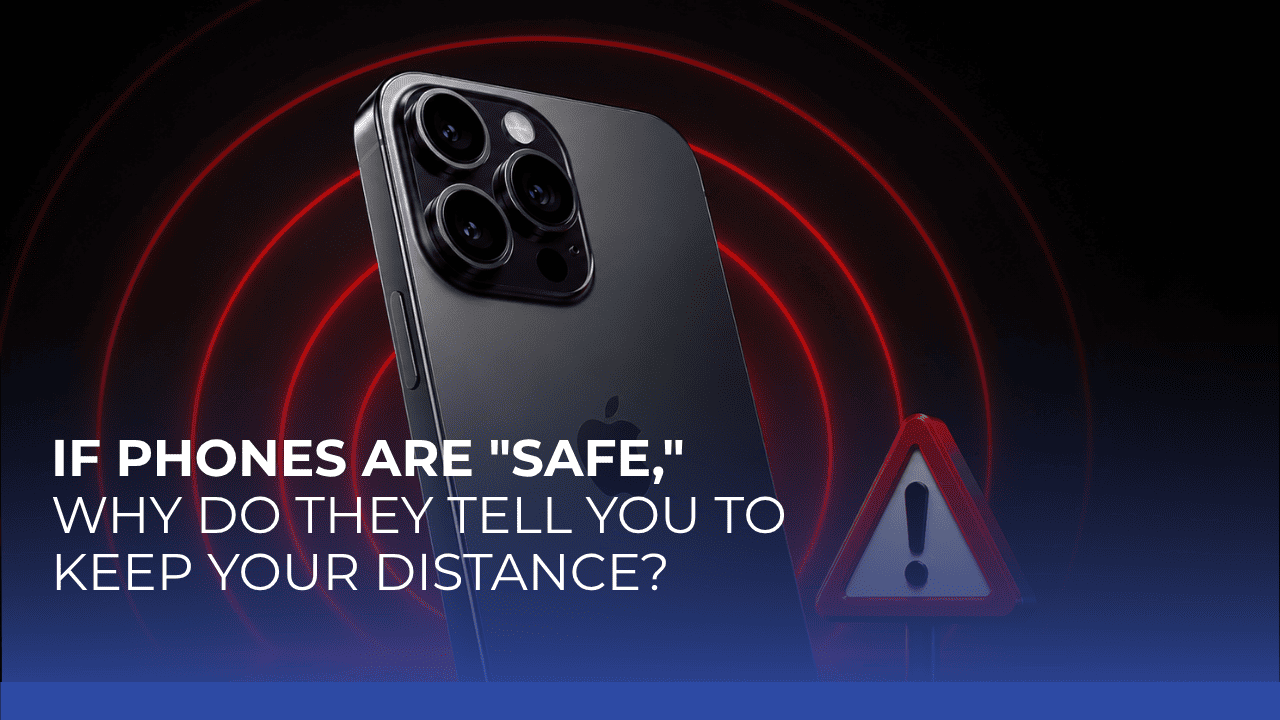
Did you know that your smart phone settings include a section that advises usage habits to reduce RF (radiofrequency) exposure?
This advice is included even though all smart phones proclaim that they are in compliance with the government’s SAR (Specific Absorption Rate) safety limits.
If the radiation emitted by cell phones was truly safe, why would they bother to tell you ways to reduce radiation exposure? Could it be because the SAR limits are outdated, and only address thermal (heating) effects of non-ionizing radiation exposure, and ignore the mounting evidence of harm from non-thermal mechanisms?
Let’s dive into this revealing topic that most people are unaware of, even though the majority of us are smart phone users.
You can check your own smart phone now. If you have an iPhone, just go into the Settings, then click General, and there should be a section called Legal and Regulatory. If you click that, and scroll all the way down, there should be a section titled RF Exposure. This may look slightly different on Android phones (like Samsung and Google Pixel), but you will find something similar if you investigate.
This section should display the results of the SAR test for your phone model, which of course will be within the “safe limits” for radiofrequency radiation exposure. If you have an iPhone, you may see something like this:
"To reduce exposure to RF energy, use a hands-free option, such as the built-in speakerphone, headphones or other similar accessories. Cases with metal parts may change the RF performance of the device, including its compliance with RF exposure guidelines, in a manner that has not been tested or certified."
Why advise reducing exposure, if the exposure level is already safe?
A Google Pixel phone we looked at, which tested at well within the SAR safety limits, even included this statement: “Keep the device away from your body to meet the distance requirement.”
What distance requirement? The SAR tests state that when the phone is placed directly against the head, or within 5mm of the torso of the body (to simulate the phone being in a pocket with a thin layer of clothing in between the phone and your skin), that you are “safe”, according to standard tests.
The Samsung S21 smart phone fine print informs that their SAR distance for safety is 15 millimeters, which is equivalent to more than half an inch. Most people place their cell phones directly against their head when making calls, as they have never been informed to do otherwise. If a Samsung S21 phone user is making calls in this way habitually, the company’s own recommendation implies that the user may be exposed to unsafe levels of RF radiation on a regular basis. Yet, this is not widespread knowledge, and is only in the fine print that most people don’t know exists!
Samsung also states, “Specific Absorption Rate (SAR) certification establishes a minimum recommended distance from a person’s body for safe operation of RF-emitting devices. Body-worn operations are restricted to belt-clips, holsters or similar accessories that have no metallic component in the assembly and must provide at least 1.5 cm (3/4 in.) separation between the device and the user's body.”
Did you ever hear any of this from a cell phone TV commercial or online advertisement? We certainly haven’t.
Pharmaceutical drugs are legally required to list their “fine print” of potential side effects, even on TV commercials. Why aren’t cell phone companies required to at least give you a brief warning about RF radiation exposure before you purchase their products, and suggest ways to reduce exposure?
It’s also important to note that having Wifi and Bluetooth enabled on your smart phone will significantly increase the RF radiation output of the device. Many people keep both of these turned on continuously or at least periodically, and do not consider the additional radiation exposure they may be getting, which may often be higher than the SAR safety limits.
The Specific Absorption Rate (SAR) limits are too high, and not healthy
Cell phone companies and the FCC seem to enjoy splitting hairs about the details of the SAR limits, and are quick to point out that the SAR test scores that phones list are at their maximum radiation output, implying that most usage is going to fall at far lower levels than the output listed on the test results.
If we’re going to argue at this level, it’s good to know that many phones may not actually be compliant at all, according to independent tests performed in 2019. If the cell phone company itself performs the tests, and the results can’t be replicated independently, then can we trust them in the first place?
However, let’s move past this type of nitpicking for now, and talk about why the SAR limits are inherently flawed and dangerous in the first place.
As stated earlier, the Specific Absorption Rate is only testing the thermal effects of cell phone radiation, meaning how much it heats localized tissue. That is the only mechanism of harm that the telecoms and FCC are willing to admit to. For a minute, let’s pretend that this is the only mechanism of harm. Even if that were true, there are significant flaws with the SAR safety limits.
The SAR safety limit was originally set in 1996 – 30 years ago. They modeled the body proportions of Army personnel, who are generally large, fully grown men, often around 6 feet tall and 200 pounds. This model does not come close to representing smaller and more developmentally vulnerable populations like children, teenagers and pregnant women. Grown men are generally the most resilient category of humans to toxic exposures of all types, whereas babies, children and developing embryos and fetuses are the most fragile. Babies and children have smaller heads, thinner skulls and rapidly developing brains that are highly vulnerable to harmful environmental influences, including wireless radiation.
The SAR rate that was set in 1996 has not been updated at all over the past 30 years, even as new cell phone technology and usage habits have evolved seemingly at light speed. The maximum distance that a phone could be tested at to achieve compliance was up to 25 millimeters, which is much further from the body than where today’s phone users keep their phones. The 25mm distance was set because in the ‘90s, people often carried their flip phones on belt clips, which were about an inch away from their body. Almost no one uses belt clips anymore, and most often, the phone is carried in a regular pocket, which is generally only 2mm away from body tissue, especially vulnerable reproductive organs like the ovaries and prostate. Guidelines have not been updated to reflect changing habits of users, nor have users been adequately warned of the potential harm of keeping their phone that close to the body.
There is also no consideration for long term exposure. Regulations are set based on immediate effects, with no thought for the many decades of consistent cell phone and other wireless radiation exposure that most modern people, especially young people, will experience in their lifetimes.
Regulations also do not acknowledge the fact that people generally no longer carry just one wireless device with them, but use multiple RF emitting devices regularly: cell phones, tablets, Bluetooth speakers and headphones, vehicle GPS devices that connect to Bluetooth, smart devices that connect to your smart phone, and much more. All of these sources multiply our RF exposure to levels that are currently unknown, and unacknowledged by official government and telecom industry sources.
We are stuck with the ancient 1996 SAR guidelines, which were created in a vastly different technological world than the one we live in today.
Thermal effects are not the only concern with wireless radiation
Lastly and most importantly, the SAR safety standards are based on the (proven erroneous) assumption that the thermal effect is the only way that cell phones can cause harm.
In the early 2000s, the National Toxicology Program, an arm of the U.S. Government’s National Institutes of Health, performed the largest, longest study on the health effects of cell phone radiation that had ever been done up to that point. Their stated intention for the study was to find out whether there were non-thermal health risks to cell phone use, since the only safety guidelines that existed at that point were the SAR safety limits, which were only based on thermal exposure risks.
This is an entire story in itself, but suffice to say that considerable harm related to cancer and DNA damage were found – results that were surprising to everyone involved in the study. After a brief period where a peer review panel of experts declared that the study was well performed and showed clear evidence of cancer and DNA damage, the government agencies involved subsequently pivoted in their opinion and decided that the study was NOT relevant to human exposure. If you haven’t yet read this whole story, you will want to, as it shows beyond any doubt how egregiously biased the United States government is towards siding with the telecom industry.
$30M National Toxicology Program Study Shows Cell Phone Radiation is Carcinogenic (full story)
The most important thing to realize is that science shows that non-ionizing radiofrequency radiation, at below-thermal levels, can be harmful to health. Whether or not a mechanism has been definitively recognized that accounts for this non-thermal harm, the harm itself has been documented in hundreds to thousands of studies, many of which you can read about here.
If you’re interested in purported mechanisms of non-thermal harm, the most probable theory at this time involves the voltage-gated ion channels of the body, and how external electrical signals trigger these highly sensitive voltage-mediated channels to flood various minerals (especially calcium) into the cells, triggering a cascade of unintended and unwanted effects. This mechanism has been extensively studied by Dr. Martin Pall, and has been discussed in at least a dozen of our other articles.
Don’t fall into the trap of blind trust – protect yourself
Ignorance of the truth won’t protect you. It is the fault of the government and telecom companies that it isn’t common knowledge that your daily wireless device usage may cause health issues over time. However, it is your responsibility to educate yourself, and to protect yourself as well as you can. Most people are not going to give up their cell phones entirely, but there are things you can do to significantly reduce your exposure:
- Never carry your cell phone in your pocket, or anywhere against your body, unless it’s turned off, or set to airplane mode.
- Never sleep with your cell phone near you, unless on airplane mode with Bluetooth and Wifi disabled, and even then be sure it’s at least a few feet away – definitely not under your pillow or near your head.
- Never hold your phone up to your head when you talk. Instead, use speaker phone or an AirTube headset (which has a tube of air instead of wires all the way to your ears) to make calls.
- Limit your children’s cell phone and tablet exposure, and be cautious during pregnancy and around babies.
To protect your body from any remaining radiation exposure, since you can’t control a lot of the RF exposure sources around you, be sure to protect your home with a stationary Blushield device of the appropriate strength for your overall EMF exposure levels, and carry a Blushield portable device with you anytime you’re on the go.
Blushield devices were demonstrated in a 2023 clinical study to calm overactivation of the voltage-gated calcium channels back to normal levels – VGCC overactivation is widely thought to be the primary mechanism of harm from EMFs, as we touched on earlier. A variety of other statistically significant health improvements were recorded, as well, showing that even if the mechanism of harm from non-thermal EMFs is more complex and nuanced than we currently know, that our EMF protection technology is broadly beneficial in regulating physiology back to a healthier state.
References:
- Apple iPhone RF Exposure Information – https://regulatoryinfo.apple.com/rfexposure/iphone18,1/en
- Samsung Galaxy S21 Radiation Levels – https://www.rfsafe.com/phone/samsung-galaxy-s21/
- Blushield: “New Proof that Cell Phones Are Not Safe” – /blogs/new-proof-that-cell-phones-are-not-safe
- Blushield: “$30M National Toxicology Program Study Shows Cell Phone Radiation is Carcinogenic” – /blogs/30m-national-toxicology-program-study-shows-cell-phone-radiation-is-carcinogenic
- Bioinitiative Report (updated in 2022) – https://bioinitiative.org/table-of-contents/
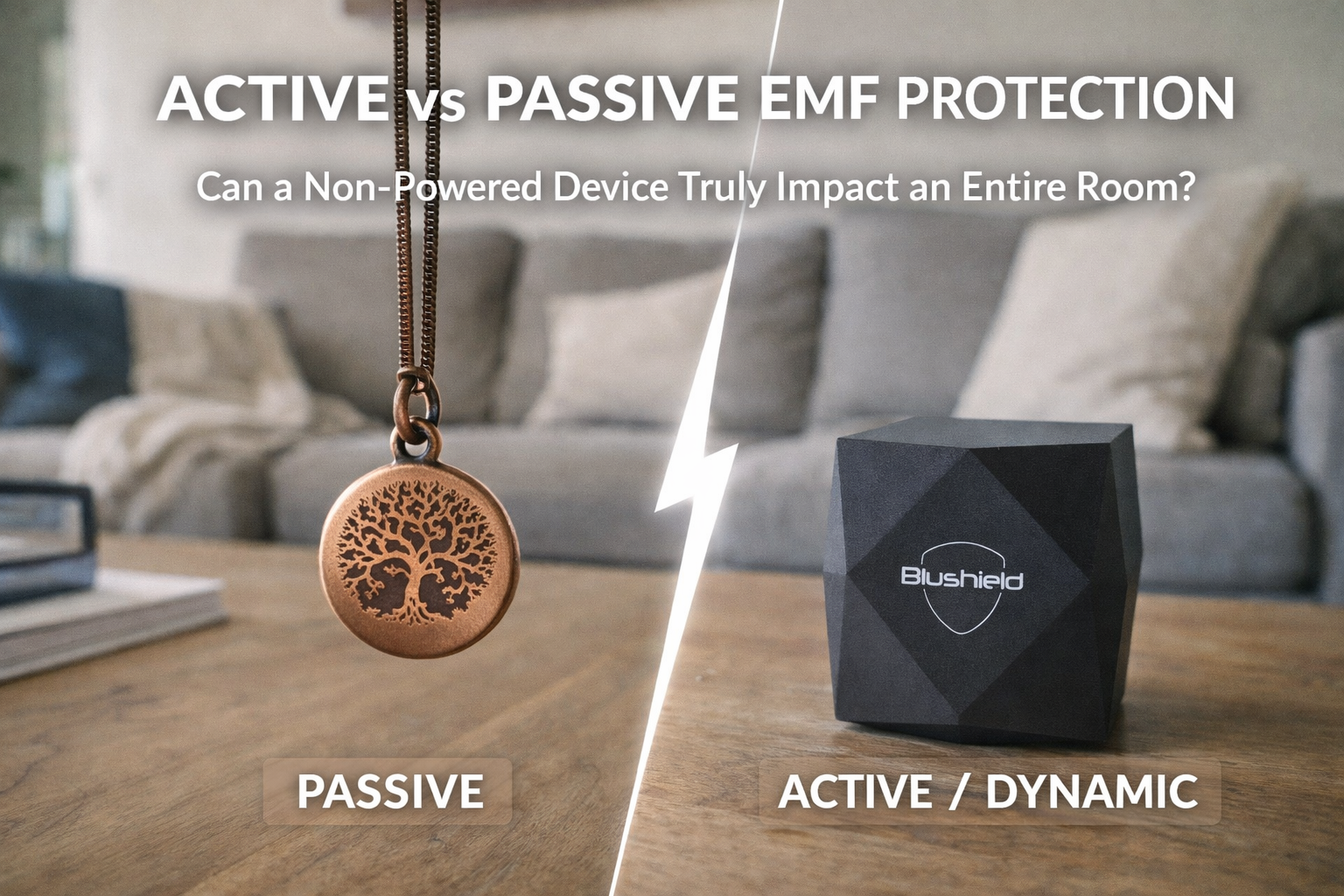
Why I ultimately chose active and dynamic field signalingMy name is Brandon Amalani and I have been running Blushield.com for nearly ten years.People regularly ask me about passive EMF protection devices and whether they are reliable or effective at protecting biology from man made electromagnetic exposure. That question comes up more now than ever, especially as passive devices have become extremely popular in recent years. I want to be very clear from the beginning that this article is not an attack on anyone or any company. It is an honest attempt to explain what I have learned about physics, biology, and signal behavior after a decade of working directly in this space.I originally got involved with Blushield after personally exploring many of the options available at the time. Most of what existed were passive EMF devices such as stickers, pendants, resonator chips, cards, and other non powered products. There were also shielding materials, grounding strategies, and constant single frequency generators. I tested all of these myself and spent a lot of time learning where each approach worked and where it clearly did not.That was about ten years ago. Since then I have worked closely with inventors and researchers in the electro therapy space and continued my education across multiple disciplines including cold plasma technology, photobiomodulation, PEMF system design, cellular biology, nutrition, and herbalism. Having this cross-disciplinary perspective has been critical in helping me understand how the human body functions as an electromagnetic system and how it interfaces with both natural and man made fields.Over the years I have noticed a shift in how passive EMF devices are discussed and marketed. Many educators and companies have moved away from older language like depolarizing EMF or harmonizing waves, and are beginning to use more nuanced terminology around coherence and biological signaling. That shift is a step in the right direction. However, based on what people share with me and what I continue to observe, there is still a great deal of confusion around the actual physics and biology involved.There are really three categories worth discussing. The first category is passive EMF devices. These devices have no power source. They claim to harvest ambient electromagnetic radiation and reorganize or modify those fields in a way that reduces biological stress. They often rely on geometry, fractal patterns, holograms, microchips embedded in pendants, or specific material combinations. The second category is active EMF signaling devices. These devices are powered systems that intentionally emit weak structured signals. They do not claim to overpower ambient EMF. Instead they claim to bias biological systems toward more coherent endogenous signaling and improved physiological resilience. The third category is what I would call active and dynamic signaling systems. Blushield falls into this category. It is active because it generates a field using an internal power source. It is dynamic because the signaling changes over time in a coherent way, more closely resembling the constantly shifting electromagnetic environment found in nature.To be clear, many of the concepts used to justify passive devices are not crazy or unscientific. Electromagnetic fields do have polarization. Geometry can influence how fields interact with materials. Fractal antennas exist in real engineering applications. Metals can couple to radiofrequency energy and act as grounds. Passive objects can scatter or redirect fields locally in the near field. All of that is true. This is why claims like an intentionally designed resonator can reorganize harmful EMFs and make them less biologically stressful sound persuasive on the surface.The issue is not the concepts themselves. The issue is scale, control, and guarantees.A passive resonator may produce higher local field intensity at specific frequencies by storing energy temporarily, much like a tuned antenna. However, this is concentration, not amplification in the engineering sense. Without an internal power source and maintained oscillation, a passive device cannot generate a dominant reference signal or enforce coherent structure across a room-scale environment.Without power, a device cannot control timing, phase, modulation, or coherence. It is entirely dependent on whatever ambient electromagnetic environment happens to be present at that moment, which is constantly changing. Geometry without power has no authority over signal behavior. Passive devices can respond to fields, but they cannot impose order on them.Over the years I have had many conversations with inventors working in active electromagnetic systems, including plasma based technologies. One important distinction that comes up repeatedly is that plasma can behave like a fractal antenna because it is an active medium with mobile charge carriers and energy input. That is fundamentally different from static geometry, etched holograms, or water/copper coil circuits which do not maintain oscillation, timing, or coherence on their own.Fractal antennas are real in engineering. However, they require specific parameters such as tuning to defined frequency ranges, feed points, impedance control, and known boundary conditions. A static hologram etched onto a pendant or card does not dynamically store electromagnetic information, adapt to changing environments, or enforce coherent signaling. It is a constraint, not a reference. Plasma systems can act like fractal antennas because they are active. They contain mobile charge carriers, dynamic oscillation, and energy input. That is a fundamentally different physical system than a static etched interference pattern. Calling both of these fractal antennas is a category error.One question that always stood out to me was how passive devices claim to cover large areas with no internal power source. Passive devices may slightly alter local coupling when worn on the body. That is plausible. What is not clear is how they could control room-scale fields or guarantee uniform effects across space. If a device truly created a dominant room-scale field, orientation, placement, and surrounding electromagnetic conditions would not matter. In reality, indoor EMF environments are dominated by near field sources such as laptops, phones, routers, and wiring. These signals reflect off walls and floors, creating standing waves and nulls. The result is a highly patchy and inconsistent field landscape. A small passive device only interacts with the local field where it is placed. It cannot average or reorganize an entire room. Its behavior will change depending on proximity to sources, wiring, and the body itself. That tells us the environment is in control, not the device.Passive devices have no internal timing reference, no phase authority, and no feedback mechanism. A passive microchip or circuit does not qualify as an internal reference because it does not actively maintain timing, state, or phase. Geometry and materials can constrain how a device responds to incoming signals, but they cannot enforce or stabilize a desired signal state. A reference requires actively maintained timing or coherence. Passive systems do not have that capability.Depolarization is another concept that has been widely misunderstood. Polarization refers to the orientation of the electric field. Coherence refers to phase stability and predictability over time. These are not the same thing. Modern radiofrequency environments are already spectrally complex, weakly polarized, and highly incoherent. Further depolarizing these fields simply adds randomness. It does not restore order. You cannot fix incoherence by adding more noise.In recent years many companies have used portable EEG devices to demonstrate before and after changes in brain activity. EEG can certainly reflect changes in mental state such as relaxation, attention, novelty, or expectation. It is extremely sensitive to posture, breathing, emotional framing, and context. What EEG cannot demonstrate is environmental EMF control, room-scale field effects, or mechanism of action. EEG does not measure cellular health, gene expression, calcium channel behavior, oxidative stress, or electromagnetic exposure levels. It tells you that a brain state changed, not why it changed. A device worn on the body could plausibly induce a local coupling effect. That does not mean the surrounding environment was altered. Small numerical changes can also appear dramatic depending on visualization choices and color scaling when creating before and after images.After evaluating many testing approaches, we chose to pursue the most rigorous path available to us. Rather than relying on internal or externally sourced white papers or theoretical models, we conducted an independent review board certified clinical trial in the United States. The results were published in a peer reviewed medical journal. We demonstrated significant changes in VGCC gene expression along with other physiological markers. This type of research is expensive and time consuming, but it aligns with the actual biological mechanisms being discussed.Biological systems are oscillatory, nonlinear, phase sensitive, timing dependent, and reference driven. This is why natural light cycles, geomagnetic fields, and environmental rhythms are so important to health. Biology does not simply respond to less stimulation. It responds to better organized information. The real question is not whether we can remove all EMF. It is whether we can provide a stable coherent reference that biology can lock onto.Active and dynamic signaling systems can do this. Passive systems cannot. Powered systems introduce a reference signal with internal timing and structure. That signal behaves consistently across environments. It improves signal to noise at the organism level. Passive systems have no phase authority, no internal timing, and no ability to resist environmental variability. They react to chaos, scatter chaos, and depend on chaos for their function. That is the opposite of what biology needs.Even mainstream EMF literature points to mechanisms such as VGCC activation, calcium influx, oxidative stress, and redox imbalance. An active coherent field can plausibly bias ion channel behavior, reduce stochastic noise, and support mitochondrial coupling. A passive scatterer cannot target these mechanisms or maintain biological reference states. Passive devices attempt to reorganize biology by harvesting incoherent ambient radiation. Active devices introduce order.We have been recommending Blushield for years as ones primary source of protection. Recently we introduced another technology that we found to pair perfectly with Blushield as the ultimate EMF protection stack.First, let’s look at the environment a bit closer.Modern EMF exposure isn’t just coming from wireless signals in the air. It also comes from the wiring inside our walls. Digital devices, switching power supplies, and LED drivers inject high-frequency transients and sharp voltage edges onto the 50/60 Hz electrical sine wave. That noise doesn’t just stay in the wires, it turns the wiring itself into a secondary source of electromagnetic variability.Blushield operates in the radiated domain by introducing a low-power, internally timed reference signal that remains stable even as the surrounding RF environment changes. It does not attempt to overpower external sources. Instead, it provides a consistent signal structure that biology can bias toward.SineTamer works at the electrical layer by reducing high-frequency transients and rapid voltage fluctuations on the building’s wiring. By lowering broadband electrical noise, it reduces the background variability that wiring can radiate into living spaces.Together, these two approaches address different layers of the same problem: one introduces structured reference signaling, the other reduces injected electrical noise. The result is not “shielding,” but a shift in signal organization and environmental stability.I genuinely want passive devices to be highly effective. I also want Nikola Tesla’s dream of a small portable device that produces clean energy from ambient energy to be real. But wanting something to be true does not make it physically possible yet. After ten years of experimentation, education, and direct testing, active and dynamic field signaling remains the most plausible approach I have seen for supporting biological resilience in modern electromagnetic environments.

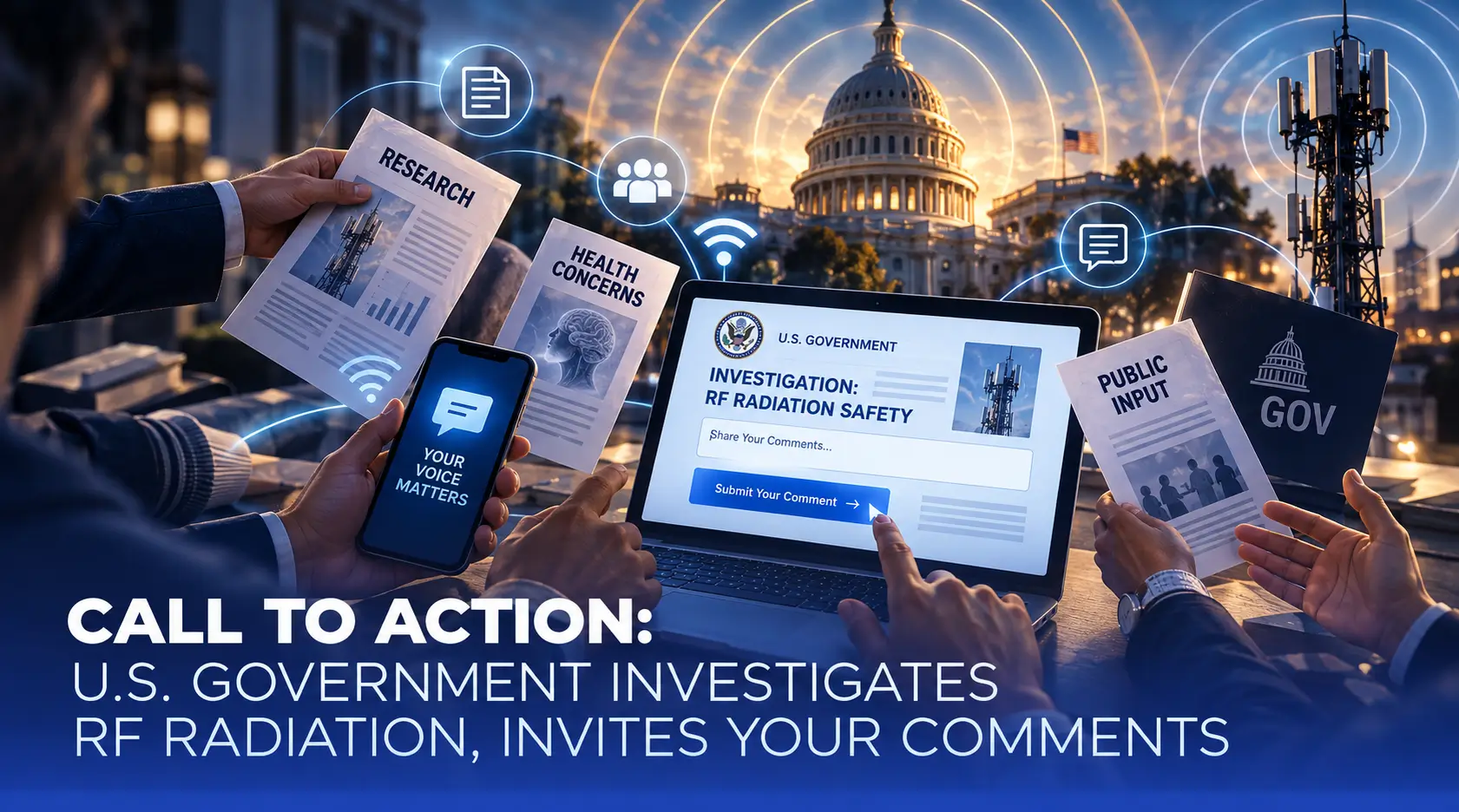
Half a year after the MAHA Report by the United States government did a preliminary assessment of toxic exposure sources in modern life that hadn’t been adequately addressed, and only briefly mentioned wireless radiofrequency (RF) radiation as a potential threat to human health, the U.S. Department of Health and Human Services (HHS) recently announced the launch of a new government commissioned study on the potential health risks of cell phone radiation.
Under Secretary Robert F. Kennedy Jr., considerable changes have taken place in the HHS and the FDA during this past year, including big shifts in government dietary and vaccine recommendations. Recently, longstanding FDA webpages asserting that cell phone radiation poses no health risks have been quietly removed, in preparation for a more comprehensive and hopefully less biased assessment of the health risks of non-ionizing radiation sources like cell phones, cell towers, Bluetooth, Wifi and smart meters, which many of us are closely and constantly exposed to in our daily lives. The FDA landing page about cell phone radiation now contains several links that reroute back to the landing page itself, after the individual pages were taken down.
"The FDA removed webpages with old conclusions about cell phone radiation while HHS undertakes a study on electromagnetic radiation and health research to identify gaps in knowledge, including on new technologies, to ensure safety and efficacy," said HHS spokesman Andrew Nixon.
Other government agencies like the FCC and CDC, however, still state on their websites that there is no evidence of health harm from wireless radiation.
At this time, no details have been shared about the study’s authors or design, indicating that the study is still in its early stages. However, the study announcement is encouraging, and seems to be a move in the right direction, especially in combination with the removal of FDA statements claiming no harm from these common radiation exposure sources.
Shocking results from a previous large government study were swept under the rug
Back in 2018, the publication of a massive government study on rats and mice by the National Toxicology Program under the National Institutes of Health (NIH) reported “clear evidence” of cancer and DNA damage from cell phone radiation. These shocking and unexpected results seemed to be inevitably leading to the U.S. government clearly stating the health dangers and taking charge of protecting public health.
Unfortunately, as we have previously detailed in our article about the NTP study, the FDA suddenly reversed their position and asserted that the expensive, well designed, perfectly executed NTP study could not apply to humans. This was a bold statement to make for a study that was specifically designed to translate to humans under the best “gold standard” scientific practices, especially after a peer review panel of experts interpreted the results as demonstrating “clear evidence” of cancer and DNA damage.
The FDA had undertaken an internal review between 2008 and 2018, concluding around the same time as the NTP study, which claimed “no consistent or credible scientific evidence” of harm from cell phone radiation. Interestingly, as Dr. Devra Davis points out, that review was never signed, which is unusual for a major public health document.
Dr. Davis’ opinion is that the review went unsigned because “no one in the FDA was willing to put their name behind such a piece of junk.”
Skepticism of the government’s motives by EMF scientist dampens enthusiasm
Some scientists who have devoted a large part of their careers to studying the harms of wireless radiation are skeptical of the U.S. government’s decision to do another study.Dr. Joel Moskowitz turned down an invitation from a Kennedy aide to participate in a literature review on wireless radiation, questioning the administration’s motives and approach by pointing out that enough research has already been done, and that waiting for yet another study would just delay regulatory change. “They’re just doing this to kick the can down the road,” he said.
Scott McCollough, lead litigator for CHD’s EMR & Wireless cases, was disappointed by Moskowitz’ position, as Moskowitz’ organization ICBE-EMF has long advocated for expert scientific recommendations to protect public health from EMFs. McCollough states that the HHS study appears to align with these goals.
The way we see it, it’s important to continue to be hopeful and optimistic about all progress in the right direction, even when it seems slow and incremental. Even though a lot of us feel fatigued by this long battle towards increased awareness and safety measures, the truth is that nothing changes quickly on a large, societal scale, especially those elements of society that permeate our daily lives so intimately. The momentum that the current iteration of wireless infrastructure has in our world is still rolling, and it may take a lot of time and effort to truly change course.
If there was a major change or breakthrough resulting in widespread admission and acceptance of the science showing harm from wireless radiation, the likely result would not be the dismantling of cell towers and people throwing their cell phones in the trash. Much more likely is a slow transition towards more reliance on wired internet connections like fiber optic and copper, phasing out unnecessary use of wireless, and widely propagated messages cautioning users to increase distance and reduce overall exposure to RF radiation sources.
Since wireless communication is still vital in our world for mobile and emergency use, the impetus for telecoms to invent and utilize new methods of transmitting wireless signals that are not harmful to living organisms could become much greater… but only IF there was an ultimatum put out by legislature that restricted their freedom to use harmful technologies. If telecoms are allowed to continue to do anything they want… well, we can already see from their past actions that money is a greater motivator than the health of humanity.
Fortunately, not everyone is waiting for the final verdict from a government study to make changes at local levels. Last year under the MAHA (Make America Healthy Again) movement, 22 states began restricting cell phone use in schools, to improve the mental and physical health of children. Our children’s health can’t wait for studies to give us 100% clear answers, and it is most vital for their current and future development to be cautious and conservative with potentially harmful exposure sources, and make changes now instead of waiting for a definitive government green light.
Swedish study shows sharp increase in sleep disorders in children and teens since 2001
A new study just released this month (January 2026) in Sweden found an astonishing 17-fold (1700%) increase in sleep disorders in teens and children since 2001. The age group that endured the most extreme increase were children and teenagers aged 5 to 19. Even young children under age 5, and young adults aged 20-29, experienced a 500% increase in sleep disorders. The study authors theorize that the exponential increase in wireless radiation exposure between 2001 and 2024, as well as blue light exposure from screens (which can disrupt melatonin and affect sleep), is primarily responsible for this sharp and unprecedented increase in sleep disorder symptoms.
The study authors, Mona Nilsson and Lennart Hardell, analyzed national health statistics on sleep disorder diagnoses during this 23-year period. Hardell is the author of more than 350 papers, around 60 of which address the topic of radiofrequency radiation, and Nilsson is the co-founder and director of the Swedish Radiation Protection Foundation. They are both concerned that major government organizations and agencies, like the WHO, FCC, and European Union, are more focused on protecting the interests of the wireless industry than people’s health.
Mainstream media has frequently reported on the increasing incidence of sleep disturbances in children and teens, but has failed to consider a possible link to wireless radiation.
Another Swedish study from last year found an increase in memory issues, which goes hand-in-hand with sleep issues. Sleep quality, length and depth is vital for cognitive function, including memory.
Nilsson shared this list of nearly 60 studies on the link between radiofrequency radiation and issues with learning and memory.
HHS study a move in the right direction, but the time to protect children is now
The announcement of the U.S. government reopening research into the harms of wireless radiation is certainly good news, but we can’t afford to wait for their conclusion, especially when it affects our children and teens who are in the midst of critical windows of development. The influences that shape them now will become hardwired into their brain, nervous system and entire body, affecting their long term health and shaping their outlook for the rest of their life.
Children who get cell phones before age 12 are at higher risk of obesity, depression and poor sleep. Reducing access to cell phones at home and at school, and waiting until a child or teen is older before owning a personal cell phone, are some ways that we can support healthy development. Balancing out academic and recreational activities on screens with physical and outdoor activities, and prioritizing healthy sleep habits, can also go a long way.
Growing up in such a heavily technological world will pose unique challenges to this generation of children. Giving them a strong, healthy foundation will fortify them so that they can meet these challenges with clarity, discernment, healthy bodies and sound minds.
References:
- Children’s Health Defense: “HHS to Study Cellphone Health Risks, as FDA Scrubs Online Safety Claims” — https://childrenshealthdefense.org/defender/hhs-study-cellphone-health-risks-as-fda-scrubs-online-safety-claims/
- Reuters: “US health department to launch study on cellphone radiation” — https://www.reuters.com/legal/litigation/us-health-department-launch-study-cellphone-radiation-2026-01-15/
- Study: “Increasing Numbers of Persons with Sleeping Problems in Sweden” — https://www.mdpi.com/2079-9721/14/1/25
- Children’s Health Defense: “Kids’ Sleeping Problems Linked to Wireless Radiation, Screens” — https://childrenshealthdefense.org/defender/kids-sleeping-problems-linked-to-wireless-radiation-screens/
- Children’s Health Defense: “Kids Who Get Cellphones Before Age 12 at Higher Risk of Obesity, Depression, Poor Sleep”— https://childrenshealthdefense.org/defender/kids-cellphones-before-age-12-higher-risk-obesity-depression-poor-sleep-study/
- Blushield: “$30M National Toxicology Program Study Shows Cell Phone Radiation is Carcinogenic” — /blogs/30m-national-toxicology-program-study-shows-cell-phone-radiation-is-carcinogenic
- Blushield: “Downplayed Dangers: The Missing EMF Conversation in the MAHA Report” — /blogs/downplayed-dangers-the-missing-emf-conversation-in-the-maha-report

Product updates
Practical tips for low-EMF living
New releases
Exclusive promotions
Frequently asked questions
Invisible signals are part of modern life. Blushield works quietly in the background at home, at work and on the go, with no setup or maintenance.
It doesn't block or shield EMF. Instead, Blushield is designed to support the body's natural response to everyday electromagnetic exposure. By focusing on biological support rather than altering environmental signals, it takes a different approach to EMF protection.
Plug-in units (Premium, Ultimate, Phi) cover your home. Portables cover you when you leave it. Most people start with one of each: a plug-in for the house and a portable for travel, work, and the car. If you're not sure, use our Find Your Device tool or message us.
30-day limited money-back guarantee on every device (restocking fee applies - see our full return policy). Stationary and portable units carry a 1-year warranty. If anything extends past that, contact us.
Many customers still choose to use one. EMF meters measure field intensity at a single moment, and everyday sources such as Wi-Fi, Bluetooth, smart meters, cell towers and nearby homes are present around the clock. Blushield runs continuously, whatever a meter reads.
Experiences vary from person to person. Some customers tell us they notice a difference quickly, while others find it becomes a quiet part of their routine over a few weeks. Blushield is not a medical device and is not intended to diagnose, treat, cure or prevent any condition.
Yes. Blushield is built on decades of research into how the body responds to coherent vs. incoherent electromagnetic signals. We have independent studies, HRV data, and live-blood analyses on our Science page. We don't make medical claims. We point you to the data and let you decide.